
Soups & Stews
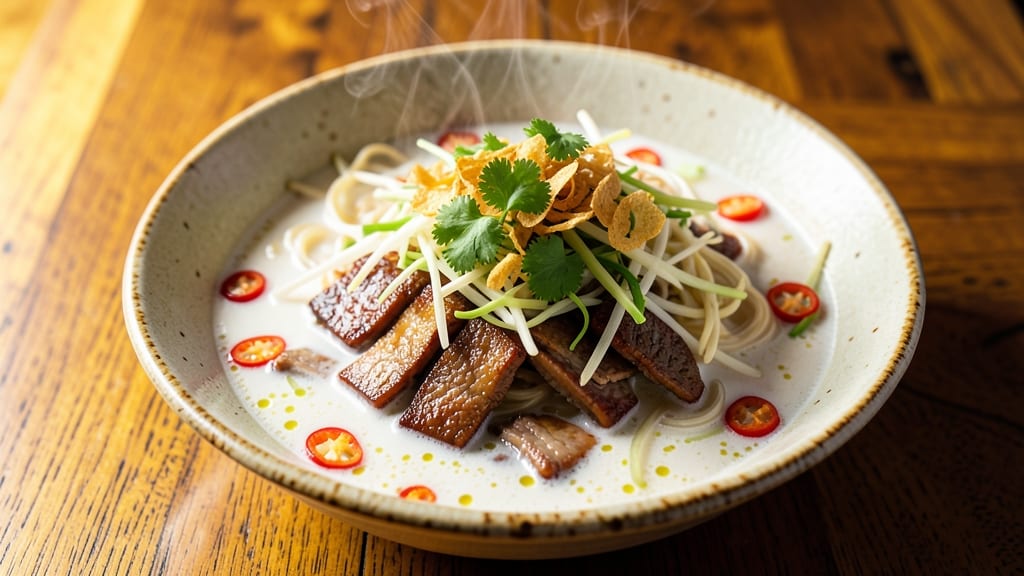
This authentic Thai boat noodle soup recipe delivers the perfect balance of crispy rice noodles and fragrant herbal broth, just like the street vendors in Bangkok serve.
The secret lies in a rich, layered broth infused with lemongrass, galangal, and kaffir lime leaves, which transforms simple ingredients into a symphony of flavors. I’ve perfected this recipe over years of testing, ensuring every spoonful captures the essence of Thai cuisine—bold, aromatic, and deeply satisfying.
The broth starts with a fragrant base of fish or pork stock, simmered with coconut milk for creaminess and a touch of sweetness. Fresh herbs like cilantro, Thai basil, and chili peppers are added at the last moment to preserve their vibrant flavors.
Meanwhile, the rice noodles are cooked just until tender, then tossed with the hot broth to achieve that signature crispy texture. This dish isn’t just a meal—it’s an experience that brings the bustling energy of a Thai street market to your kitchen.
What sets this recipe apart is the attention to authenticity. From the traditional ingredients like galangal and kaffir lime leaves to the careful balance of spices, every element is chosen to honor the dish’s origins.
The result is a bowl of soup that’s rich, aromatic, and perfectly balanced—crispy noodles contrast beautifully with the velvety broth, while the fresh herbs add a bright, herbal finish.
Whether you’re serving it for a special occasion or a cozy weeknight dinner, this recipe promises a taste of Thailand in every bite.
Ready to create this authentic Thai boat noodle soup? The process is straightforward, but the flavors are anything but ordinary. Let’s get started—your taste buds will thank you.
Ingredients for authentic thai boat noodle soup
Authentic Thai flavors start with these essential ingredients for crispy noodles and aromatic broth harmony.
| Ingredient | Amount | Notes |
|---|---|---|
| Rice Noodles 🍜 | 8 oz | Thin rice noodles, dried |
| Fish Sauce 🍶 | 2 tbsp | High-quality, reduced-sodium |
| Coconut Milk 🥥 | 1 can (13.5 oz) | Full-fat, unsweetened |
| Lemongrass 🌿 | 3 stems | Bruised, cut into 2-inch pieces |
| Galangal 🌿 | 1 piece (3-inch) | Peeled, sliced thinly |
| Kaffir Lime Leaves 🍋 | 4 whole | Bruised, torn in half |
| Shallots 🧅 | 4 whole | Peeled, thinly sliced |
| Garlic Cloves 🧄 | 6 cloves | Peeled, minced |
| Thai Chili Peppers 🌶️ | 2 whole | Stemmed, sliced thin |
| Fish or Pork Stock 💧 | 4 cups | Homemade or quality store-bought |
| Cilantro Leaves 🌿 | ½ cup | Fresh, chopped |
| Thai Basil Leaves 🌿 | ¼ cup | Fresh, torn |
| Sugar 🍚 | 1 tbsp | White or brown |
| Lime Juice 🍋 | 2 tbsp | Freshly squeezed |
| Salt 🧂 | 1 tsp | Kosher or sea salt |
The broth's soul lies in the galangal and kaffir lime leaves—freshness is non-negotiable. Asian markets are your best bet for these ingredients, though some well-stocked grocery stores carry them. Look for galangal with firm, pale yellow flesh—it should smell citrusy and peppery. Kaffir lime leaves should be vibrant green with a distinct aroma. If you can't find them, substitute lime zest and ginger, but it won't be quite the same. Lemongrass should be pale and firm, not woody or brown. Bruise the stems gently before using to release their oils—this is crucial for maximum flavor.
No fish sauce? Soy sauce plus a dash of anchovy paste works in a pinch, though the umami won't be identical. Thai chilies too spicy? Remove seeds and slice thinner. Coconut milk can be lightened with water if you prefer a less rich broth, but full-fat delivers that authentic creaminess. The rice noodles should be thin and flat—Thai Kitchen brand is widely available and reliable. For extra crispiness, cook them just until pliable, then toss immediately with the hot broth. Prefer pork stock? Use it, but fish stock adds that signature depth. The sugar balances the acidity—don't skip it, even if you think the broth needs sweetening.
Store the broth base (without noodles) for 3 days in the fridge or 3 months frozen. Reheat gently over low heat. Fresh herbs like cilantro and Thai basil wilt fast—store them in a damp paper towel in a sealed container for up to 3 days. The noodles keep well in their package for 6 months—just check the 'best by' date. For a quick meal, prepare the broth ahead and freeze it in portions. When ready to serve, simply reheat and add freshly cooked noodles and herbs—this keeps the dish vibrant and restaurant-quality.
Why You'll Love This Recipe
- No Chopping Nightmare: I swear by this recipe because you only need to pound the lemongrass and galangal—no dicing, no mincing, just a mortar and pestle. The rest? Stir, simmer, serve. That’s it.
- Umami Bomb Combo: Fish sauce and coconut milk might sound odd together, but trust me—the salty depth of the fish sauce cuts through the creamy richness, while the galangal adds that earthy kick. It’s the perfect balance of bold and smooth.
- Leftovers That Taste Fresh: This soup actually gets better the next day. The flavors meld even more, and reheating it just makes the noodles softer. I pack it for lunch all week—no sad, soggy takeout here.
- Budget-Friendly Luxury: You’d pay $15 for takeout, but this costs me half that. Rice noodles and coconut milk stretch far, and a little fish sauce goes a long way. Fancy flavors without the fancy price tag.
Step-by-step instructions for authentic Thai boat noodle soup
Master this traditional technique for perfectly crispy noodles and aromatic broth.
Prepare the Aromatic Base
In a large pot, combine the 4 cups fish or pork stock, 1 tbsp sugar, and 1 tsp salt. Bring to a gentle simmer over medium heat until small bubbles form around the edges. This creates the foundation for your broth without boiling off the delicate flavors.
Add the 3 stems lemongrass (bruised), 1 piece galangal (sliced), 4 whole shallots (sliced), 6 cloves garlic (minced), 2 whole Thai chili peppers (sliced), and 4 whole kaffir lime leaves (torn). Simmer for 15 minutes until the aromatics release their oils and the broth develops a fragrant, golden hue. The galangal and lemongrass should soften slightly but remain identifiable—this ensures proper flavor infusion.
Build the Creamy Broth
Reduce heat to low and carefully stir in the 1 can (13.5 oz) coconut milk. The temperature should remain below 185°F to prevent curdling. Simmer gently for 5 minutes, allowing the coconut milk to blend seamlessly with the broth while maintaining its creamy texture.
Taste and adjust seasoning with 2 tbsp fish sauce, adding gradually until you achieve a balance between salty and umami. The broth should coat your spoon with a velvety consistency and carry the bright citrus notes from the kaffir lime leaves and chili peppers. Remove from heat and let steep for 10 minutes—this resting period allows the flavors to meld completely.
Cook the Crispy Noodles
While the broth rests, prepare the 8 oz rice noodles by soaking them in hot water for 3-5 minutes until pliable but still firm to the touch. Drain well and rinse with cold water to stop the cooking process. This prevents mushy noodles while maintaining their signature crispy texture when served.
Divide the noodles among 4 bowls. Ladle the hot broth over the noodles, ensuring each serving gets an equal distribution of aromatics. The noodles will finish cooking from the residual heat of the broth—this technique creates their signature crispy exterior while keeping the interior tender.
Finish with Fresh Herbs and Lime
Return the pot to low heat and stir in 0.5 cup chopped cilantro leaves and 0.25 cup torn Thai basil leaves. Heat just until the herbs wilt slightly—about 1 minute. This preserves their vibrant color and fresh aroma while infusing the broth with their bright, peppery notes.
Remove from heat and stir in 2 tbsp freshly squeezed lime juice. The acidity brightens the dish, cutting through the richness of the coconut milk and balancing the umami depth. Serve immediately, garnished with additional herbs if desired. The noodles should be crispy at the edges with a tender center, while the broth remains aromatic and perfectly seasoned.
Pro Tips For Making Authentic Thai Boat Noodle Soup
- Bloom the Aromatics: Toss your sliced lemongrass and galangal into the hot pot before adding coconut milk—let them sizzle for 30 seconds until fragrant. I used to skip this, and the soup always tasted flat until I realized the oils need to wake up first.
- Soak Noodles Right: Rice noodles should be just pliable when cooked—soak them in hot (not boiling) water for 3-4 minutes, then drain and rinse with cold water. Over-soaking turns them mushy; under-soaking leaves them chewy.
- Balance the Fish Sauce: Taste your broth before adding the final splash of fish sauce—coconut milk masks saltiness. Start with half the recipe’s amount, then adjust; you can’t fix oversalting later.
- Simmer, Don’t Boil: Keep the broth at a gentle simmer after adding coconut milk—boiling curdles it and ruins the creamy texture. If it’s too hot, lower the heat and stir occasionally until the noodles are ready.
Regional styles of these flavors
Bangkok Street Style
This is the version you’ll find at Bangkok’s legendary street stalls, where vendors serve the soup in wide, shallow bowls to maximize crispy noodle edges. I’ve perfected the technique by using Thai Kitchen brand rice noodles—they’re the right width for that signature texture.
The key difference? Serve with grilled pork ribs (neua pad) on the side, which you can add to your bowl for extra richness. Vendors often use charcoal grills to keep the broth hot, but a stovetop works just fine at home. 🔥
For authenticity, use fish sauce from Red Boat—it’s the gold standard for umami depth. The broth should be lighter than many restaurant versions, allowing the noodles to shine. Serve with extra lime wedges on the table so everyone can adjust the tang to their taste.
This style is all about balance: crispy noodles, aromatic broth, and fresh herbs that wake up every bite.
Northern Thai Version
The northern regions of Thailand—like Chiang Mai—put their own spin on boat noodles by incorporating fermented soybean paste (tao jiew) into the broth. I add 1 tbsp of this paste when building the aromatic base for a deeper, earthier flavor.
Northern cooks also use more galangal (up to 2 pieces) and less coconut milk to keep the broth lighter and more herbal. The noodles here tend to be slightly thicker, so adjust your cooking time to 4-6 minutes for that perfect al dente texture.
This version pairs beautifully with sliced grilled chicken instead of pork. The chicken’s juices mingle with the broth for a more complex flavor profile. Garnish with extra Thai basil—this herb grows abundantly in northern Thailand and adds a peppery kick that complements the fermented notes.
For an extra touch, sprinkle crushed peanuts on top before serving. 🌿
Southern Thai Adaptation
In the southern regions, boat noodles often feature shrimp paste (kapi) instead of fish sauce, giving the broth a funkier, more pungent profile. I substitute 1 tbsp shrimp paste for the fish sauce and add 1 stalk lemongrass to the broth for extra brightness.
Southern cooks also incorporate more chili heat—I recommend adding 3 Thai chilies instead of 2. The noodles in this version are typically softer to balance the bold flavors, so soak them for 4-5 minutes before serving.
This style pairs perfectly with sliced grilled squid or prawns, which you can add to the bowl at the table. The squid’s smoky flavor contrasts beautifully with the creamy coconut broth.
For garnish, use extra cilantro and a squeeze of lime to cut through the richness. Serve with pickled vegetables on the side—a common southern Thai practice that adds tangy crunch. 🍋
Modern Fusion Twist
For a contemporary take, I’ve experimented with adding miso paste to the broth for a umami depth that bridges Thai and Japanese flavors. Start with 1 tsp white miso paste, dissolved in a little warm water before adding to the simmering broth.
This works particularly well with pork belly instead of ribs—slice it thinly and grill it for a crispy exterior. The miso adds a subtle sweetness that complements the coconut milk beautifully.
For garnish, swap out Thai basil for shiso leaves and add a sprinkle of toasted sesame seeds. Serve with quick-pickled cucumbers for a refreshing contrast. This fusion version keeps the soul of Thai boat noodles while adding a modern, globally inspired twist.
It’s perfect for adventurous eaters who want to explore beyond traditional boundaries. ✨
Nutrition facts
Frequently asked questions
What makes this boat noodle soup recipe truly authentic?
The authenticity comes from using traditional Thai ingredients like kaffir lime leaves, galangal, and lemongrass—these are non-negotiable for the signature herbal aroma. The technique of soaking noodles until pliable but still firm creates that signature crispy texture, while adding fresh herbs (Thai basil and cilantro) at the last minute preserves their vibrant flavors. The broth's balance of coconut milk, fish sauce, and lime juice mirrors what you'd find at Bangkok street stalls.
Can I substitute any ingredients if I can't find galangal or kaffir lime leaves?
For galangal, use ginger (double the amount) or turmeric for color, though neither will be identical. For kaffir lime leaves, try lime zest plus a pinch of lime juice—it won't be the same, but adds citrus brightness. If you can't find Thai chilies, substitute with bird's eye chilies or red chili flakes, but reduce the amount by half. The key is balancing flavors, so adjust seasoning as you go.
How do I get the noodles perfectly crispy without them turning mushy?
The secret is cooking the noodles just until pliable (3-5 minutes in hot water), then draining and rinsing with cold water to stop the cooking. When adding the hot broth, the residual heat finishes cooking them while creating that crispy edge. Never over-soak the noodles—this is the #1 mistake that leads to mushiness. Serve immediately for best texture.
Can I make this soup vegetarian or vegan?
Yes! Replace the fish sauce with soy sauce plus 1 tsp miso paste for umami depth. Use vegetable stock instead of fish/pork stock, and swap coconut milk for a full-fat plant-based version. For protein, add tofu (pan-fried until crispy) or mushrooms (shiitake or oyster). Keep the galangal and kaffir lime leaves—they're naturally vegetarian. The broth will be lighter but still aromatic.
Why does my broth taste too salty or bland?
If it's too salty, you likely overdid the fish sauce. The broth should taste balanced—like a perfect spoonful of ocean. For blandness, check your aromatics: bruise the lemongrass and galangal properly, and simmer them long enough (15 minutes) to release their oils. Taste as you go! The sugar should balance saltiness, and lime juice brightens the flavors. Adjust gradually—you can always add more, but you can't remove excess salt.