
Main Courses
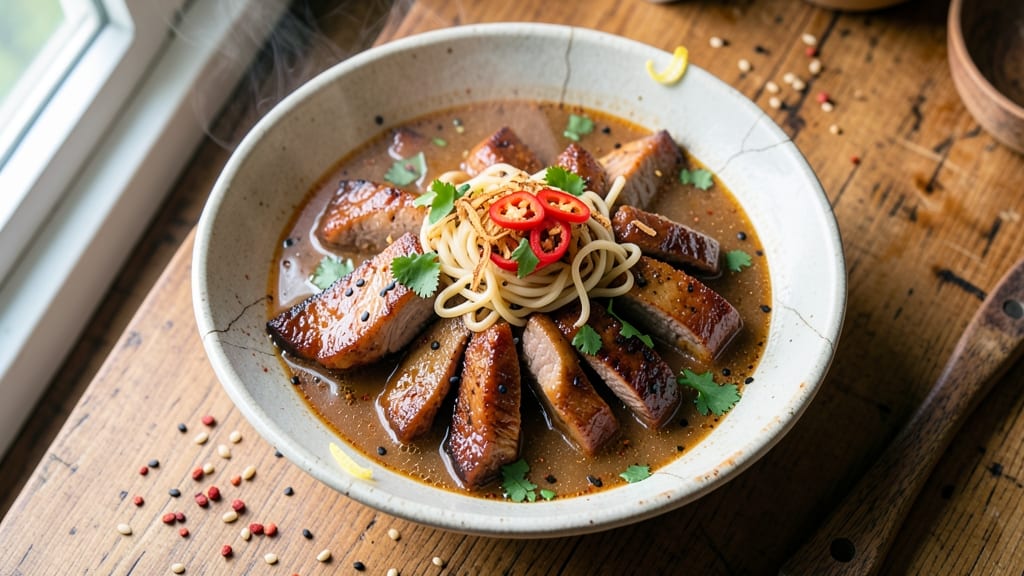
This Asian BBQ pork noodle soup recipe delivers the perfect balance of smoky, sweet, and savory flavors in every steaming bowl. 🔥 As a pitmaster trained in French techniques, I've adapted my love for slow-cooked meats to create a broth that's deeply aromatic yet approachable for home kitchens.
The secret lies in properly charring the pork and layering flavors through careful spice balancing.
The recipe begins with tender pork shoulder marinated in a blend of hoisin, soy sauce, and five-spice powder, then charred over high heat to develop that essential smoky depth.
While the pork rests, we build a rich broth using a combination of store-bought chicken stock and traditional aromatics—ginger, garlic, and star anise—that simmer until fragrant. The key technique here is controlling the sweetness: just enough to complement the smokiness without overpowering the natural pork flavor.
What makes this dish truly special is the chewy texture contrast between the tender pork, silky broth, and perfectly cooked noodles. I use wide rice noodles because they hold up better to the hearty broth while still delivering that satisfying bite.
The assembly is where the magic happens—each component comes together to create a harmonious balance where no single flavor dominates.
This soup is equally at home as a comforting weeknight dinner or an impressive meal for guests. The technique is straightforward but the results feel restaurant-quality, with that perfect marriage of smoky char and sweet-spicy depth.
Let's get cooking—your kitchen will soon be filled with the irresistible aroma of this Asian BBQ pork noodle soup.
Ingredients for asian bbq pork noodle soup
Smoky marinade, aromatic broth, and chewy noodles—just 15 ingredients for bold flavors.
| Ingredient | Amount | Notes |
|---|---|---|
| Pork Shoulder 🥓 | 1 ½ lb | Bone-in for flavor, cut into 1-inch cubes |
| Hoisin Sauce 🍶 | ½ cup | Store-bought or homemade, for marinade |
| Soy Sauce 🥄 | ⅓ cup | Dark soy preferred for color depth |
| Five-Spice Powder 🌶️ | 1 tbsp | Toasted for enhanced aroma |
| Chicken Stock 💧 | 4 cups | Homemade or high-quality store-bought |
| Fresh Ginger 🌿 | 2 tbsp | Grated, for aromatic base |
| Garlic Cloves 🧄 | 6 cloves | Minced, for bold flavor |
| Star Anise 🌟 | 2 whole | For subtle aniseed aroma |
| Wide Rice Noodles 🍜 | 8 oz | Dried, for chewy texture |
| Cinnamon Sticks 🌳 | 1 whole | For warm undertones |
| Sesame Oil 🫒 | 1 tbsp | Toasted, for finishing touch |
| Green Onions 🧅 | ¼ cup | Sliced, for garnish |
| Sesame Seeds 🌾 | 1 tbsp | Toasted, for crunch |
| Brown Sugar 🍯 | 2 tbsp | Lightly packed, for balanced sweetness |
| Vegetable Oil 🫒 | 2 tbsp | High smoke point for charring |
The pork shoulder is non-negotiable here—bone-in adds depth, and Costco or Whole Foods often carry the best cuts. Look for good marbling, which means juicier meat. For the marinade, Kikkoman hoisin is my go-to, but any brand works. The five-spice powder? Penzeys has a great toasted blend, but the bulk section at Trader Joe's is usually cheaper. Toast it lightly in a dry pan before mixing into the marinade—trust me, it makes a difference. The star anise and cinnamon sticks are the secret weapons for that restaurant-quality aroma.
No hoisin? Substitute with 2 tbsp soy sauce plus 1 tbsp honey—it won't be identical, but it works. Short on star anise? Double the cinnamon for a similar warmth. The wide rice noodles are crucial—Thai Kitchen brand is widely available and holds up perfectly. If you can't find them, egg noodles work in a pinch, but they'll be softer. The sesame oil is for finishing only—don't cook with it. And if you're using pre-minced garlic, rinse it first to remove excess moisture. Fresh ginger? Peel it first—the skin can get bitter.
This soup tastes even better the next day, so make a double batch if you can. Store broth and noodles separately in airtight containers for up to 4 days—reheat gently. The pork can be prepped ahead too: marinate overnight, then char and set aside until ready to cook. For freezing, portion the broth into 2-cup containers—thaw and reheat with fresh noodles. Garnish with sesame seeds and green onions right before serving, or they'll wilt into oblivion.
Why You'll Love This Recipe
- One-Pot Magic: I swear by this—just toss pork shoulder, hoisin, and five-spice into a pot with stock, simmer until it falls apart, and boom. No chopping veggies into perfect matchsticks, no fancy plating. The noodles go in last, and suddenly, you’ve got a restaurant-worthy bowl with zero stress.
- Umami Bomb: That combo of hoisin and soy sauce? It’s like a flavor hug. The five-spice powder adds this warm, earthy depth, while the pork shoulder melts into rich, caramelized strands. Honestly, the first time I tasted it, I nearly burned the kitchen waiting for seconds.
- Leftovers That Don’t Suck: Between us, most soups turn into sad, watery meals by day three. Not this one. The pork stays tender, the broth gets even deeper, and I’ve reheated these leftovers for four days straight—still solid. Add fresh herbs or a fried egg on top, and it’s like a whole new dish.
- Budget Meal for Busy Nights: Pork shoulder is cheap, stock is cheap, and you’re not buying exotic ingredients. I make this when I’m too tired to order takeout but still want something that feels special. Plus, it’s the kind of meal that disappears fast—great for feeding a crowd or just me when I’m craving something hearty.
Step-by-step instructions for Asian BBQ pork noodle soup
Here's how to build a rich, aromatic broth with perfectly tender pork and chewy noodles.
🔥 Step 1: Char the Pork for Deep Flavor
Heat 2 tablespoons vegetable oil in a large Dutch oven over medium-high heat until shimmering. Add the 1.5 lb pork shoulder cut into 1-inch cubes and sear undisturbed for 3-4 minutes until deeply browned on all sides. This creates the Maillard reaction that builds that signature smoky depth.
Real talk: Don't rush this step. You want those pork cubes to develop a caramelized crust before we pull them out. Once browned, remove the pork and set aside. Here's where it gets fun—we're about to build layers of flavor in that same pan.
🍳 Step 2: Build the Aromatic Base
In the same Dutch oven, add 2 tablespoons grated fresh ginger and 6 minced garlic cloves. Sauté for 1 minute** until fragrant and just starting to turn golden. Add the 2 whole star anise and 1 whole cinnamon stick, stirring for 30 seconds to toast the spices.
Pour in 4 cups chicken stock and scrape up all those delicious browned bits from the bottom of the pot. Add 0.5 cup hoisin sauce, 0.33 cup soy sauce, 1 tablespoon five-spice powder, and 2 tablespoons brown sugar. Bring to a gentle simmer over medium heat—you want this to bubble softly, not boil vigorously.
🥘 Step 3: Braise the Pork Until Tender
Return the pork to the pot and partially cover with a lid. Simmer gently for 45-50 minutes until the pork is fork-tender and pulls away from the bone easily. I know it seems like forever, but patience pays off here—this is where the pork transforms from tough to melt-in-your-mouth delicious.
About 15 minutes before the pork is done, add 8 ounces wide rice noodles to a large bowl of boiling water. Soak them according to package instructions (usually 5-7 minutes) until pliable but still slightly firm. They'll finish cooking in the hot broth, so don't over-soak.
🍽️ Step 4: Finish with Toasted Sesame Oil
Once the pork is tender, carefully remove the star anise and cinnamon sticks with tongs. Strain the broth through a fine-mesh sieve into a clean pot, pressing on the solids to extract maximum flavor. Return the pork to the strained broth and simmer for another 5 minutes to heat everything through.
Drain the cooked noodles and divide them among 4 bowls. Ladle the hot pork and broth over the noodles, then finish with 1 tablespoon toasted sesame oil swirled into each bowl. The oil should float on top, adding that nutty aroma with every bite.
👨🍳 Step 5: Garnish and Serve Immediately
Garnish each serving with 1 tablespoon toasted sesame seeds and 1 tablespoon sliced green onions. The sesame seeds add a delightful crunch that contrasts beautifully with the silky noodles, while the green onions bring a fresh brightness to cut through the richness.
Serve this soup piping hot with extra hoisin sauce on the side for dipping. The contrast of chewy noodles, tender pork, and aromatic broth makes every spoonful worth waiting for. And trust me, the first bite is always the best—you'll want to make this again immediately.
Pro Tips For Making Asian Bbq Pork Noodle Soup
- CUT PORK INTO STRIPS: I used to slice pork shoulder thinly against the grain, but that left me with chewy, uneven pieces. Instead, cut it into 1-inch chunks first, then flatten each piece to ¼-inch thickness with the side of your knife—this guarantees tender bites every time.
- SWEAT THE FIVE-SPICE: Skip the direct heat, and you’ll end up with bitter, overpowered broth. Toast the five-spice powder in a dry pan for 30 seconds until fragrant, then whisk it into the hoisin and soy sauce before adding to the stock. This makes a real difference in depth.
- DON’T BOIL THE STOCK: I learned this the hard way—simmering the chicken stock at a gentle bubble (just below a rolling boil) keeps it clear and prevents the hoisin from curdling. If it starts to foam, lower the heat immediately.
- USE COLD NOODLES: Tossing cooked noodles into boiling soup makes them mushy. Instead, rinse them in cold water, then add them to the pot just before serving—they’ll soak up flavor without turning to paste. (Yes, even if you’re impatient like me.)
Creative variations of these flavors
Spicy Thai Fusion
Transform this classic into a fiery Thai-inspired version by adding 1 tbsp chili garlic sauce and 1 tbsp fish sauce to the broth.
Swap the wide rice noodles for rice vermicelli noodles (soak for 8-10 minutes) and top with thinly sliced Thai basil and crushed dried shrimp for authentic umami.
I like to finish with a drizzle of sriracha-infused honey—just ½ tsp sriracha mixed with 1 tsp honey—for a sweet-spicy kick. 🌶️
Japanese Miso Twist
For a Japanese-inspired variation, replace the hoisin with 3 tbsp white miso paste and add 1 tbsp mirin to the broth. Use udon noodles instead of rice noodles and finish with soft-boiled quail eggs and shredded nori strips.
The miso adds a deep, savory base that pairs beautifully with the smoky pork. Garnish with toasted sesame seeds and grated daikon radish for freshness. 🍜
Vietnamese Pho-Inspired
This version turns your soup into a Vietnamese-style pho by using beef or chicken stock instead of chicken stock and adding 1 cinnamon stick, 1 star anise, and 1 tsp coriander seeds to the broth.
Swap the pork for thinly sliced beef flank steak (marinate in fish sauce, black pepper, and garlic), and serve with rice noodle bowls, bean sprouts, thinly sliced jalapeños, and hoisin sauce for dipping. 🌿
Korean Kimchi Kick
Give your soup a Korean-inspired twist by adding ½ cup chopped kimchi to the broth during the last 10 minutes of simmering. Use dangmyeon (glass noodles) instead of rice noodles and top with fried shallots, sesame seeds, and gochujang (Korean chili paste) for a spicy, tangy finish.
The kimchi adds a tangy depth that cuts through the richness of the pork. 🔥
Vegetarian Adaptation
Skip the pork entirely and use extra-firm tofu or mushrooms for a vegetarian version. Press and cube 14 oz firm tofu, then pan-fry until golden before adding to the broth. Add 1 tbsp soy sauce and 1 tsp five-spice powder to the tofu marinade.
Garnish with crispy fried shallots and cilantro for freshness. The tofu absorbs the broth beautifully, making it a hearty, satisfying dish. 🌱
Summer Light Version
For a lighter summer take, reduce the broth to 3 cups and add 1 cup coconut milk at the end for creaminess. Swap the wide rice noodles for rice vermicelli and top with fresh mint leaves, lime wedges, and chili slices.
Serve chilled or at room temperature for a refreshing twist. The coconut milk adds a tropical note that brightens the dish for warmer weather. ✨
Nutrition facts
Frequently asked questions
Can I make this soup without hoisin sauce?
For a quick substitute, mix 2 tablespoons soy sauce with 1 tablespoon honey or brown sugar. The flavor won't be identical, but it'll still deliver that sweet-savory balance. If you have time, make a simple homemade version with soy sauce, vinegar, garlic, and ginger for deeper flavor.
How do I get the pork extra tender?
The key is slow cooking and proper prep. Start with bone-in pork shoulder (it stays juicier), then marinate overnight. During braising, keep the heat low and cover the pot—this breaks down collagen into gelatin, making the meat melt-in-your-mouth tender. If short on time, use a slow cooker on low for 6-7 hours instead of stovetop.
Can I use regular rice noodles instead of wide rice noodles?
Regular rice noodles will work, but they'll be softer and may disintegrate more in the broth. For best texture, stick with wide rice noodles—they hold up better while still being chewy. If you can't find them, try egg noodles (they're heartier) or udon noodles for a thicker texture.
What's the best way to store leftovers?
Store components separately for freshness: broth in airtight containers for up to 4 days, cooked noodles in a sealed bag for 2 days, and pork in its marinade for 3 days. To reheat, warm broth first, then add noodles and pork—this prevents soggy noodles. For freezing, portion broth into 2-cup containers and freeze for up to 3 months.
How can I make this soup spicier?
Add heat by stirring in 1 teaspoon chili flakes or 1 tablespoon chili garlic sauce during the last 5 minutes of cooking. For extra kick, serve with sriracha or chili oil on the side. Start with small amounts—you can always add more, but you can't take it out! Garnish with sliced jalapeños for fresh heat.