Why this site exists
You’ve got a crockpot, a handful of ingredients, and a recipe that promises ‘rich flavor’ but doesn’t say how long to let it sit. The soup tastes fine, but it’s missing something—the depth, the balance, the *proof* that it’s been tested beyond the first try.
This site exists for those moments when a recipe feels like a half-finished sketch.
Here, every dish is cooked at least three times, adjusted for real kitchens, and written so the steps don’t assume you’re already an expert. No vague ‘season to taste’ without telling you what that means. No photos that lie about texture.
Just recipes that work the first time—or close to it.
Who writes this site

Do you test recipes with real home cooks?
No. I test them myself, with my own hands, my own mistakes, and the same tools you’re likely using. If it works in my kitchen—with my burnt edges and misjudged timings—it’ll work in yours.
What’s the weirdest thing you’ve gotten wrong in a recipe?
A misplaced pinch of baking soda turned a creamy bisque into a foam. I kept it in the notes because it’s a lesson: even small things matter. The site doesn’t hide failures, just the ones that don’t repeat.
Why isn’t that dish/technique here?
Either I haven’t mastered it yet, or it’s something I actively avoid—like pressure-cooked beans, which I’ve tried three times and still can’t get right. If it’s not here, it’s because I haven’t cracked it.
The only thing I keep on the stove when I’m not cooking is a chipped mug from my great-grandmother’s wedding. It’s where I stir things that need watching, and where I drink tea when the soup’s done.
It’s the one thing that’s seen every burn, every spill, and every first proof.
How a recipe is built
A recipe starts with a memory—something that tasted right, or a technique that stuck. But the real work begins when you realize that memory isn’t enough. The first version is always wrong. The second is closer. The third might finally work.
The first proof
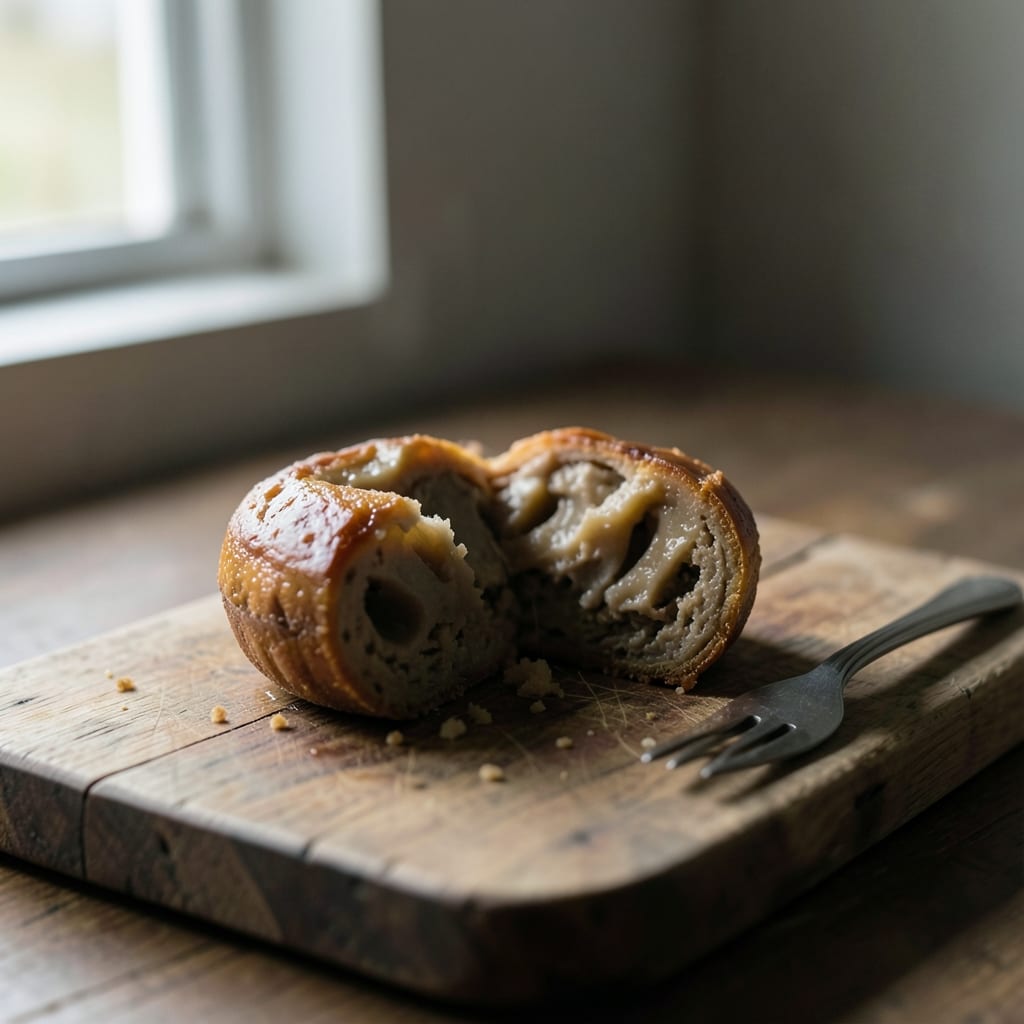
I cook it once, exactly as written. If it’s good, I note what made it work. If it’s not, I tweak one thing—the salt, the heat, the time—and try again. This is where most recipes die. This is also where the good ones are born.
The fix
The second cook is about adjusting. Too thin? Add a roux. Too bland? A splash of vinegar or a pinch of sugar. The third is about trusting the changes. By then, the recipe isn’t just instructions anymore—it’s a conversation between the page and the pot.
What we will not do
This site won’t pretend every recipe is foolproof. It won’t replace a seasoned cook’s intuition with ‘just add water.’ And it won’t turn cooking into a performance—no staged photos, no over-edited stories. What you get is the real thing: messy, imperfect, and built to work.
Things you will never find here
- Recipes that skip steps because ‘you’ll figure it out.’
- Photos of food that wasn’t actually eaten.
- Claims about ‘easy’ or ‘quick’ without explaining the trade-offs.
- Dishes that require tools or techniques most home cooks don’t own.
Where to start
If you’re new, begin with the ‘Starter Soups’ section—they’re designed to work the first time. If you’re looking for something specific, use the search. If you can’t find what you need, the ‘Missing Recipes’ page lists what’s coming next. No fluff, no detours.
Say hello
I like hearing about the dishes you’ve remade, the mistakes you’ve fixed, or the recipes you still can’t crack. If you’ve got a question or a story, the contact page is where to leave it. No sales pitches, no spam—just real talk about real cooking.
The recipes are grouped by category: Appetizers, Beverages, Breakfast & Brunch, Desserts, Main Courses and Reviews.