
Soups & Stews
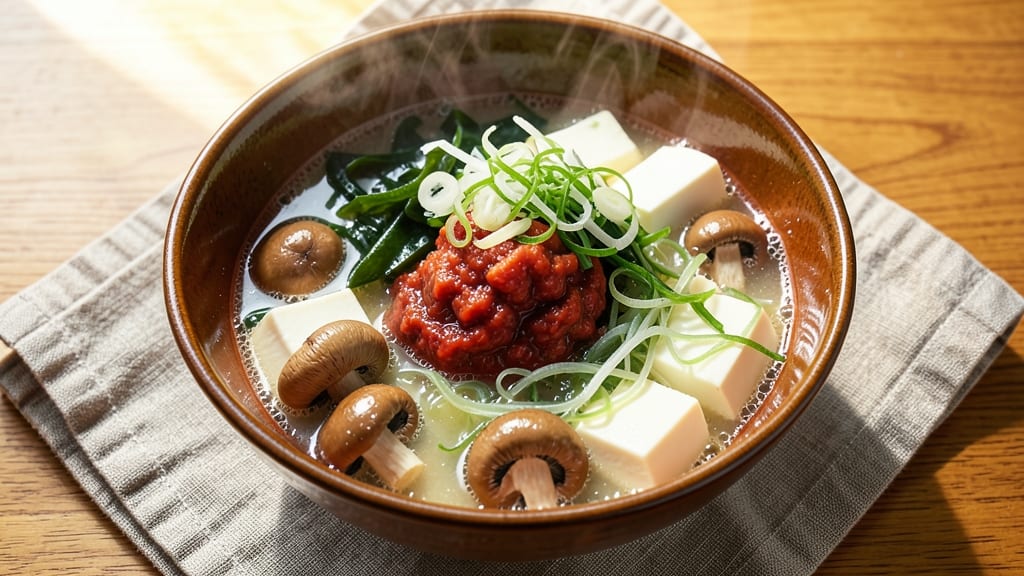
Aka miso soup recipe delivers the comforting essence of Japan in a simple, umami-rich bowl that comes together in just 15 minutes. This traditional dish balances silky broth with tender tofu and delicate dumplings, creating a vegetarian masterpiece that's both nourishing and deeply satisfying.
The secret lies in properly dissolving the miso paste and building a flavorful dashi base—steps that transform basic ingredients into something truly special.
The beauty of this recipe is its simplicity. You'll start with a light kombu broth infused with shiitake mushrooms, then dissolve red miso paste to create that signature deep umami flavor.
Soft silken tofu adds protein and texture, while optional wakame seaweed and green onions contribute fresh, bright notes that balance the richness. What makes this version truly authentic is the attention to traditional preparation methods that preserve the soup's natural harmony.
By the time you finish, you'll have a steaming bowl of soup with a silky, aromatic broth that perfectly complements the tender tofu and delicate dumplings. The miso paste dissolves completely, creating a smooth, velvety texture without any graininess.
This isn't just soup—it's a comforting experience that captures the essence of Japanese home cooking in every spoonful.
The best part? This recipe scales beautifully for any occasion. Make a single serving for a light lunch or double it for a nourishing dinner. The vegetarian nature makes it perfect for any diet, while the traditional preparation ensures authentic flavor.
Let's get started on creating this comforting classic in your own kitchen.
Ingredients for aka miso soup
Traditional Japanese ingredients meet modern convenience for this vegetarian miso masterpiece.
| Ingredient | Amount | Notes |
|---|---|---|
| Dried Kombu Seaweed 🍃 | 1 piece | 4x6 inch sheet, cut into strips |
| Dried Shiitake Mushrooms 🍄 | 4 whole | Rehydrated in hot water |
| Red Miso Paste 🧈 | 3 tbsp | Aka miso, unsweetened |
| Silken Tofu 🧀 | 1 block | 12 oz package, cubed |
| Wakame Seaweed 🍃 | ½ oz | Dried, rehydrated |
| Green Onions 🧅 | 2 whole | Thinly sliced, white and green |
| Mushroom Dumplings 🍜 | 8 pieces | Store-bought or homemade |
| Dashi Granules 💧 | 1 tbsp | Vegetarian dashi concentrate |
| Water 💧 | 4 cups | Filtered preferred |
| Sesame Seeds 🌰 | 1 tsp | Toasted for garnish |
| Diamond Crystal Kosher Salt 🧂 | ¼ tsp | For seasoning broth |
| Rice Vinegar 🍶 | 1 tsp | For brightness |
The kombu seaweed is the foundation of authentic umami flavor—look for 4x6 inch sheets at Asian markets or the international section of Whole Foods. Miyoko's brand is excellent if you can't find traditional kombu. Soak the dried shiitake mushrooms in hot water for 20 minutes before using; discard the soaking liquid to keep the broth clear. The miso paste must be unsweetened—sweetened versions will throw off the balance. For the tofu, Kite Hill or Nasoya brands offer reliable silken texture, but any firm silken tofu works if cubed properly. Wakame should be rehydrated in the same broth as the kombu for maximum flavor infusion.
No dashi granules? Combine 1 tbsp kombu with 4 cups water and simmer 10 minutes for homemade dashi. Short on time? Vegetable bouillon cubes work in a pinch, but dissolve them separately to avoid cloudiness. The mushroom dumplings can be swapped for store-bought gyoza or even steamed wonton wrappers if needed. For extra depth, add 1 tsp grated ginger to the broth. The rice vinegar should be seasoned—Kikkoman is widely available and adds subtle brightness without overpowering the delicate flavors. If you can't find wakame, nori strips make a reasonable substitute, though they'll add a slightly saltier note.
Store leftover broth in the fridge for 3-4 days—it actually improves as flavors meld. Reheat gently on the stove, never microwave, to preserve the silky texture. The tofu and dumplings reheat beautifully but best eaten fresh. For meal prep, portion the soup into glass containers and refrigerate—this prevents absorption of other fridge odors. Freeze broth separately for up to 3 months if you plan to use it for other recipes later. The dumplings can be pre-cooked and frozen for 2 months before adding to the soup.
Why You'll Love This Recipe
- I’ll be real: the dried shiitake and kombu here don’t demand hours of soaking—just a quick rinse and they’re ready. That umami punch from the mushrooms and seaweed builds while you boil water, so you’re basically getting free flavor while you wait.
- No-Soaking Needed: I’ll be real: the dried shiitake and kombu here don’t demand hours of soaking—just a quick rinse and they’re ready. That umami punch from the mushrooms and seaweed builds while you boil water, so you’re basically getting free flavor while you wait.
- Deep Savory Magic: That red miso paste? It’s where this soup gets its soul—rich, slightly sweet, with a warmth that lingers. The wakame adds a briny crunch, and the silken tofu? It’s like a cloud melting into the broth. Honestly, I’ve tasted fancier soups that didn’t hit this hard.
- Weeknight & Meal Prep: This is my go-to when I’m swamped: double the batch, store it in jars, and reheat portions all week. Works cold too—pack it in bento boxes for lunch, or serve it hot with rice for dinner. The tofu stays creamy even after reheating, which is a win.
Step-by-step instructions for aka miso soup
Here's how to craft restaurant-quality miso soup with a velvety broth and perfectly balanced umami.
Prepare the Kombu and Shiitake Foundation
Cut the 1 piece dried kombu seaweed into ¼-inch strips and place them in a clean pot. Add the 4 whole dried shiitake mushrooms and cover with 4 cups water. Bring to a gentle simmer over medium-low heat—you'll see the kombu release its natural glutamate compounds into the water, creating the base for your silky broth.
Simmer uncovered for 5 minutes until you notice the kombu strips begin to soften and the water takes on a faint greenish hue. Remove the kombu immediately after—it should be tender but still hold its shape. Leave the shiitake mushrooms in the broth to rehydrate completely. This step extracts maximum umami without overpowering the delicate flavors.
Build the Broth with Miso and Wakame
Reduce heat to low and stir in the 1 tbsp dashi granules until fully dissolved. Add the 0.5 oz rehydrated wakame seaweed (pre-soaked in hot water for 5 minutes and drained) and the 3 tbsp red miso paste. I like to dissolve the miso paste first in a small amount of the hot broth before adding it to the pot—this prevents clumping and ensures even distribution.
Simmer gently for 3 minutes while stirring occasionally. The broth should develop a rich, reddish color and a deep umami aroma. Avoid boiling—high heat destroys the delicate miso compounds. Taste the broth at this stage; it should be intensely savory but not salty. If needed, adjust with 0.25 tsp Diamond Crystal kosher salt—remember, miso is already salty.
Add Tofu and Dumplings
Gently add the 1 block silken tofu (cubed) and 8 pieces mushroom dumplings to the simmering broth. The silken tofu will soften almost immediately, creating delicate ribbons in the soup. Keep the heat at low to maintain the tofu's delicate texture—it should cook through in 2-3 minutes without breaking apart.
Here's where precision matters: the dumplings should cook through completely but remain tender. If they're store-bought, check the package instructions for cooking times—typically 3-4 minutes in simmering broth is sufficient. The broth should be hot enough to cook them through but not so vigorous that it tears the delicate wrappers.
Finish with Aromatics and Garnish
Remove the pot from heat and stir in the 1 tsp rice vinegar and 1 tsp sesame seeds. The vinegar brightens the rich umami flavors while the sesame seeds add a subtle nutty crunch. Thinly slice the 2 whole green onions and divide them among serving bowls—reserve some for garnish.
Ladle the hot soup into bowls, dividing the tofu and dumplings evenly. Top each serving with the remaining green onion slices and a final sprinkle of sesame seeds. The contrast between the silky broth, tender tofu, and crisp dumplings creates the perfect texture profile. Serve immediately while the broth is steaming hot to appreciate all the layered flavors.
Pro Tips For Making Aka Miso Soup
- SOAK KOMBU FIRST: Toss the dried kombu into cold water 10 minutes before boiling—this softens it and pulls out more umami. I used to add it straight to hot water, and it’d just sit there like a soggy leaf. Let it soak, then remove it before adding miso (yes, even if it’s still slightly firm).
- CUT MUSHROOMS THIN: Slice dried shiitake into paper-thin pieces—no need to rehydrate them first. They’ll soften in the broth, but keeping them whole makes the soup look muddy. Thin slices cook faster and blend better into the broth without turning to mush.
- DILUTE MISO LAST: Stir the miso paste into the hot broth just before serving—never boil it. I learned this the hard way when my soup turned bitter and grainy. Remove the kombu first, then whisk in the miso while the pot’s off the heat (or it’ll scorch).
- SALT THE TOFU: Toss silken tofu cubes in a pinch of salt before adding them to the soup. It crisps the edges slightly and balances the richness of the miso. I skip this sometimes, and the tofu just sits there like a bland sponge—worth the 10 seconds.
Pro cooking tips for perfect results
Miso Paste Mastery
The key to silky miso soup lies in dissolving the paste properly. I always dissolve the 3 tbsp red miso paste in a small amount of hot broth first—about ¼ cup—to create a smooth paste before adding it to the pot.
This prevents clumping and ensures even distribution throughout the broth. Remember, miso is salty—taste before adding extra salt! The paste should blend completely into the broth, creating a velvety texture without any graininess. 🧈
Broth Temperature Control
Never let your miso broth boil—high heat destroys the delicate umami compounds in the miso paste. Maintain a gentle simmer at low heat throughout cooking. The ideal temperature is just below 195°F, where the broth bubbles gently but doesn't vigorously roll.
I use a candy thermometer for precision, but you can also watch for small bubbles breaking the surface without violent activity. This careful temperature control preserves the soup's authentic depth of flavor.
Tofu Texture Secrets
For perfect silken tofu cubes, I recommend using Kite Hill or Nasoya brands—they hold their shape beautifully. Cut the tofu into 1-inch cubes and add them to the broth just before serving. The gentle heat will warm them through without breaking them apart.
Pro tip: If your tofu releases too much liquid, drain it on a paper towel for 5 minutes before adding to the soup to maintain a clean broth.
Dashi Substitution Hacks
If you don't have dashi granules, make your own by simmering 1 tbsp kombu seaweed in 4 cups water for 10 minutes on low heat. For a quick substitute, dissolve 1 vegetable bouillon cube in the broth, but add it separately to avoid cloudiness.
I've also used 1 tbsp soy sauce as an emergency substitute—it adds depth but changes the flavor profile slightly. The key is balance, so adjust seasoning accordingly.
Dumpling Cooking Precision
Store-bought mushroom dumplings need precise timing—they should cook through completely but remain tender. I typically add them 3-4 minutes before serving to ensure they're hot and ready to eat. If using homemade dumplings, check their package instructions for exact cooking times.
The broth should be hot enough to cook them through but not so vigorous that it tears the delicate wrappers. A gentle simmer at low heat is ideal for maintaining their texture.
Flavor Layering Technique
For maximum depth, I build flavors in layers. First, develop the kombu and shiitake base. Then add the miso paste to create umami. Finally, finish with the bright rice vinegar and nutty sesame seeds. This progression creates a harmonious balance where each ingredient's flavor shines without overpowering.
The green onions add a fresh, crisp contrast that cuts through the richness. This layering technique is what makes the soup taste restaurant-quality at home. ✨
Nutrition facts
Frequently asked questions
What makes red miso soup different from white miso soup?
The color comes from the miso paste itself—red miso (aka miso) is fermented longer, creating a deeper umami flavor and richer color. White miso is milder and sweeter, while red miso has a bold, savory punch perfect for this recipe. The fermentation process also gives red miso its signature grainy texture when dissolved properly.
Can I make this soup without kombu or dashi?
Yes, but the flavor will be less authentic. For kombu, use 1 tbsp soy sauce as a substitute, though it won't replicate the umami depth. For dashi, dissolve 1 vegetable bouillon cube separately to avoid cloudiness. The soup will still be delicious, but the traditional depth of flavor will be slightly diminished.
How do I prevent the miso paste from clumping?
Always dissolve the miso paste in a small amount of hot broth first—about ¼ cup—before adding it to the pot. Stir vigorously until completely smooth, then pour into the main broth. Never add miso directly to cold water or it will form clumps. The key is patience and gentle heat—simmer at low to preserve the delicate compounds.
What's the best way to reheat leftover miso soup?
Reheat gently on the stove over low heat—never microwave—to maintain the silky texture. Add 1-2 tbsp water if the broth thickens too much. For best results, reheat just until steaming, then let sit for 2 minutes before serving. The tofu and dumplings reheat beautifully but are best eaten fresh for optimal texture.
Can I add meat or seafood to this vegetarian recipe?
For a non-vegetarian version, add 4 oz sliced shrimp or 2 oz thinly sliced chicken breast during the final 3 minutes of cooking. For seafood lovers, try ½ lb scallops or 4 oz sliced mackerel.