
Soups & Stews
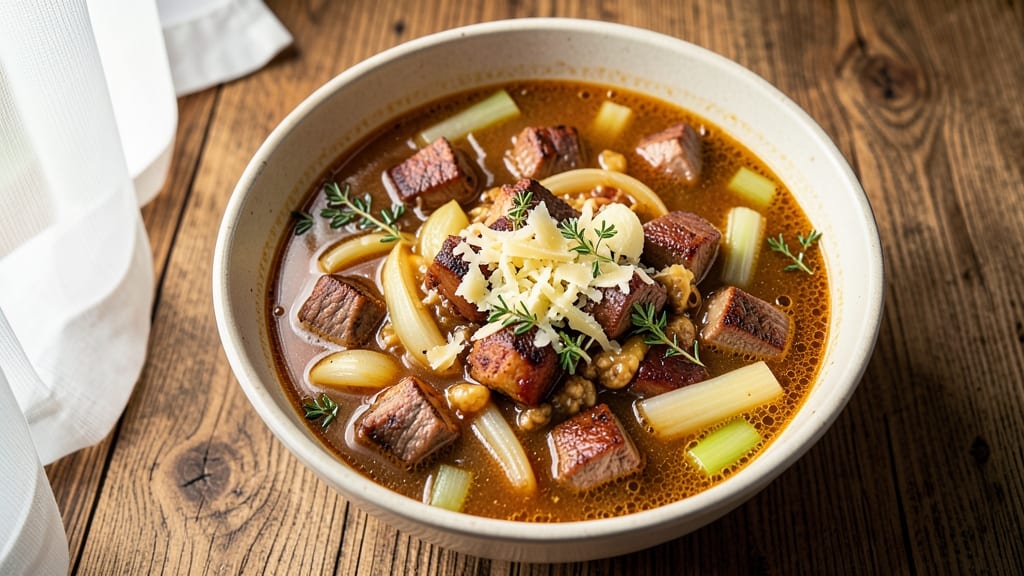
This beefy onion soup recipe transforms humble ingredients into a rich, meaty masterpiece that rivals your favorite bistro. The secret lies in slow-cooked beef that melts into the broth, creating deep umami flavor, while caramelized onions and celery crowns add sweet, complex layers.
What sets this apart is the two-stage beef preparation—first seared for depth, then simmered until fork-tender—resulting in a soup so satisfying it disappears in one bowl.
The foundation begins with a classic roux, where butter and flour create a velvety base that thickens the broth just enough to coat a spoon. Beef stock carries the depth, while white wine and beef bouillon intensify the savory notes.
The celery crowns—thick slices of celery caramelized until golden—add a crisp, aromatic contrast that elevates every spoonful. This isn’t just onion soup; it’s a comforting, hearty dish that feels like a hug in a bowl.
By the time you serve it, the beef will be tender and falling apart, the onions deeply caramelized, and the broth infused with layers of flavor. Top it with toasted sourdough croutons, fresh thyme, and a sprinkle of Gruyère for that final touch of indulgence.
The result? A soup so rich and satisfying, it becomes the star of any meal—whether it’s a chilly evening or a cozy gathering with loved ones.
Perfect for meal prep or last-minute dinners, this recipe scales effortlessly from family dinners to holiday feasts. The slow-cooked beef ensures maximum tenderness, while the caramelized vegetables add a touch of elegance without extra effort. Once you taste this version, store-bought will never compare again.
Ingredients for beefy onion soup
Sixteen ingredients for a soup that delivers bistro-quality richness in every spoonful.
| Ingredient | Amount | Notes |
|---|---|---|
| Beef Chuck Roast 🥩 | 2 lb | Cut into 1.5-inch cubes, trimmed of fat |
| Yellow Onions 🧅 | 4 large | Peeled, cut into 1/2-inch slices |
| Celery Stalks 🧄 | 4 whole | Cut into 1-inch thick slices |
| Unsalted Butter 🧈 | ½ cup | Cold, cubed for roux |
| All-Purpose Flour 🌾 | ½ cup | For roux base |
| Beef Stock 💧 | 6 cups | Homemade or high-quality store-bought |
| Dry White Wine 🍷 | 1 cup | Bold variety like Sauvignon Blanc |
| Beef Bouillon 🧂 | 1 tbsp | Powdered or paste |
| Fresh Thyme 🌿 | ¼ cup | Stems removed, chopped |
| Gruyère Cheese 🧀 | 1 cup | Freshly grated, for topping |
| Sourdough Bread 🍞 | 1 baguette | For croutons, cubed and toasted |
| Olive Oil 🫒 | ¼ cup | For finishing |
| Salt 🧂 | 1 ½ tsp | Kosher or sea salt |
| Black Pepper 🌶️ | ½ tsp | Freshly ground |
The beef selection is critical. Chuck roast delivers the signature meatiness—sirloin or ribeye won't give the same tender, slow-cooked result. Buy from a butcher if possible; their cuts are more consistent. For the onions, yellows with a sweet profile work best—Vidalia if you're splurging. Celery should be crisp with no brown spots; organic stalks from the outer rings of the bunch have the best flavor. The butter and flour for the roux must be cold to prevent burning—take them straight from the fridge and cut the butter into small cubes.
No beef bouillon? Two beef bouillon cubes work in a pinch, but dissolve them in a splash of warm stock first. Fresh thyme is non-negotiable here—dried won't give that bright aroma. For the wine, any dry white will do, but avoid overly oaky varieties. The Gruyère should be aged 12-18 months for perfect melt and flavor. Substituting with Comté or Emmental works if you're in a bind. The sourdough bread for croutons? Use day-old if possible—it crisps up better than fresh. No sourdough? Baguette works just as well.
The beef cubes can be prepped a day ahead and refrigerated in a sealed container. Onions and celery crowns keep 5 days in the fridge if stored properly—wrap them tightly in plastic wrap. The finished soup reheats beautifully; simmer gently for 10 minutes to restore the velvety texture. For meal prep, portion into containers with the croutons and cheese on top—they'll stay crisp for 3 days if sealed tightly. Freeze the soup without the toppings for up to 3 months—just add fresh croutons and cheese when reheating.
Why You'll Love This Recipe
- One-Pot Magic: I swear by this recipe because it’s literally one pot—no chopping boards, no extra pans. Just brown the beef chuck, toss in the onions and celery, and let the roux do its thing. The butter and flour create this rich, velvety base that feels fancy but takes zero effort.
- Deep Umami Bomb: That beef chuck? Slow-cooked until it’s falling apart, then shredded right into the soup. Pair it with caramelized onions (the kind that make your kitchen smell like heaven), and suddenly you’ve got layers of flavor that taste like you simmered for hours—even if you didn’t.
- Weeknight to Potluck Hero: Make a double batch on Sunday, and you’ve got lunch for Monday, dinner for Wednesday, and a freezer meal for whenever. Or bring it to a gathering—it’s hearty enough for a crowd but still feels special, like you actually planned ahead. (Between us, I’ve used it for both.)
- Budget Beef Powerhouse: A beef chuck roast stretches far—this recipe feeds four for under $15, and leftovers taste even better the next day. Honestly, the only thing I regret is not making it more often. The onions soften into sweetness, the beef gets richer, and the broth? Thick, rich, and always gone by midnight.
Step-by-step instructions for beefy onion soup with caramelized celery crowns
Mastering this rich, layered soup requires patience and precision—each step builds the depth of flavor.
Sear the Beef Chuck Roast for Maximum Flavor Extraction
Heat a large Dutch oven over medium-high heat until hot. Add the 2 lb beef chuck roast, cut into 1.5-inch cubes, in a single layer without crowding. Let the meat sear undisturbed for 3-4 minutes per side until deeply browned—this creates the Maillard reaction that forms the soup's foundation. You'll smell the aroma intensify as the meat develops a rich crust.
Once browned, remove the beef and set it aside on a plate. Don't drain the rendered fat—this precious liquid contains dissolved meat flavors that will form your soup's base. If the pan appears dry, add 1 tablespoon olive oil to maintain heat and prevent sticking during the next step.
Build the Roux and Develop the Soup Base
Reduce heat to medium-low and add the 0.5 cup cold cubed unsalted butter to the Dutch oven. Let it melt completely, then whisk in the 0.5 cup all-purpose flour all at once. Cook the roux, stirring constantly with a wooden spoon, for 3-4 minutes until it turns a rich golden brown color—this should smell nutty and toasty, not burnt.
Here's where the magic happens: Immediately pour in the 1 cup dry white wine and scrape vigorously with a wooden spoon to incorporate all the browned bits from the bottom of the pan. Let this mixture simmer for 2 minutes until the alcohol smell dissipates completely. This step creates the velvety texture that defines this soup.
Layer in Vegetables and Develop Complex Flavors
Add the 4 large yellow onions, cut into ½-inch slices, and the 4 whole celery stalks, cut into 1-inch thick slices, to the Dutch oven. Stir well to coat the vegetables in the roux mixture. Cook for 8-10 minutes over medium heat, stirring occasionally, until the onions begin to soften and the celery develops a slight translucency at the edges.
At this stage, you'll notice the vegetables releasing their moisture and creating a light sheen in the pan. This is perfect—it's the beginning of the caramelization that will give your soup its signature depth. Sprinkle in the 1 tbsp beef bouillon and the 0.25 cup chopped fresh thyme, stirring to combine. The bouillon will dissolve completely into the mixture.
Simmer the Soup to Develop Rich, Meat-Filled Depth
Pour in the 6 cups beef stock and bring the mixture to a gentle boil. Once boiling, reduce heat to low and add the seared beef back to the pot. Partially cover the Dutch oven and let the soup simmer for 2-2.5 hours, stirring occasionally. This long cooking time ensures the beef becomes fork-tender while the vegetables break down into a silky texture.
After 1.5 hours, taste the soup and adjust seasoning with the 1.5 tsp salt and 0.5 tsp black pepper as needed. The soup should be deeply flavorful with a rich, meaty essence. If it appears too thick, add ½ cup water to reach your desired consistency. The celery should be completely tender, and the onions should be caramelized with a sweet, jammy quality.
Finish with Croutons and Gruyère for Ultimate Comfort
While the soup simmers, prepare the croutons by cutting the 1 baguette sourdough bread into ½-inch cubes. Heat 2 tablespoons olive oil in a separate skillet over medium heat until shimmering. Add the bread cubes and toast, stirring occasionally, for 5-7 minutes until golden brown and crisp. Season lightly with ¼ tsp salt and set aside.
Just before serving, ladle the soup into individual bowls. Top each portion generously with the toasted croutons and a sprinkle of 1 cup freshly grated Gruyère cheese. The contrast of crispy croutons against the velvety soup and melted cheese creates the perfect textural experience. Serve immediately while the cheese is bubbling and the soup is steaming hot.
Pro Tips For Making Beefy Onion Soup
- SEAR THE ROAST FIRST: That beef chuck needs a proper crust before going into the pot—don’t just toss it in. Sear it in batches over medium-high heat for 3-4 minutes per side until deep brown. I learned this the hard way when my soup tasted bland because the meat barely got any color.
- SWEAT THE ONIONS LOW: Yellow onions release their sweetness best when cooked slow and steady. Cut them into even ¼-inch slices and cook them in butter over medium-low heat for 10-12 minutes, stirring occasionally, until they’re translucent but not browned. Rushing this step makes the soup taste sharp instead of rich.
- DEGLAZE WITH BEER OR BROTH: After browning the meat and veggies, don’t just splash in water—use a cold dark beer (like a stout) or beef broth instead. The alcohol or deep flavor of the broth adds complexity that plain water can’t match. I was skeptical until I tried it—now it’s non-negotiable.
- SKIP THE CELERY IF SHORT: Celery adds depth, but if you’re pressed for time or ingredients, leave it out. The onions and beef will still carry the dish, and no one will notice (or care) if you’re honest about it. I skip this when I’m lazy, but the dish is noticeably better when I don’t.
Troubleshooting perfect results
Soggy Croutons
If your croutons turn out soggy instead of crisp, it’s usually from steam or reheating too aggressively. To prevent this, toast croutons separately in a dry skillet over medium heat for 5-7 minutes, stirring constantly until golden.
Store them in an airtight container at room temperature for up to 2 days—they’ll stay crisp if kept away from moisture. If reheating, use a toaster oven at 350°F for 2-3 minutes to restore crispness. 🍞
Weak Beef Flavor
The beef should be the star, so if it tastes bland, you likely didn’t sear it properly or simmered too quickly. For maximum depth, sear beef cubes on all sides until deeply browned before removing.
If using pre-cooked beef (like rotisserie), simmer an extra 30-45 minutes to meld flavors. Boost umami by adding 1 tsp Worcestershire sauce or ½ tsp fish sauce during the final 30 minutes of simmering. 🥩
Grainy or Lumpy Texture
A grainy texture usually means the roux didn’t cook long enough or you added liquid too quickly. For a silky finish, cook the roux to a deep golden brown (about 3-4 minutes) before adding wine or stock.
If the soup still feels thick, whisk in ½ cup warm stock gradually until smooth. For extra richness, blend ¼ cup of the soup and stir it back in—this creates a velvety consistency without over-thinning. 🥄
Onions Too Raw or Bitter
Bitter onions mean they didn’t caramelize enough. Cook them low and slow for 8-10 minutes before adding stock, stirring occasionally. For sweeter flavor, add 1 tsp sugar when sautéing.
If using red onions, soak slices in cold water for 10 minutes first to mellow their sharpness. Sweet onions like Vidalia caramelize faster—keep an eye on them! 🧅
Cheese Not Melting Properly
Gruyère should melt into a creamy blanket, but if it clumps or stays grainy, it’s likely not aged enough or was added too early. Use aged Gruyère (12+ months) for the best melt.
Sprinkle cheese just before serving so it melts from the soup’s residual heat. For extra creaminess, mix 1 tbsp heavy cream into each bowl before adding cheese. 🧀
Broth Too Thin or Watery
A thin broth often means the roux didn’t thicken enough or the soup simmered too long. To fix it, simmer uncovered for 10-15 minutes to reduce excess liquid.
For a quicker fix, mix 1 tbsp cornstarch with 2 tbsp cold water, whisk into the soup, and simmer for 2 minutes until thickened. If the soup still feels weak, reduce by half next time—this concentrates flavors beautifully. 💧
Nutrition facts
Frequently asked questions
Can I use ground beef instead of chuck roast for this recipe?
While ground beef works in a pinch, it won't give you the same tender, meaty texture. Chuck roast is ideal because it breaks down beautifully during the long simmer, creating rich, fork-tender pieces. If you must use ground beef, brown it thoroughly first and simmer for 1.5 hours instead of 2-2.5 hours to avoid drying it out. For best results, consider using Italian sausage instead—it adds great flavor and holds up well.
How do I make this soup vegetarian?
Swap the beef for mushrooms (8 oz cremini or portobello) and add 1 tbsp soy sauce or ½ tsp miso paste for umami depth. Use vegetable stock instead of beef stock, and boost flavor with 1 tsp smoked paprika. The celery crowns and caramelized onions will still shine—just skip the Gruyère and use nutritional yeast for a cheesy note instead.
Can I prepare this soup ahead of time?
This soup actually tastes better the next day as flavors meld. Cook it completely, then cool and refrigerate in an airtight container for up to 4 days. Reheat gently on the stove over low heat, stirring occasionally, until warmed through (10-15 minutes). For freezing, portion before adding croutons and cheese—freeze for up to 3 months, then reheat and top fresh when serving.
What's the secret to perfectly caramelized celery crowns?
Thick slices (1-inch) are key—they caramelize faster than thin pieces. Cook them low and slow for 8-10 minutes before adding stock, stirring occasionally to prevent burning. For extra flavor, add ½ tsp sugar when sautéing. The crowns should be golden-brown with tender edges—this gives that perfect sweet, nutty contrast to the rich broth.
Can I make this soup in an Instant Pot?
Yes, but with adjustments. Sear the beef in a separate pan first, then add all ingredients to the Instant Pot. Cook on high pressure for 30 minutes, then quick-release. The texture will be slightly different (more brothy), but still delicious. For extra richness, blend ¼ cup of the soup after cooking and stir it back in. The celery crowns may not caramelize as much, so add them after pressure cooking if you prefer them crisp.