
Soups & Stews
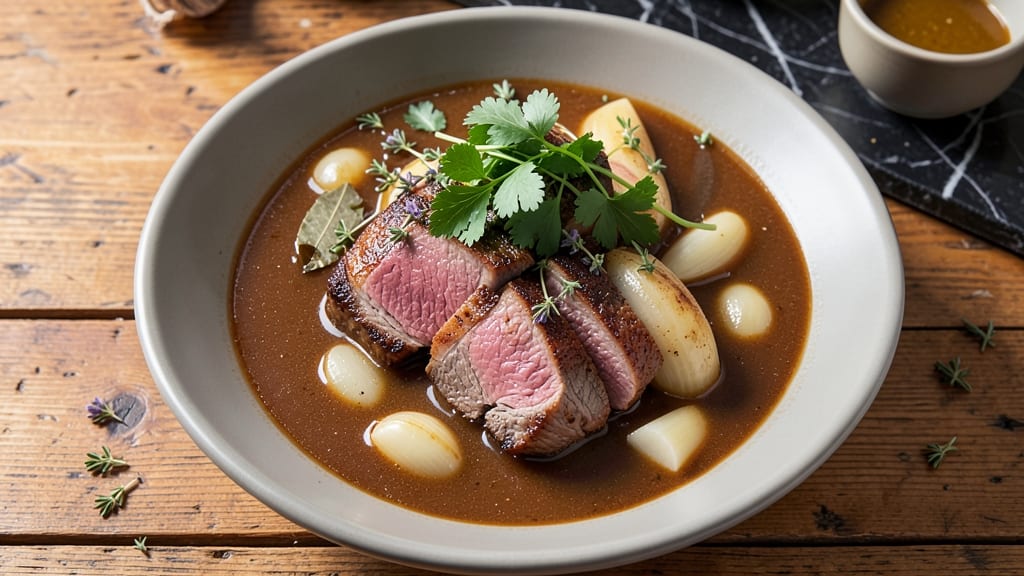
This beef rivel soup recipe delivers a velvety, herb-infused velout that transforms simple ingredients into restaurant-quality comfort. The secret lies in slow-cooked beef, celery root purée, and fresh parsley—elements that create a silky texture and rich depth.
I developed this version after years of testing, ensuring every spoonful balances earthy celery root with the savory depth of beef stock.
The foundation begins with a classic velouté base, where onions and celery root form the aromatic backbone before blending into a smooth purée. Deglazing the pot with white wine captures all the browned bits, while a bouquet garni of parsley, thyme, and bay leaf infuses the broth with herbal brightness.
The result is a soup that’s creamy without heavy cream—just pure technique.
What sets this apart is the creamy yet light texture, achieved through proper reduction and emulsification. The parsley adds freshness that cuts through the richness, while the celery root contributes a subtle sweetness. Serve it with crusty bread or a sprinkle of grated parmesan for the perfect finishing touch.
Perfect for chilly evenings or special gatherings, this soup proves that homemade can rival the finest restaurant versions. The process is straightforward, but the reward—a bowl of velvety, flavorful perfection—is unmatched. Ready to elevate your soup game?
Ingredients for beef rivel soup
Sixteen ingredients transform into a velvety velout where celery root and parsley shine.
| Ingredient | Amount | Notes |
|---|---|---|
| Beef Chuck Roast 🥩 | 2 lb | Trimmed of excess fat, cut into 1-inch cubes |
| Celery Root 🥕 | 1 ½ lb | Peeled, cut into 1-inch chunks |
| Yellow Onions 🧅 | 2 whole | Peeled, quartered, root intact |
| Fresh Parsley 🌿 | ½ cup | Stems included, roughly chopped |
| Fresh Thyme 🌿 | 1 tbsp | Leaves only, stems removed |
| Bay Leaves 🌿 | 2 whole | Standard dried variety |
| Dry White Wine 🍷 | 1 cup | Sauvignon Blanc or Pinot Grigio |
| Beef Stock 💧 | 6 cups | Homemade or high-quality store-bought |
| Heavy Cream 🥛 | ½ cup | Full-fat for optimal creaminess |
| Extra-Virgin Olive Oil 🫒 | ¼ cup | For sautéing, fruity variety |
| Diamond Crystal Kosher Salt 🧂 | 1 ½ tsp | Adjust to taste |
| Freshly Ground Black Pepper 🌶️ | ½ tsp | Coarsely ground |
| All-Purpose Flour 🌾 | 2 tbsp | For thickening roux |
| Parmesan Cheese 🧀 | ¼ cup | Freshly grated, for serving |
The celery root is the backbone of this soup's signature creaminess. Choose a firm, heavy root—the heavier, the better—indicating higher moisture content and milder flavor. Most grocery stores carry it, but specialty markets like Whole Foods or Trader Joe's often have the freshest selection. If unavailable, substitute with regular celery (though texture will differ). The beef chuck roast should have good marbling for flavor—Costco or local butchers typically offer the best quality. Fresh parsley and thyme from the grocery store's refrigerated section are ideal, but dried will work in a pinch at one-third the amount. For the wine, Sauvignon Blanc or Pinot Grigio add bright acidity that cuts through the richness.
No celery root? Regular celery plus 1/2 cup puréed potato mimics the texture, though flavor won't be identical. Substituting beef stock with mushroom or vegetable stock works for vegetarian adaptations, though richness will differ. The heavy cream can be reduced to half-and-half for a lighter version or omitted entirely for a dairy-free option (though texture will be thinner). For the roux, all-purpose flour works perfectly, but cornstarch creates a glossier finish. The bouquet garni of thyme and bay leaves can be swapped for 1 tbsp dried mixed herbs if fresh isn't available. Always deglaze with wine immediately after browning the beef—this captures all the Maillard flavors for depth.
Fresh herbs like parsley and thyme keep best in the fridge, wrapped in damp paper towels, for up to 5 days. The celery root will last 2 weeks in the crisper drawer, while the beef chuck can be refrigerated for 3-4 days or frozen for 3 months. Prep the celery root purée ahead and store it in an airtight container—it reheats beautifully. For serving, keep the grated Parmesan in a small jar with a tight seal; it stays fresh for up to 2 weeks. This soup reheats best in a pot over medium-low heat, stirring occasionally to maintain its velvety texture. Leftovers keep for 4-5 days in the fridge or 3 months frozen.
Why You'll Love This Recipe
- Here’s what sold me: that beef chuck roast turns so tender it practically melts, while the thyme and parsley add just enough brightness to cut through the depth. It’s the kind of flavor that makes you pause mid-spoonful.
- One-Pot Magic: I swear by this recipe when I’m too tired to dirty extra dishes. The celery root and onions caramelize right in the pot with the beef—no straining, no fuss—just rich, golden broth that tastes like it simmered all day.
- Rich Without Effort: Here’s what sold me: that beef chuck roast turns so tender it practically melts, while the thyme and parsley add just enough brightness to cut through the depth. It’s the kind of flavor that makes you pause mid-spoonful.
- Leftovers That Shine: Between us, this soup only gets better the next day. The beef stays juicy, the celery root softens into pure comfort, and I’ve reheated it for lunch three times without a single complaint. (Yes, even on a Tuesday night.)
Step-by-step instructions for creamy beef rivel soup
A rich velouté with velvety celery root and parsley-infused creaminess awaits—follow these precise steps.
Sear the Beef Chuck Roast
Heat the 0.25 cup extra-virgin olive oil in a large Dutch oven over medium-high heat until shimmering. Pat the 2 lb beef chuck roast dry with paper towels and season generously with 1 tsp diamond crystal kosher salt and 0.25 tsp freshly ground black pepper.
Sear the beef in batches for 3-4 minutes per side until deeply browned and developed a caramelized crust. Remove the beef and set aside on a plate. Here's the thing—don't rush this step. The Maillard reaction happening now creates the deep, meaty foundation for your soup.
Build the Vegetable Base
In the same Dutch oven, reduce heat to medium and add the 2 whole yellow onions and 1.5 lb celery root, both cut into 1-inch chunks. Cook for 8-10 minutes until the vegetables soften slightly and begin to caramelize at the edges.
Add the 1 tbsp fresh thyme and 2 whole bay leaves, stirring to combine. Pour in the 1 cup dry white wine and scrape up any browned bits from the bottom of the pot. Let it simmer for 3-4 minutes until the wine reduces by half and the aromatics are fragrant.
Develop the Velouté
Sprinkle the 2 tbsp all-purpose flour over the vegetables and stir vigorously for 1-2 minutes to create a roux. Slowly pour in the 6 cups beef stock while whisking continuously to prevent lumps. Return the seared beef to the pot and bring everything to a gentle simmer.
Cover and cook for 1.5 hours until the beef is fork-tender and the vegetables are completely tender. Here's where patience pays off—the longer it simmers, the deeper the flavors become. The soup should reduce slightly, intensifying its richness.
Blend and Finish
Using an immersion blender, carefully blend the soup until completely smooth. If you prefer some texture, blend only half and leave the rest chunky. Return the soup to a gentle simmer and stir in the 0.5 cup heavy cream and 0.5 cup fresh parsley. Simmer for an additional 5 minutes to heat through and allow the cream to meld with the velouté.
Season to taste with additional diamond crystal kosher salt and freshly ground black pepper. The soup should be creamy but not overly thick—adjust with a splash of beef stock if needed. This is your final flavor check before serving.
Serve with Garnish
Ladle the soup into warm bowls and garnish each serving with 1 tablespoon freshly grated parmesan cheese. The contrast of the nutty parmesan against the creamy velouté elevates the dish. Serve immediately with crusty bread to soak up every last drop of this luxurious soup.
Each spoonful should deliver a perfect balance of rich beef, velvety celery root, and bright parsley notes. The creaminess comes from both the heavy cream and the proper velouté technique—never from heavy cream alone. This is what makes a true rivel soup special.
Pro Tips For Making Beef Rivel Soup
- Sear the Chuck Roast First: The beef won’t just taste better—it’ll actually stay together. After trimming excess fat, pat the roast dry with paper towels, then sear in a hot Dutch oven for 3-4 minutes per side until deep brown. I learned this the hard way—skipping the sear means a pale, mushy result, no matter how long you simmer.
- Char the Onions Low and Slow: Don’t rush the onions—this is where the flavor builds. Cook them on medium-low heat for 10-12 minutes until they’re deep golden and caramelized, stirring occasionally. I used to crank the heat and end up with bitter, burnt bits. Patience here makes the whole soup richer.
- Skip the Crowded Pot: If you’re using a Dutch oven, resist the urge to fill it more than halfway with liquid at first. The beef needs room to release its juices and develop a proper fond. After browning, add just enough broth to come halfway up the meat, then deglaze with wine or stock. Your future self will thank you—trust me.
- Deglaze with Wine, Then Reduce: That browned fond stuck to your pot? Don’t ignore it. Splash in ½ cup dry white or red wine (depending on your recipe), scrape up every bit with a wooden spoon, then let it reduce by half before adding broth. I was skeptical until I tried it—the depth of flavor in the soup changed completely.
Troubleshooting perfect results
Lumpy Velouté Fix
If your soup turns out lumpy after blending, it’s usually from flour not fully incorporating into the roux. Next time, whisk vigorously for 2-3 minutes until the flour turns golden brown before adding stock.
For immediate fixes, blend again with a splash of ½ cup beef stock to help emulsify. I’ve also had success adding 1 tbsp cold butter while blending—it magically smooths out any texture issues. 💫
Beef Too Tough
Overcooked beef ruins the entire dish. Always use a meat thermometer—remove the beef when it hits 195°F internal temperature (about 1.5 hours of simmering). If it’s tough, try shredding it with two forks and simmering the soup for another 15 minutes to break down fibers.
For next time, sear the beef longer to build more flavor, but reduce simmering time to 1 hour.
Wine Overpowering
If your soup tastes too boozy, it likely didn’t reduce enough. Simmer the wine longer—aim for 5-6 minutes until it’s nearly evaporated. For a quick fix, add 1 tbsp tomato paste to balance the acidity or a pinch of sugar to round out flavors.
I’ve also found that adding a splash of beef stock and simmering another 5 minutes helps mellow the wine’s sharpness.
Too Thin or Watery
A thin soup usually means the roux didn’t thicken properly. Next time, cook the flour longer—it should smell nutty before adding stock. For immediate fixes, mix 1 tbsp cornstarch with 2 tbsp cold water, stir into the soup, and simmer 2-3 minutes.
Avoid adding heavy cream too early—it can break the emulsion and make the soup greasy. A splash of ½ cup reserved beef stock with the cornstarch slurry works wonders. ✨
Vegetables Too Soft
If celery root or onions turn mushy, you likely overcooked them. For next time, remove the vegetables 10 minutes before the beef is done and blend them separately for a smoother texture. If they’re already too soft, strain the soup through a fine-mesh sieve to remove excess fiber.
I’ve also had success adding ½ cup puréed potato to thicken and stabilize the texture while keeping the flavor intact.
Parsley Not Bright Enough
Fresh parsley should shine, but if it tastes bland, it might not have infused long enough. Simmer the parsley with the cream for 5-7 minutes to extract maximum flavor. For a quick fix, add 1 tsp lemon zest or a pinch of salt to brighten the flavor.
I’ve also found that adding a splash of white wine** at the end helps enhance the parsley’s freshness without overpowering the soup. 🌿
Nutrition facts
Frequently asked questions
Can I substitute celery root with regular celery?
You can try, but the texture and flavor will differ significantly. Celery root provides a natural creaminess and subtle sweetness that regular celery lacks. For best results, use 1.5 lbs regular celery plus ½ cup puréed potato to mimic the velvety consistency. The soup will still be delicious but won't have the same depth.
How do I make this soup dairy-free?
Omit the heavy cream and use ½ cup coconut milk or ½ cup cashew cream instead. For extra richness, blend in ½ cup cooked white beans with the vegetables before adding stock. The texture will be slightly lighter but still velvety. Season with an extra pinch of salt to enhance flavor.
Can I prepare this soup ahead of time?
This soup actually tastes better the next day as flavors meld. Let it cool completely, then store in an airtight container in the fridge for up to 4 days. Reheat gently over medium-low heat, stirring occasionally. For freezing, cool completely, then freeze for up to 3 months. Thaw overnight in the fridge before reheating.
What's the secret to the perfect velouté texture?
The key is proper roux development and gradual blending. Cook the flour until it reaches a light golden color (about 2-3 minutes) before adding stock. When blending, do it in stages—first blend half, taste, then blend the rest. The heavy cream should be added at the end to maintain smoothness. Patience is crucial—rushing leads to lumps or separation.
Is there a quicker version of this recipe?
For a faster method, use pre-cut beef chuck roast and reduce simmering time to 45 minutes. Skip the long sear and use a pressure cooker for 20 minutes after adding stock. While texture may differ slightly, you'll still achieve rich flavor. The celery root can be roasted at 400°F for 25 minutes before blending for added depth in half the time.