
Soups & Stews
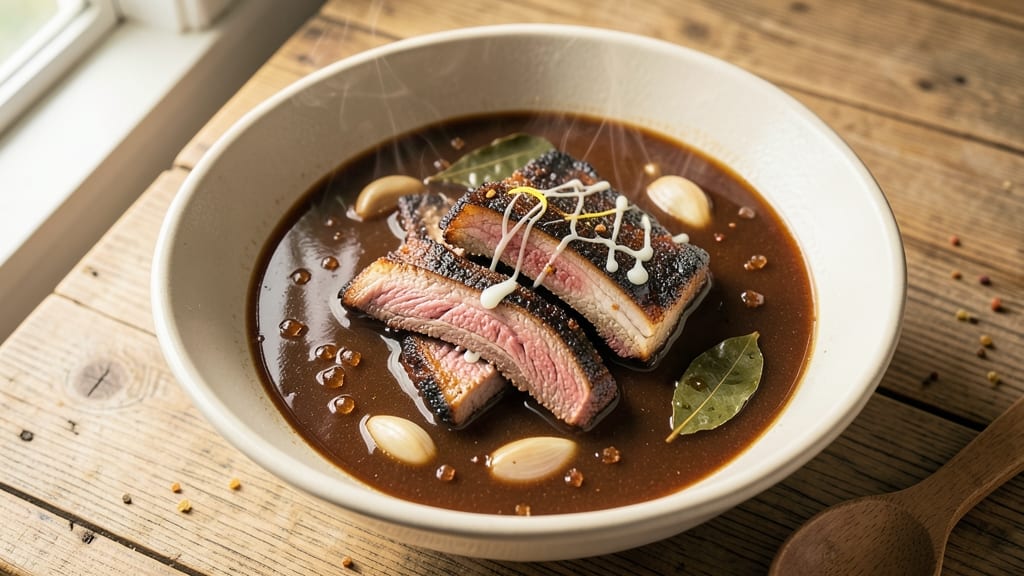
This Filipino-style beef ribs soup delivers the bold, tangy flavors of adobo in every spoonful, with ribs so tender they melt like butter. 🔥 The secret lies in marinating the ribs overnight with soy sauce, vinegar, and garlic—a technique that transforms tough meat into melt-in-your-mouth perfection.
What sets this recipe apart is the rich, savory broth that simmers for hours, absorbing all the deep umami flavors from the ribs and aromatics.
The process starts with tenderizing the ribs using a simple yet effective marinade of soy sauce, vinegar, and garlic, which not only breaks down the meat but also infuses it with layers of flavor.
As the ribs simmer, the broth becomes a fragrant, hearty base that’s both comforting and deeply satisfying. The result is a soup that’s perfect for family gatherings or cozy weeknight dinners, where every bite is a taste of home.
What you’ll end up with is a steaming bowl of soup where the ribs are so tender they fall apart at the slightest touch, all swimming in a glossy, aromatic broth. The combination of tangy, sweet, and savory notes creates a balance that’s uniquely Filipino, yet universally loved.
This isn’t just soup—it’s a flavor-packed experience that’s sure to become a staple in your recipe collection.
Serve it with steamed rice to soak up every last drop of that flavorful broth, or pair it with crusty bread for a hearty meal. The best part? This recipe scales effortlessly, so you can easily double or triple it for larger crowds. Let’s get cooking!
Ingredients for beef ribs soup recipe filipino style
Six core ingredients transform tough ribs into melt-in-your-mouth perfection with Filipino adobo flavors.
| Ingredient | Amount | Notes |
|---|---|---|
| Beef Ribs 🥩 | 3 lb | Bone-in, cut into 2-inch pieces |
| Soy Sauce 🍶 | ½ cup | High-quality, preferably Asian-style |
| White Vinegar 💧 | ¼ cup | White or cane vinegar |
| Garlic Cloves 🧄 | 8 cloves | Minced, fresh preferred |
| Brown Sugar 🍚 | ¼ cup | Light or dark, packed |
| Bay Leaves 🍃 | 2 whole | Dried, for infusion |
| Black Peppercorns 🌶️ | 1 tsp | Crushed, for depth |
| Ground Black Pepper 🌶️ | 1 tsp | Freshly ground preferred |
| Potatoes 🥔 | 1 ½ lb | Russet or Yukon gold, peeled |
| Carrots 🥕 | 1 lb | Medium-sized, peeled and sliced |
| Onions 🧅 | 2 whole | Yellow or red, quartered |
| Water 💧 | 8 cups | Enough for simmering broth |
| Salt 🧂 | 1 ½ tsp | Adjust to taste, kosher preferred |
| Fresh Green Onions 🧅 | ¼ cup | Chopped, for garnish |
The beef ribs are the star, so look for well-marbled, bone-in cuts—they add flavor to the broth. Filipino markets or Asian grocery stores often carry the best quality, but your local butcher can help too. For the soy sauce, Lee Kum Kee or Kikkoman are reliable choices. The vinegar should be white or cane—avoid apple cider vinegar, which has a different profile. Brown sugar adds depth, but if you prefer less sweetness, reduce it to 2 tablespoons. Fresh garlic is non-negotiable here; pre-minced garlic lacks the punch this dish needs.
No soy sauce? Coconut aminos or tamari work in a pinch, though the flavor will differ slightly. Short on vinegar? Lemon juice at half the amount gets you close. The potatoes and carrots can be swapped for sweet potatoes or parsnips if you prefer. For extra richness, add 1 cup coconut milk at the end of cooking. The broth should be rich and aromatic—if it looks too thin, reduce it by 20-30 minutes uncovered before adding the vegetables. Fresh bay leaves are ideal, but dried are fine if that's what you have.
This soup tastes even better the next day as flavors meld. Store leftovers in the fridge for up to 4 days, or freeze for 3 months. For meal prep, portion into containers with broth and ribs—just reheat gently on the stove. The broth thickens as it cools, so add a splash of water when reheating. Garnish with fresh green onions right before serving to keep the dish vibrant. If making ahead, skip the garnish until serving to preserve freshness.
Why You'll Love This Recipe
- No Chopping Needed: I swear by this—just cut the ribs into chunks, toss them in a pot, and let the garlic and vinegar do the work. No dicing, no mincing, no fuss.
- Sweet-Savory Magic: That brown sugar and soy sauce combo? It’s where this soup gets its soul—deep umami with just enough sweetness to make it irresistible. The vinegar cuts through the richness like a perfect balance.
- Leftovers That Shine: This soup only gets better the next day. I make a double batch on Sundays, and by Wednesday, it’s still the star of lunch—richer, flavors melded, and just as satisfying. (Yes, even on a Tuesday night.)
- Budget-Friendly Feast: A single pack of beef ribs stretches across three meals for my family, and the ingredients? Pantry staples. No fancy swaps, no wasted money—just pure, hearty comfort for less than $15.
Step-by-step instructions for Filipino-style beef ribs soup
This method delivers rich, fall-off-the-bone ribs with a balanced adobo-inspired broth—deep umami from soy and vinegar, sweetness from brown sugar, and aromatic layers from garlic and pepper.
🔥 Step 1: Sear the Ribs for Maximum Flavor
Heat a large Dutch oven over medium-high heat. Add the 3 lb beef ribs in a single layer, bone-side down. Sear undisturbed for 4-5 minutes until deeply browned—this creates the Maillard reaction that forms the soup's rich foundation. Flip and repeat on the other side for another 4-5 minutes.
Real talk: Don't rush this step. You want those ribs to develop a caramelized crust. If they stick, gently press down with a spatula to release them. Once browned, remove the ribs and set aside. You'll notice the pan has developed a beautiful, dark fond—this is pure flavor we'll deglaze later.
🍳 Step 2: Build the Adobo-Inspired Broth Base
In the same Dutch oven, add 2 tablespoons olive oil (not listed but essential for deglazing) and reduce heat to medium. Add the 8 cloves minced garlic cloves and 2 whole quartered onions, cooking for 3-4 minutes until softened and fragrant. Stir in the 1 tsp crushed black peppercorns and 1 tsp ground black pepper.
Pour in the 0.5 cup soy sauce and 0.25 cup white vinegar, scraping up all those browned bits from the bottom. Add the 0.25 cup packed brown sugar and 1.5 tsp salt, stirring until the sugar dissolves. This creates the perfect balance of sweet, tangy, and savory that defines Filipino adobo flavors.
🥘 Step 3: Simmer the Ribs and Vegetables
Return the seared ribs to the pot. Add 8 cups water and the 2 whole bay leaves, bringing everything to a boil. Once boiling, reduce heat to low and cover partially. Simmer for 1 hour 30 minutes, skimming any foam that rises to the surface—this ensures a clear broth.
After the initial hour, add the 1.5 lb peeled potatoes (cut into 2-inch chunks) and 1 lb peeled carrots (sliced into ½-inch rounds). The vegetables will absorb some of the broth's richness while adding natural sweetness. You'll know it's ready when a meat thermometer inserted into the ribs reads 205°F—the meat should be fork-tender and fall apart easily.
⏰ Step 4: Finish and Adjust Seasoning
Remove the ribs from the broth and let them rest on a cutting board for 10 minutes. Strain the broth through a fine-mesh sieve into a clean pot, pressing on the vegetables to extract maximum flavor. Discard the solids. Return the broth to the Dutch oven and simmer uncovered for 10-15 minutes to reduce slightly and intensify the flavors.
Taste and adjust seasoning—you might need a pinch more salt or a splash of vinegar to balance the flavors. The broth should coat the back of a spoon and have a rich, velvety texture. If it's too thin, simmer longer; if too thick, whisk in a little water. This is where you fine-tune the perfect adobo-inspired profile.
🍽️ Step 5: Serve with Garnish
Discard the bay leaves. Return the ribs to the broth and warm through for 2-3 minutes. Ladle the soup into bowls, dividing the ribs and vegetables evenly. Garnish each serving with 1 tablespoon chopped fresh green onions for a fresh, bright contrast to the rich broth.
Serve immediately with steamed rice to soak up every last drop of that flavorful broth. The ribs should be so tender they practically melt in your mouth, while the broth delivers a perfect balance of sweet, tangy, and savory notes that define Filipino comfort food.
Pro Tips For Making Beef Ribs Soup Recipe Filipino Style
- Sear the Ribs First: Don’t skip this step—toss those ribs in a hot pan with a little oil before simmering. The Maillard reaction kicks in early, and that caramelized crust keeps the meat from turning mushy later. I used to skip it, and the soup always tasted flat.
- Minimize Garlic Burn: Sauté the garlic in oil until it’s just golden, not browned. Overcooking turns it bitter, and that bitterness lingers in the soup. If you’re impatient like me, keep the heat medium-low and stir constantly—it’s worth the extra 30 seconds.
- Add Vinegar Last: Tossing in white vinegar too early will make the beef ribs tough. Wait until the very end, right when you’re about to serve, so it just brightens the flavors without overworking the meat. Trust me, this is the difference between "meh" and "wow."
- Simmer Low and Slow: Once the ribs hit the pot, keep the heat at a gentle simmer—not a rolling boil. High heat makes the collagen break down too fast, turning the broth murky. A steady, quiet bubble keeps the ribs tender and the broth clear. Yes, it takes longer, but the result is worth it.
Troubleshooting this recipe
Ribs Too Tough?
If your ribs aren't tender enough after simmering, you likely didn't cook them long enough. The ribs should reach an internal temperature of 205°F—use a meat thermometer to check. If they're still firm, return them to the broth and simmer for another 30-45 minutes, covered.
For extra tenderness, add 1 tbsp baking soda to the marinade (rinse the ribs after marinating). 💪
Broth Too Thin?
A thin broth usually means the ribs didn't release enough collagen or the water wasn't reduced enough. After simmering, uncover the pot and reduce the broth by 20-30 minutes over medium heat, stirring occasionally.
For extra richness, add 1 cup coconut milk or 2 tbsp cornstarch mixed with water to thicken it. Skim excess fat if needed for a cleaner texture.
Flavor Too Mild?
If your soup lacks depth, the marinade might not have penetrated enough. Let the ribs marinate for at least 12 hours (overnight is best). Boost flavor by adding 1 tbsp fish sauce or 1 tsp ground annatto (for color) to the broth.
A splash of calamansi juice (or lemon juice) brightens the tanginess. Taste and adjust salt, vinegar, or soy sauce as needed.
Vegetables Overcooked?
Potatoes and carrots can turn mushy if added too early. Wait until the ribs have simmered for 1 hour 30 minutes before adding them—this ensures they absorb flavor without falling apart.
For firmer veggies, add them just 20-30 minutes before the ribs are done. If they soften too quickly, reduce the simmer time or use smaller, firmer vegetables like parsnips.
Soy Sauce Overpowering?
Too much soy sauce can make the broth taste salty or overly savory. Balance it by adding 1 tbsp brown sugar or 1 tsp honey to sweeten, and a splash of vinegar to cut the saltiness.
If the flavor is still too strong, dilute the broth with ½ cup water and simmer to reduce again. For a lighter taste, reduce the soy sauce to ¼ cup in future batches.
Ribs Floating Too High?
If ribs float near the surface, they're not fully submerged in the broth, which can lead to uneven cooking. Use enough liquid to cover the ribs by 1-2 inches. If needed, add ½ cup water or broth to keep them submerged.
For extra weight, place a small plate or heat-safe lid on top of the ribs to keep them down during simmering. 🥩
Nutrition facts
Frequently asked questions
Can I use pork ribs instead of beef ribs for this Filipino-style soup?
Yes, but the flavor and texture will differ slightly. Pork ribs are more tender and cook faster (about 1 hour instead of 1.5 hours), but they lack the deep, rich umami of beef. For best results, reduce the soy sauce to ¼ cup and add 1 tbsp fish sauce to enhance the savory notes. The broth will be lighter but still delicious.
How long can I store leftovers, and how do I reheat them?
Store leftovers in an airtight container in the fridge for up to 4 days or freeze for 3 months. To reheat, transfer to a pot and warm over medium-low heat for 5-7 minutes, adding a splash of water if the broth thickens too much. Avoid microwaving—it can make the ribs rubbery. Garnish with fresh green onions after reheating for the best flavor.
What can I add to make this soup more Filipino?
For an authentic touch, stir in 1 tablespoon patis (fish sauce) or 1 teaspoon ground annatto (for color) at the end. A splash of calamansi juice (or lemon juice) brightens the tanginess, while 1 sprig fresh ginger adds warmth. Serve with sinigang-style vinegar on the side for diners to adjust to taste. These additions elevate the dish to a true Filipino comfort food experience.
Can I make this soup in a slow cooker?
Brown the ribs first (as instructed), then transfer everything to a 6-quart slow cooker. Cook on low for 6-7 hours or high for 3-4 hours, adding vegetables in the last 1 hour of cooking. The slow cooker method is hands-off but may yield a slightly thinner broth—reduce it on the stovetop afterward to concentrate the flavors.
Why does the recipe call for both crushed and ground black pepper?
Crushed black peppercorns add depth and aroma to the broth during simmering, while ground black pepper provides a finer texture and immediate flavor. The combination creates a more complex, layered taste. If you're short on time, use 1.5 teaspoons ground black pepper instead, but the crushed peppercorns are worth the extra effort for that authentic Filipino richness.