
Soups & Stews
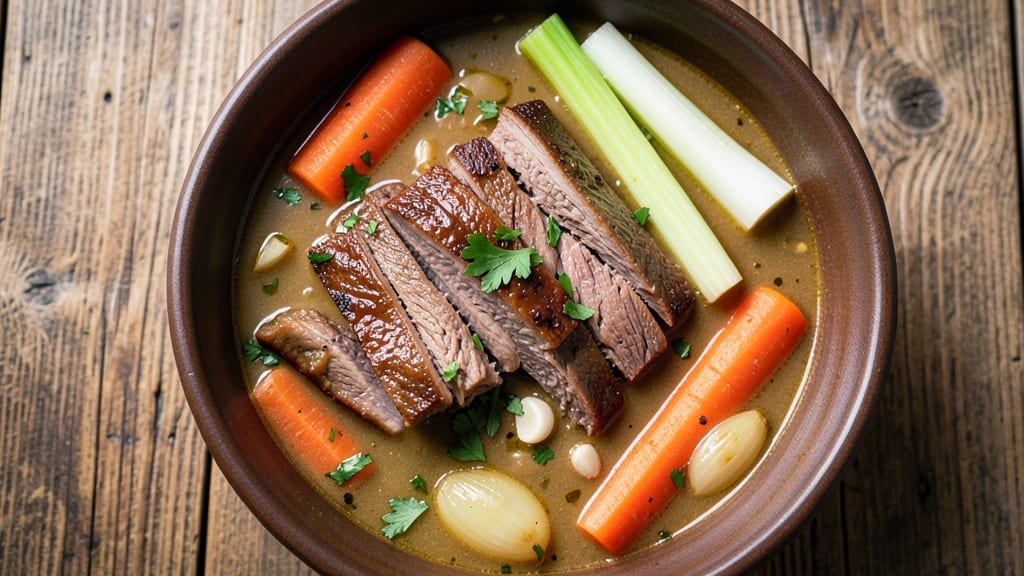
This beef brisket vegetable soup recipe transforms tough cuts into melt-in-your-mouth beef chunks through slow-simmered tenderness and aromatic vegetables. The secret lies in low-and-slow cooking that develops deep, savory flavors while keeping the meat incredibly juicy—no tough, chewy surprises here.
This isn't just soup; it's a hearty, comforting meal that builds character with every spoonful, perfect for chilly evenings or meal prep.
The process begins with searing the brisket to lock in juices before it braises for hours with onions, carrots, and celery—classic mirepoix that forms the flavor foundation. A rich broth develops as the vegetables soften and the beef becomes fork-tender, while herbs and spices add layers of warmth.
The result is a soup where every ingredient plays its part: tender beef, perfectly cooked vegetables, and a broth so flavorful it deserves its own bowl.
What makes this recipe special is its balance—rich enough to satisfy but light enough to enjoy as a main dish. The vegetables stay vibrant yet tender, the beef falls apart at the touch of a fork, and the broth carries all the accumulated flavors.
It's the kind of soup that tastes even better the next day, when flavors have had time to meld completely. Serve with crusty bread to soak up every last drop of that golden, aromatic liquid.
This soup scales beautifully for gatherings or leftovers, making it ideal for busy weeks. The technique is straightforward but requires patience—worth every minute for restaurant-quality results at home. Let's get cooking with a recipe that delivers comfort in every bite.
Ingredients for beef brisket vegetable soup
Pantry staples meet hearty comfort—where beef brisket and aromatic vegetables transform into rich, slow-simmered soup.
| Ingredient | Amount | Notes |
|---|---|---|
| Beef Brisket 🥩 | 2 lb | Flat cut, trimmed of fat |
| Yellow Onions 🧅 | 2 whole | Large, roughly chopped |
| Carrots 🥕 | 4 whole | Medium size, peeled |
| Celery Stalks 🧄 | 4 whole | Fresh, trimmed |
| Garlic Cloves 🧄 | 6 cloves | Fresh, peeled |
| Beef Broth 💧 | 8 cups | Low-sodium preferred |
| Tomatoes 🍅 | 2 whole | Roma, crushed |
| Bay Leaves 🍃 | 2 whole | Dried, standard size |
| Thyme Sprigs 🌿 | 1 tbsp | Fresh, loosely packed |
| Black Peppercorns 🌶️ | 1 tsp | Freshly cracked |
| Salt 🧂 | 1 ½ tsp | Kosher or sea salt |
| Olive Oil 🫒 | ¼ cup | Extra-virgin preferred |
| Potatoes 🥔 | 2 lb | Yukon gold, peeled |
| Fresh Parsley 🌿 | ¼ cup | Chopped, for garnish |
The brisket is non-negotiable here—look for well-marbled cuts at your butcher or grocery store's meat counter. Costco or Whole Foods often have excellent options, but any reputable market works. Trim excess fat to avoid greasy broth, but leave some marbling for flavor. The potatoes add heartiness, so Yukon golds (or Russets) are ideal—they hold up beautifully during long cooking. Fresh thyme and bay leaves are worth hunting down at specialty stores like Penzeys for that restaurant-quality aroma, but dried works in a pinch.
No beef broth? Substitute with a mix of water and bouillon cubes, but add a splash of Worcestershire for depth. Swap Roma tomatoes for canned crushed tomatoes if needed—San Marzano is best, but any high-quality brand works. Celery can be subbed with fennel for a different twist (use equal amounts). The potatoes can be cubed ahead and refrigerated for 2 days before cooking, which saves time. For extra richness, add a splash of red wine (about 1/4 cup) when searing the brisket—deglaze the pan with it for maximum flavor.
This soup tastes even better the next day as flavors meld. Store in an airtight container in the fridge for up to 5 days, or freeze portions for 3 months. I like to make a double batch—one for dinner, one for lunches. The broth thickens as it cools, so add a splash of water when reheating. Garnish with fresh parsley right before serving to keep it vibrant. For meal prep, portion into containers with the broth on top—it keeps the vegetables from drying out.
Why You'll Love This Recipe
- One-Pot Magic: I swear by this—just toss in the brisket, onions, carrots, and celery, then let the slow simmer do the work. No fancy techniques, no extra pots, and honestly? The cleanup is just rinsing a big spoon.
- Deep Umami Bomb: That brisket breaks down into melt-in-your-mouth tenderness while the garlic and onions caramelize into a rich, savory base. The carrots stay just crisp enough—it’s the kind of soup where every spoonful feels like a hug for your taste buds.
- Lunchbox Hero: Between us, this is my go-to for meal prep. The flavors only get better after a day in the fridge, and it reheats like a dream. Pack it in thermoses for work or school—no sad, soggy lunches here.
- Budget Brisket Win: A pound of brisket stretches to feed four (or five if you’re feeding teenagers). The veggies are cheap, the prep is minimal, and leftovers turn into next-day sandwiches or a quick stir-fry. Smart, simple, and satisfying—what’s not to love?
Step-by-step instructions for slow-simmered beef brisket vegetable soup
Transform tough brisket into tender beef chunks while building deep, aromatic flavors through careful layering and patience.
Sear the Brisket for Deep Flavor
Heat the 0.25 cup olive oil in a large Dutch oven over medium-high heat until shimmering. Pat the 2 lb beef brisket thoroughly with paper towels to remove all moisture—this ensures a proper sear. Working in batches if needed, add the brisket and sear for 4-5 minutes per side until deeply browned and crispy in spots.
Here's the thing—don't rush this step. You want that Maillard reaction happening to create complex flavors that will infuse the entire soup. Once browned, remove the brisket and set it aside on a plate. The browned bits left in the pot are flavor gold—we'll scrape them up later.
Build the Aromatic Vegetable Base
In the same Dutch oven, add the 2 whole yellow onions, 4 whole carrots (cut into 1-inch chunks), and 4 whole celery stalks (cut into 1-inch pieces). Cook for 8-10 minutes over medium heat, stirring occasionally, until the vegetables begin to soften and the onions turn translucent.
Add the 6 cloves garlic cloves (smashed with the side of your knife) and cook for another 1 minute until fragrant. This is your flavor foundation—don't skip the garlic or you'll miss that essential depth. If the vegetables start to stick, add 2 tablespoons of the beef broth to deglaze and scrape up those browned bits from the bottom.
Simmer the Brisket with Herbs and Tomatoes
Return the seared brisket to the pot. Add the 8 cups beef broth, 2 whole tomatoes (crushed by hand), 2 whole bay leaves, 1 tbsp thyme sprigs, 1 tsp black peppercorns, and 1.5 tsp salt. Bring to a gentle boil, then immediately reduce heat to low and cover partially.
Simmer for 2 hours, maintaining a gentle bubble. Here's where patience pays off—the brisket will break down into tender chunks as it cooks. Check occasionally and add more broth if the soup reduces too much. The brisket is done when it easily pulls apart with two forks—this usually takes the full 2 hours for proper tenderness.
Add Potatoes and Finish the Soup
Peel and cut the 2 lb potatoes into 1-inch chunks and add them to the soup. Return to a gentle simmer and cook for another 20-25 minutes until the potatoes are fork-tender. The potatoes should absorb some of the broth but still maintain their shape—test by piercing one with a fork.
Taste and adjust seasoning if needed. The soup should be rich and well-seasoned from the brisket and herbs, but you might want to add a pinch more salt or pepper to taste. Remove the bay leaves and thyme sprigs before serving—they've done their job.
Serve with Fresh Garnish
Ladle the soup into bowls and garnish each serving with 0.25 cup fresh parsley (chopped). The parsley adds a bright contrast to the rich, hearty soup. Serve immediately while hot, as the flavors continue to meld even after cooking.
This soup tastes even better the next day as the flavors deepen, so consider making extra. The brisket will continue to break down slightly, making each bite more tender and flavorful. Pair with crusty bread to soak up every last drop of that delicious broth.
Pro Tips For Making Beef Brisket Vegetable Soup
- SEAR THE BRISKET FIRST: Skip the slow start—hit that brisket with a screaming-hot pan for 3-4 minutes per side until it’s deep brown. I learned this the hard way: rushing the sear means flavor gets stuck in the meat instead of spreading into the broth. (Yes, it takes longer to clean the pan, but the soup will taste like you’ve been cooking for hours.)
- CUT VEGETABLES UNIFORM: Onions into ½-inch chunks, carrots and celery into ¼-inch slices—same size, same fate. Uneven pieces mean some veggies turn to mush while others stay crunchy. My grandmother swore by this, and she was right: consistency makes every bite balanced.
- DON’T BOIL THE GARLIC: Add whole garlic cloves after the brisket and veggies have simmered for 20 minutes, then remove them before serving. Burned garlic ruins the whole dish, and peeled cloves are easier to fish out later. (I know, I know—it’s a pain, but trust the process.)
- USE A PRESSURE COOKER FOR TENDERNESS: If you’re short on time, cook the brisket in a pressure cooker first (90 minutes on high) before adding veggies and broth. The meat falls apart like butter, and you’ll save hours of simmering. I was skeptical until I tried it—now it’s my go-to for weeknight soups.
Perfect pairings for these flavors
Crusty Bread Pairing
This soup is made for crusty bread—think a baguette or sourdough with a thick, crackly crust. I love toasting slices and serving them on the side so everyone can soak up every last drop of that rich, beefy broth.
For extra indulgence, brush warm bread with garlic butter (mix 2 tbsp softened butter with 1 minced garlic clove and a pinch of salt) before serving. 🥖
Cheesy Toppings
Add a sprinkle of grated Parmesan cheese or sharp cheddar to each bowl for a salty, umami boost. I recommend Parmigiano-Reggiano for its nutty depth—about 2 tablespoons per serving.
For a creamy touch, stir in ½ cup sour cream or crème fraîche just before serving. The contrast of cool dairy with the warm soup is pure comfort.
Acidic Accents
Brighten the richness with a squeeze of lemon juice (about 1 teaspoon per bowl) or a dollop of hot sauce like Cholula. The acidity cuts through the beefy depth, balancing the flavors beautifully.
I also love adding pickled jalapeños (2-3 slices per bowl) for a tangy kick. These toppings elevate the soup from hearty to restaurant-worthy.
Herb Finishes
Fresh herbs add freshness and color. Beyond parsley, try chopped chives or dill for a bright, almost Mediterranean twist. I also love a sprinkle of fresh thyme leaves (about 1 teaspoon per bowl) for a fragrant finish.
These herbs not only taste great but also make the soup look stunning in bowls. 🌿
Side Salad
A crisp arugula salad with a light vinaigrette balances the soup’s richness. Toss 4 cups baby arugula with 2 tablespoons olive oil, 1 tablespoon lemon juice, and a pinch of salt.
Top with shaved Parmesan and toasted walnuts for crunch. The peppery greens cleanse the palate between bites of hearty soup.
Beverage Pairings
For drinks, I recommend a bold red wine like Cabernet Sauvignon or Malbec to complement the beef’s richness. For beer lovers, a dark lager or stout (like Guinness) works beautifully. If you prefer non-alcoholic options, a sparkling water with lemon or iced hibiscus tea refreshes the palate. 🍷
Nutrition facts
Frequently asked questions
Can I substitute beef brisket with another cut of beef?
While brisket is ideal for its rich flavor and tenderness when slow-cooked, you can substitute with chuck roast or short ribs. These cuts have similar fat content and break down beautifully. For best results, increase cooking time by 30-45 minutes to ensure tenderness. Avoid lean cuts like sirloin—they won't become tender enough.
How do I know when the brisket is fully cooked?
The brisket is done when it easily pulls apart with two forks and reaches an internal temperature of 203°F. For the best texture, cook it until it's fork-tender but still holds its shape slightly. If you're unsure, check the temperature with a meat thermometer. Overcooking can make it too mushy, so aim for that perfect balance of tenderness.
Can I make this soup in a slow cooker?
Brown the brisket first in a skillet, then transfer everything (including the browned bits) to your slow cooker. Cook on low for 7-8 hours or high for 4-5 hours. Add the potatoes during the last 1 hour of cooking to prevent them from turning to mush. The slow cooker method is even more hands-off and delivers the same rich, tender results.
Why does my soup taste bland? Bland soup often results from not building enough flavor layers.
Can I freeze this soup for later?
Yes, this soup freezes beautifully! Let it cool completely, then store in airtight containers for up to 3 months. When reheating, thaw overnight in the fridge, then warm on the stove over medium-low heat, stirring occasionally. Add a splash of water or broth if it thickens too much. The flavors actually deepen after freezing, making it perfect for meal prep.