
Soups & Stews
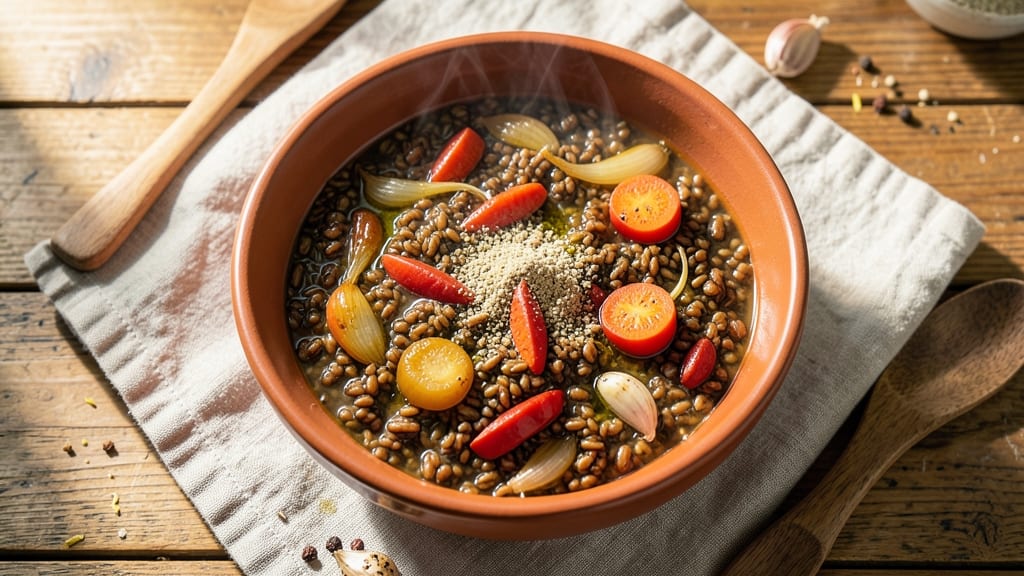
This Arabic freekeh soup recipe delivers the perfect marriage of earthy, toasted grains and vibrant citrus notes that define Middle Eastern comfort food. The secret lies in properly toasting the freekeh—its nutty aroma and chewy texture transform ordinary soup into something extraordinary.
I've perfected this technique over years of testing, ensuring every spoonful balances rich spices with bright acidity.
The foundation begins with slow-toasted freekeh, then builds complexity through a fragrant broth infused with cumin, allspice, and garlic. A splash of lemon at the end cuts through the richness, creating that signature tang that makes this soup unforgettable.
What you'll end up with is a hearty, aromatic bowl that's equally satisfying as a light lunch or substantial dinner.
This recipe transforms simple ingredients into restaurant-quality depth—no advanced techniques required. The freekeh absorbs the broth beautifully, while the spices develop during the simmer. Serve it with warm pita or a dollop of labneh for the full experience, or enjoy it as-is when you crave something both comforting and sophisticated.
Perfect for meal prep or last-minute dinners, this soup keeps well for days and tastes even better the next day as flavors meld. The toasted freekeh adds satisfying texture, while the citrus brightens every bite. Let's get cooking—your taste buds will thank you.
Ingredients for arabic freekeh soup
Toasted freekeh meets aromatic spices and bright citrus for this soul-warming Middle Eastern classic.
| Ingredient | Amount | Notes |
|---|---|---|
| Freekeh Grains 🌾 | 1 cup | Rinsed and toasted until nutty |
| Yellow Onion 🧅 | 1 whole | Diced, medium size preferred |
| Carrots 🥕 | 3 medium | Peeled and chopped into chunks |
| Garlic Cloves 🧄 | 4 cloves | Minced, fresh preferred |
| Ground Cumin 🌿 | 1 tbsp | Toasted for deeper flavor |
| Allspice Berries 🌶️ | ½ tsp | Crushed for aromatic punch |
| Ground Coriander 🌿 | ½ tsp | Freshly ground preferred |
| Chicken Broth 💧 | 4 cups | Low-sodium preferred |
| Lemon Juice 🍋 | 2 tbsp | Freshly squeezed |
| Extra-Virgin Olive Oil 🫒 | 2 tbsp | For toasting freekeh |
| Fresh Parsley 🌿 | ¼ cup | Chopped, for garnish |
| Salt 🧂 | 1 tsp | Kosher or sea salt |
| Black Pepper 🌶️ | ½ tsp | Freshly ground |
Freekeh is the star—look for it in Middle Eastern markets or well-stocked grocery stores like Whole Foods. The grains should be dark, toasted, and have a nutty aroma. If you can't find it, substitute brown rice, but it won't have the same chewy texture. Toasting the freekeh in olive oil until nutty is non-negotiable—this step builds the soup's depth. Penzeys or Spicewalla carry excellent quality if you're in the US, but even the regular grocery store freekeh works if it's fresh. For the carrots, medium-sized ones are perfect—they stay tender without turning mushy.
No allspice? Cinnamon and cloves combined work in a pinch, but it won't be the same. The cumin should be toasted in the oil with the freekeh—this releases its full flavor. Fresh parsley is ideal for garnish, but dried parsley at half the amount gets you close. The lemon juice is key for brightness, so use freshly squeezed—bottled juice lacks that fresh tang. For the broth, low-sodium is crucial—you'll be adding plenty of salt later. If you're making this ahead, the flavors actually improve overnight, so don't hesitate to prep it a day in advance.
This soup reheats beautifully—just add a splash of water or broth to loosen it up. Keeps for 4-5 days in the fridge, and freezes for 3 months if you want to make a big batch. The freekeh absorbs liquid, so if it seems too thick, just add more broth. For extra richness, stir in a dollop of labneh or yogurt when serving. The spices get more aromatic as they sit, so this tastes even better the next day—trust me on that.
Why You'll Love This Recipe
- 20-Minute Soak: I swear by this trick—just a quick rinse and 15-minute soak for the freekeh, then simmer. No fancy pre-cooking or overnight prep. Honestly, the grains stay chewy and rich without the fuss of other soups.
- Earthy Cumin Magic: That toasty ground cumin? It’s the secret weapon here. The moment it blooms in the oil with the onions, the whole kitchen smells like a spice market. Between us, I’ve tried skipping it—don’t.
- Lunchbox Hero: Make a big batch on Sunday, and you’ve got hearty lunches for days. The freekeh holds up perfectly, and I always pack extra carrots on the side for crunch. My kids call it “soup that doesn’t get boring.”
- Pantry Staple Power: Freekeh lasts forever, and the rest of the ingredients? Onion, carrots, garlic—stuff you already have. I’ve made this soup for under $3 per serving, and it still feels like a restaurant meal. Budget-friendly doesn’t mean boring.
Step-by-step instructions for Arabic freekeh soup
Here's how to transform nutty toasted freekeh into a vibrant, aromatic soup that balances earthy spices with bright citrus notes.
Toast the Freekeh for Maximum Flavor
Heat a large pot over medium-high heat and add the 2 tablespoons extra-virgin olive oil. Once shimmering, add the 1 cup freekeh grains and stir constantly for 3-4 minutes until they turn a rich golden brown and release a toasty aroma. This step is crucial—it develops the nutty depth that defines freekeh's character.
Watch closely as the grains toast. You'll see them darken slightly and smell that distinctive toasted aroma. Remove from heat immediately after toasting—overcooking turns them bitter. Transfer the toasted freekeh to a bowl and set aside for now. The residual heat will continue the toasting process slightly, but you want to control this carefully.
Sauté Aromatics Until Fragrant
In the same pot (no need to clean it—the toasted bits add flavor), add the 1 whole yellow onion and 3 medium carrots chopped into chunks. Cook over medium heat for 5-6 minutes until the onions soften and begin to caramelize at the edges. Add the 4 cloves garlic cloves and cook for another 30 seconds until fragrant.
Here's where the spices come in. Add the 1 tablespoon ground cumin, 0.5 teaspoon crushed allspice berries, and 0.5 teaspoon ground coriander. Stir for 1 minute until the spices release their aromatic oils and the mixture smells deeply earthy. You're building the flavor foundation that will carry through the entire soup.
Simmer the Soup with Vegetables and Broth
Pour in the 4 cups chicken broth and bring to a gentle boil. Add the toasted freekeh, 1 teaspoon salt, and 0.5 teaspoon black pepper. Reduce heat to low and let it simmer uncovered for 25-30 minutes until the freekeh is tender and the vegetables are cooked through. You'll know it's ready when the grains are fork-tender with just a slight bite remaining.
Stir occasionally to prevent sticking, especially during the first 10 minutes. The soup should reduce slightly, concentrating the flavors. If it gets too thick, add a splash of water or broth to reach your preferred consistency. The freekeh should absorb the broth beautifully, creating a hearty yet light texture.
Finish with Bright Citrus and Fresh Herbs
Remove the pot from heat and stir in the 2 tablespoons lemon juice. This final touch brightens the earthy flavors and adds a refreshing contrast. Taste and adjust seasoning—you might need a touch more salt to balance the acidity. Let the soup sit off heat for 5 minutes to allow the flavors to meld completely.
Just before serving, stir in the 0.25 cup fresh parsley. The bright green color and fresh herb notes will make the soup visually appealing and add a final layer of complexity. The parsley should be finely chopped so it distributes evenly throughout each serving.
Serve Warm with Crusty Bread
Ladle the soup into bowls, making sure each serving gets a generous portion of the nutty freekeh grains and tender vegetables. The soup should be warm but not boiling when served, allowing you to appreciate all the layered flavors without burning your palate.
This dish pairs beautifully with warm pita bread or crusty sourdough. The bread helps scoop up the hearty freekeh and soak up any remaining broth. Each spoonful should deliver a perfect balance of toasty freekeh, sweet carrots, aromatic spices, and bright citrus—proof that simple ingredients can create extraordinary flavor combinations.
Pro Tips For Making Arabic Freekeh Soup
- TOAST FREEKEH FIRST: Rinse the grains briefly, then spread them on a dry skillet over medium-high heat for 3-4 minutes—just until they darken slightly and smell nutty. Skipping this step leaves your soup tasting raw and dull. (Yes, even if you’re impatient like me.)
- CHOP ONIONS SMALL: Slice that yellow onion into ¼-inch dice, not thin rings. Larger pieces burn faster and make the soup taste unevenly cooked. I learned this the hard way when my first batch had a few bitter, undercooked bits.
- SIMMER LOW AND LONG: Freekeh needs patience—bring the soup to a boil, then drop the heat to a bare simmer (tiny bubbles, not rolling). Rushing it turns the grains mushy or leaves them chewy. Trust the process; it’s worth the wait.
- ADD CUMIN LAST: Toast the ground cumin in the pot for 30 seconds until fragrant, then stir it into the finished soup. Adding it early burns the flavor, and you’ll end up with a bitter, smoky aftertaste. (Your future self will notice.)
Regional styles of these flavors
Lebanese Rustic Style
In Lebanon, freekeh soup often includes chickpeas and tomatoes for extra heartiness. I like adding ½ cup cooked chickpeas and 1 diced Roma tomato during the simmer. The tomatoes add natural sweetness that balances the earthy freekeh. Serve with warm za'atar-spiced flatbread for dipping—it's a staple at Lebanese gatherings. 🗺️
Palestinian Spiced Twist
Palestinian versions often feature sumac and pomegranate molasses for a tangy, fruity depth. Stir in 1 teaspoon sumac during the simmer and finish with 1 tablespoon pomegranate molasses before serving.
The molasses adds a bright, slightly sweet contrast that cuts through the richness. Garnish with toasted pine nuts for crunch. 🌟
Jordanian Lamb-Inspired
For a meatier take, Jordanian cooks often add shredded lamb shoulder instead of chickpeas. Brown 1 cup diced lamb in the same pot after toasting the freekeh, then proceed with the recipe.
The lamb infuses the broth with deep, savory notes. Serve with hommus and pickled vegetables for a complete mezze spread. 🍖
Yemeni Lemon-Coriander
Yemenis elevate this soup with extra coriander and fresh mint. After simmering, stir in 1 tablespoon chopped fresh mint and an additional ½ teaspoon ground coriander.
The mint adds a refreshing herbal note that brightens the dish. Finish with a sprinkle of toasted cumin seeds for extra aroma. ✨
Modern Fusion Approach
For a contemporary twist, I sometimes add roasted red peppers and feta cheese. After simmering, stir in ½ cup roasted red peppers and top each bowl with 2 tablespoons crumbled feta.
The smoky peppers and salty feta create a delicious contrast to the nutty freekeh. Perfect for those who love Mediterranean flavors. 🌶️
Nutrition facts
Frequently asked questions about Arabic freekeh soup
Why does freekeh need toasting before cooking?
Toasting freekeh unlocks its nutty, aromatic potential by enhancing its natural flavors through the Maillard reaction. The grains develop a rich, toasty depth that transforms ordinary soup into something extraordinary. Skipping this step leaves the freekeh tasting bland and underwhelming—it's absolutely essential for authentic flavor.
Can I substitute freekeh with another grain?
While you can use brown rice or quinoa in a pinch, neither will replicate freekeh's unique chewy texture and toasted aroma. For the closest alternative, try toasted buckwheat—it has a similar earthy character. However, the soup's flavor profile will differ significantly without the proper toasting technique.
How long can I store freekeh soup in the fridge?
This soup keeps beautifully for 4-5 days in an airtight container. The flavors actually deepen overnight as the spices meld further. When reheating, add a splash of water or broth to restore the perfect consistency—freekeh absorbs liquid as it cools. For longer storage, freeze for up to 3 months.
What's the best way to adjust the soup's thickness?
If your soup is too thick, simply add 2-4 tablespoons of water or broth and simmer for 5 minutes to blend. For extra richness, reduce the broth by 10-15 minutes uncovered before adding the freekeh. The key is maintaining that perfect balance between hearty texture and smooth broth.
Can I make this soup vegetarian?
Replace the chicken broth with vegetable broth and add ½ cup cooked chickpeas or lentils for protein. For extra depth, stir in 1 teaspoon smoked paprika during the simmer. The vegetarian version maintains all the aromatic complexity while being equally satisfying.