
Soups & Stews
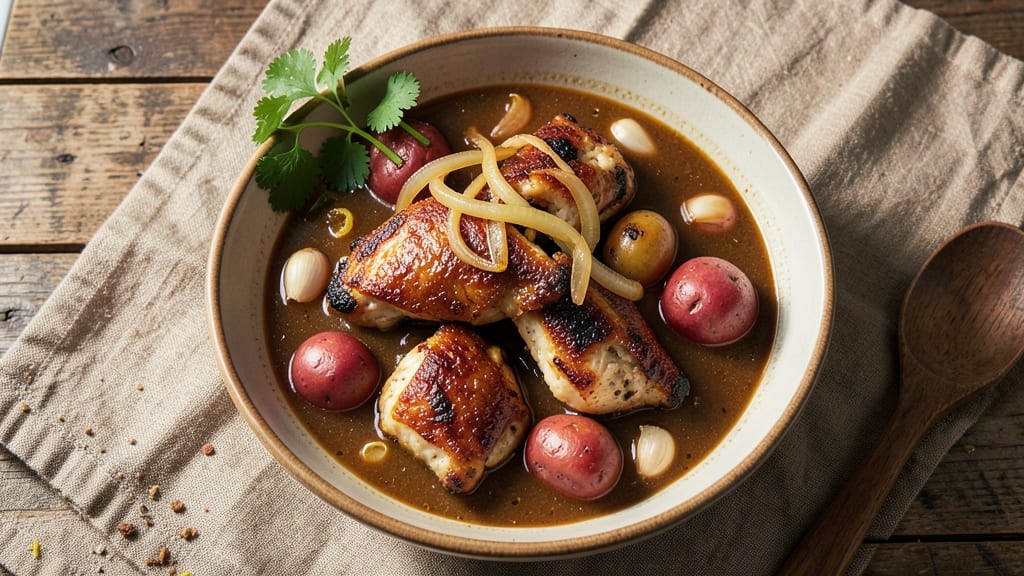
This adobo soup recipe transforms simple ingredients into a rich, tangy-savory stew that balances vinegar's brightness with soy's depth. The secret lies in marinating chicken in soy sauce and vinegar first—this tenderizes the meat while building layers of flavor that deepen as the soup simmers.
I've perfected this version to deliver that perfect harmony between sharp, sweet, and umami notes that define authentic adobo.
The beauty of this recipe is its versatility—you can keep it traditional with just chicken, garlic, potatoes, and carrots, or modernize it with coconut milk for creaminess. The tender chicken falls apart effortlessly, while the vegetables absorb the aromatic broth, creating a dish that's both comforting and restaurant-quality.
What makes it special is how the vinegar's acidity cuts through the richness, leaving your palate refreshed with every spoonful.
Simmering time is where the magic happens—about 45 minutes transforms tough chicken into melt-in-your-mouth pieces, and the broth reduces to a perfect consistency. The result? A steaming bowl of soup that's equally at home on a chilly evening or as a hearty lunch.
Serve it with steamed rice to soak up every last drop of that flavorful broth.
For those who love traditional adobo, stick to the classic soy-vinegar base, but don't hesitate to experiment with additions like bell peppers or a splash of calamansi juice for extra zing.
The key is balancing the flavors—too much vinegar makes it sharp, too little soy flattens the taste. This recipe delivers that perfect equilibrium every time.
Ingredients for adobo soup
Twelve ingredients transform into a restaurant-quality adobo that balances sharp, sweet, and umami perfectly.
| Ingredient | Amount | Notes |
|---|---|---|
| Chicken Thighs, Bone-In, Skin-On 🍗 | 1 ½ lb | Cut into 2-inch pieces |
| White Vinegar 💧 | ½ cup | Distilled preferred for clarity |
| Soy Sauce 🍶 | ½ cup | Light or regular variety |
| Garlic Cloves 🧄 | 6 cloves | Minced, not pressed |
| Yellow Onion 🧅 | 1 medium | Diced, about 1 cup |
| Russet Potatoes 🥔 | 2 medium | Peeled, cut into 1-inch cubes |
| Carrots 🥕 | 3 medium | Peeled, cut into 1-inch chunks |
| Bay Leaves 🌿 | 2 whole | Fresh preferred |
| Black Peppercorns 🌶️ | 1 tsp | Crushed, not ground |
| Salt 🧂 | 1 ½ tsp | Diamond Crystal preferred |
| Coconut Milk (Optional) 🥥 | ¼ cup | Full-fat for creaminess |
| Fresh Ginger 🌿 | 1 inch | Peeled, grated |
| Green Bell Pepper (Optional) 🌶️ | ½ cup | Diced, for extra crunch |
The chicken thighs are non-negotiable—bone-in, skin-on pieces stay juicy while marinating in the vinegar-soy mix. Look for thighs with good marbling at Whole Foods or your local butcher shop; the extra fat renders into flavor. Fresh ginger and garlic? Buy them at an Asian market—they're fresher and more aromatic than the grocery store. The yellow onion should be firm with no soft spots, and those Russet potatoes need to be starchy, not waxy. For the soy sauce, Kikkoman or Pearl River Bridge are reliable choices, but any light soy will work. If you're adding coconut milk, grab the full-fat canned version—it makes the soup luxuriously creamy.
No fresh ginger? Substitute with 1 tsp ground ginger, but it won't have the same zing. Short on soy sauce? Tamari or coconut aminos work in a pinch, though the flavor profile shifts slightly. The vinegar can be swapped for white wine or apple cider vinegar, but distilled vinegar gives the cleanest tang. For the potatoes and carrots, baby potatoes and baby carrots save time on peeling and chopping. Want to skip the optional bell pepper? No problem—just boost the garlic to 8 cloves for extra depth. The bay leaves can be dried, but fresh ones infuse more aroma—just remove them before serving.
Marinate the chicken for at least 30 minutes (overnight is ideal) to maximize tenderness. The soup reheats beautifully—simmer for 10 minutes on the stove or 2 minutes in the microwave. Store leftovers in an airtight container for 4-5 days in the fridge, or freeze for 3 months. For meal prep, double the recipe and portion into containers—each serving pairs perfectly with steamed jasmine rice. The broth freezes well, so you can make it ahead and add the chicken and veggies later.
Why You'll Love This Recipe
- Same recipe, different vibes: dump it in a slow cooker for tired evenings, or simmer it in a Dutch oven for company. Between us, it’s the one dish that makes me look like a pro without trying.
- I’ll be real: the first batch disappears fast, but the second? Even better. The flavors meld overnight, and reheating it? Just add a splash of water—no sad, dry chicken here. Budget-friendly, foolproof, and my secret weapon for lazy Sundays.
Step-by-step instructions for adobo soup
Transform simple ingredients into a rich, aromatic stew where tender chicken melts in a tangy, savory broth.
Sear the Chicken for Deep Flavor
Cut the 1.5 lb chicken thighs into 2-inch pieces, keeping the skin on for maximum crispiness. Heat a large Dutch oven over medium-high heat with no oil—we'll use the chicken's natural fat. Working in batches to avoid crowding, sear the chicken pieces for 4-5 minutes per side until the skin turns golden brown and crispy. This step develops the foundational flavor through the Maillard reaction, so don't rush it.
As the chicken browns, you'll notice the fat rendering out and sizzling in the pan. This is exactly what we want—it creates a rich, caramelized base for our soup. Once all pieces are browned, transfer them to a plate and set aside. The residual fat in the pot will become the flavorful foundation for our adobo.
Build the Aromatic Base
In the same Dutch oven, add the diced yellow onion and cook for 3-4 minutes until softened and translucent. Add the minced garlic cloves and cook for another 30 seconds until fragrant—this is where the soup develops its signature depth of flavor. The garlic should smell pungent and sweet, not burnt.
Stir in the peeled and grated 1-inch fresh ginger, crushed black peppercorns, and 1.5 teaspoons salt. Cook for 1 minute until the raw ginger aroma gives way to a warm, spicy note. Here's where the magic happens: pour in the 0.5 cup white vinegar and 0.5 cup soy sauce, scraping up any browned bits from the bottom of the pot. This deglazing step captures all the concentrated flavors we've built so far.
Simmer the Vegetables and Chicken
Add the peeled and cubed 2 medium russet potatoes and 3 medium carrots to the pot. Pour in enough water to cover all ingredients by about 1 inch—approximately 6 cups total. Bring to a gentle boil, then reduce heat to medium-low to maintain a steady simmer. Add the 2 whole bay leaves and return the seared chicken to the pot.
Cover and simmer for 30-35 minutes until the chicken is fork-tender and the vegetables are easily pierced with a fork. The broth should reduce slightly but remain flavorful. If you're using the optional 0.5 cup diced green bell pepper, add it during the last 10 minutes of cooking to maintain its crisp texture. The potatoes should be soft but not falling apart, and the carrots should be tender with slight bite.
Finish with Creamy Richness
Once the chicken is tender, carefully remove it from the broth and set it aside. Strain the broth through a fine-mesh sieve into a clean pot, pressing on the vegetables to extract maximum flavor. Return the broth to medium heat and stir in the 0.25 cup coconut milk if using—this adds a luxurious creaminess that balances the tangy adobo flavors.
Return the chicken to the pot and simmer for an additional 5 minutes to allow the flavors to meld completely. Taste and adjust seasoning with additional salt or soy sauce if needed. The soup should be rich with a perfect balance of tangy, savory, and slightly sweet notes. Serve immediately with steamed rice to soak up every delicious drop of that aromatic broth.
Pro Tips For Making Adobo Soup
- SEAR THE SKIN FIRST: That crispy skin is your flavor anchor—don’t skip it. Pat the chicken thighs very dry, then sear skin-side down in a hot pan for 8-10 minutes until deep golden. I used to rush this, and the soup never tasted as rich. Trust me, the extra 2 minutes now save you from bland broth later.
- MINCE THAT GARLIC FINE: No pea-sized chunks here—you want it paste-like. Pulse the garlic in a food processor for 10 seconds, then mix with the onions before cooking. After burning my tongue on undercooked garlic bits twice, I learned: finer means faster flavor infusion, and it caramelizes better with the onions.
- DON’T DROWN THE VINEGAR: Start with ½ cup white vinegar, but reduce it first. Simmer the chicken and aromatics in just enough water to cover, then add the vinegar and cook uncovered until the liquid reduces by half. Too much vinegar upfront makes the soup taste harsh—reduce first, balance later.
- USE COLD SOY SAUCE: Add the soy sauce after the vinegar has cooked down, when the pot is off the heat. Cold soy keeps the color bright and prevents bitterness from overcooking. I was skeptical until I tried it—the broth stays glossy, and the umami hits cleaner. (Yes, even if you’re impatient like me.)
Creative variations of adobo soup
Filipino Classic Style
For an authentic taste, use pork belly instead of chicken—Filipino adobo often features this rich cut. Cook the pork belly for 1.5 hours until fork-tender, then shred it into the broth.
Add 1 tbsp fish sauce for umami depth and 1 tbsp brown sugar to balance the vinegar's sharpness. Garnish with kalamansi slices (or lime) for that signature Filipino tang. 🌶️
Creamy Coconut Twist
Swap the traditional broth for a coconut milk base by simmering the chicken in 1 can (13.5 oz) coconut milk instead of water. Add 1 tbsp shrimp paste (bagoong) for a Thai-inspired depth, and finish with fresh cilantro and lime zest.
This version feels like a cross between adobo and Thai tom kha soup. 🥥
Spicy Chili Adobo
Kick up the heat by adding 1-2 tbsp adobo sauce (the dark, salty condiment from Filipino cuisine) or 1 tsp chili flakes during the simmer. For extra smokiness, char 1 red onion and 2 garlic cloves over an open flame before adding them to the pot.
Top with crispy fried shallots for texture. 🌶️
Vegetarian Adaptation
Replace the chicken with extra-firm tofu (pressed and cubed) or mushrooms (shiitake or portobello). Boost umami with 1 tbsp soy sauce and 1 tsp miso paste, then add 1 cup chickpeas for protein.
Garnish with toasted sesame seeds and green onions for freshness. This version is just as hearty! 🌱
Slow-Cooker Shortcut
Marinate the chicken in the vinegar-soy mix for 1 hour, then transfer everything (including veggies) to a 6-quart slow cooker. Cook on low for 6-7 hours or high for 3-4 hours. The slow cooker enhances tenderness without watching the pot. Perfect for busy weeknights! ⏰
Modern Fusion Twist
Add 1 cup corn kernels (fresh or frozen) and ½ cup diced zucchini for a summery touch. Stir in 1 tbsp lime juice and ½ tsp cumin at the end for a Mexican-inspired adobo.
Serve with crusty bread or tortilla chips for scooping. The sweetness of the corn balances the tangy broth beautifully. 🌽
Nutrition facts
Frequently asked questions
Can I use pork instead of chicken in this adobo soup?
Pork belly or pork shoulder works beautifully—Filipino adobo often features pork. For pork belly, simmer for 1.5 hours until tender, then shred it into the broth. Add 1 tbsp fish sauce and 1 tbsp brown sugar to balance the flavors. The fat renders beautifully, creating a richer, more decadent soup.
Why does my adobo soup taste too sour?
Too much vinegar makes the broth overly sharp. Balance it by adding 1-2 tbsp soy sauce or a pinch of sugar to mellow the acidity. For future batches, reduce vinegar to ¼ cup and taste as you simmer. The broth should be tangy but not overpowering—think of it as a bright contrast, not the star of the show.
Can I make this soup ahead of time?
Yes! Adobo soup actually tastes better the next day as flavors meld. Store in an airtight container in the fridge for 4-5 days or freeze for 3 months. Reheat gently on the stove for 10 minutes—never microwave directly from frozen. The broth will reduce slightly, intensifying the flavors even more.
What vegetables can I add for extra nutrition?
Try adding green beans, spinach, or zucchini—they wilt beautifully in the broth. For heartiness, include corn kernels or mushrooms. Just remember: softer veggies (like carrots and potatoes) need longer cooking time, while heartier options (like bell peppers) should go in last.
Is it safe to marinate chicken in vinegar overnight?
Yes, but for best results, marinate for 4-6 hours max—longer exposure can make the chicken mushy. If using bone-in pieces, 30 minutes is sufficient. For extra safety, use distilled vinegar (less acidic than white vinegar) and refrigerate the marinade. Always cook the chicken to 165°F before serving.