
Soups & Stews
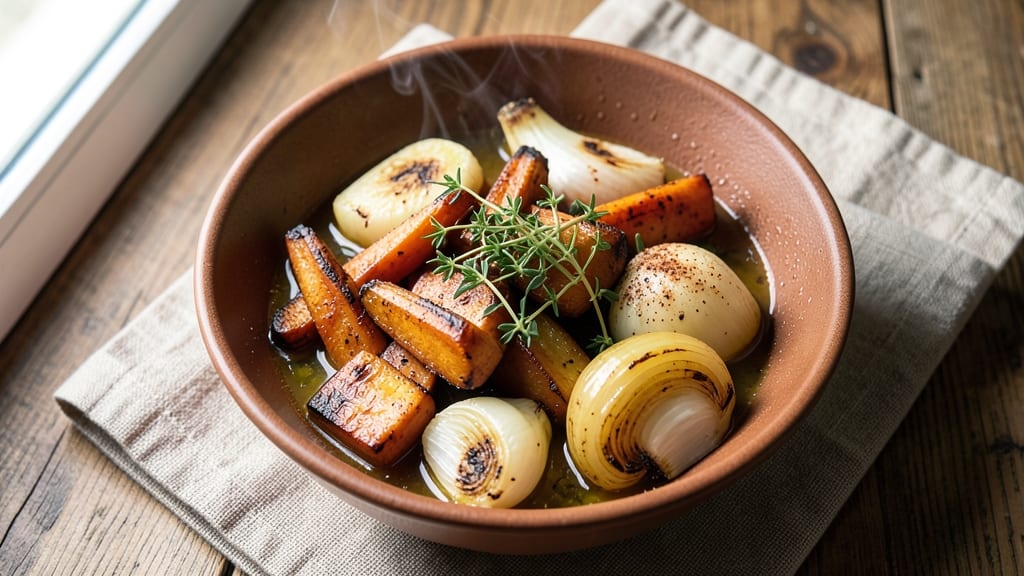
This roasted soup recipe transforms humble vegetables into a deeply flavorful, umami-rich dish that tastes like it simmered all day—without the hours in the kitchen. The secret lies in roasting vegetables first, which caramelizes their natural sugars and intensifies their flavors before they even hit the pot. I developed this method after years of experimenting with soups that tasted flat or one-dimensional, and the difference is night and day.
What makes this recipe stand out is the balance of textures and flavors: crispy roasted edges in every spoonful, tender vegetables, and a rich broth that develops depth from slow simmering.
You’ll start with a mix of root vegetables and aromatic herbs, then roast them until they’re golden and concentrated in flavor. The broth builds as it simmers, absorbing all that roasted goodness into a velvety, satisfying base.
The result is a soup that’s hearty enough for a main course but flexible enough for any meal—think crispy roasted carrots, parsnips, and celery root floating in a fragrant broth infused with garlic, thyme, and a touch of smoked paprika.
It’s the kind of dish that tastes even better the next day, as flavors meld and deepen. Perfect for chilly evenings or when you want a restaurant-quality meal without the fuss.
This method works with almost any vegetable—swap in butternut squash, sweet potatoes, or even mushrooms for a different twist—but the technique remains the same: roast first, then simmer.
The key is patience; the extra time upfront ensures a soup that’s far more complex and satisfying than anything you’d find in a can. Let’s make it.
Ingredients for best roasted soup
Roasting unlocks deep umami flavors in these simple vegetables—no fancy ingredients needed.
| Ingredient | Amount | Notes |
|---|---|---|
| Carrots 🥕 | 1 ½ lb | Whole, peeled and cut into chunks |
| Parsnips 🥕 | 1 ½ lb | Peeled and cut into 1-inch pieces |
| Celery Root 🥕 | 1 lb | Peeled and cubed |
| Yellow Onion 🧅 | 1 whole | Quartered, skin on |
| Garlic Cloves 🧄 | 6 cloves | Peeled and smashed |
| Fresh Thyme 🌿 | 2 tbsp | Leaves only, chopped |
| Smoked Paprika 🌶️ | 1 tbsp | Sweet or hot variety |
| Vegetable Broth 💧 | 4 cups | Low-sodium preferred |
| Extra-Virgin Olive Oil 🫒 | ¼ cup | For roasting |
| Sea Salt 🧂 | 1 ½ tsp | Diamond Crystal preferred |
| Black Pepper 🌶️ | ½ tsp | Freshly ground |
| Fresh Rosemary 🌿 | 1 tbsp | Leaves only, chopped |
| Crusty Bread 🍞 | 8 slices | For serving |
| Fresh Parsley 🌿 | ¼ cup | Chopped, for garnish |
The vegetables are the heart of this soup, so choose firm, vibrant produce. Local farmers markets often have the freshest carrots, parsnips, and celery root—look for deep color and no soft spots. If shopping at Whole Foods or Trader Joe's, opt for organic when possible, though conventional works fine. The onions and garlic should smell pungent, not musty. Fresh thyme and rosemary from the grocery store's produce section (not dried) make a noticeable difference in flavor complexity. For the smoked paprika, Penzeys or McCormick are reliable brands—avoid the pre-seasoned blends that often contain salt.
No fresh rosemary? Dried rosemary at one-third the amount works, but fresh is ideal. Short on vegetable broth? Water plus 1 tbsp tomato paste adds depth. The crusty bread can be any variety—sourdough or baguette work beautifully. For extra umami, add 1 tbsp soy sauce or miso paste to the broth. If you're using celery root, peel it thoroughly—the skin can be bitter. The carrots and parsnips should be cut evenly so they roast uniformly. For a smoky twist, swap half the smoked paprika for liquid smoke (start with 1/2 tsp).
Roasted vegetables keep in the fridge for 3 days before adding to broth, but fresh is best. The finished soup reheats beautifully—simmer gently to avoid breaking up the vegetables. Store in airtight containers for 4-5 days or freeze for 3 months. For make-ahead convenience, roast the vegetables and store them separately before simmering. The broth can be made a day ahead and reheated with the roasted veggies. Garnish with fresh parsley just before serving to keep it vibrant.
Why You'll Love This Recipe
- One-Pan Magic: I swear by this—just toss everything (carrots, parsnips, celery root) on a sheet pan, roast until caramelized, then blend. No separate pots, no extra cleanup. The celery root alone makes it worth the effort.
- Sweet-Savory Crunch: That crispy edge on the parsnips and carrots? It’s the secret weapon. Roasting pulls out their natural sugars, then the garlic and onion mellow into this deep, almost umami base—like a hug in a bowl.
- Meal Prep MVP: Make a double batch on Sunday, and you’ve got lunch sorted for days. It reheats beautifully, and honestly? The flavor gets even better after a day in the fridge—like a slow-cooked secret.
- Budget Bright Spot: Celery root and parsnips stretch my grocery budget further than any store-bought broth ever could. Plus, roasting them first means I’m not left with sad, watery veggies—just pure, concentrated flavor for less.
Step-by-step instructions for deep umami roasted vegetable soup
Transform humble root vegetables into a rich, complex soup where roasting unlocks their natural sweetness.
Preheat and Prepare the Roasting Pan
Preheat your oven to 425°F. Line a large rimmed baking sheet with parchment paper or aluminum foil for easy cleanup. In a medium bowl, combine the 1.5 lb carrots, 1.5 lb parsnips, and 1 lb celery root as listed. Toss them with 0.25 cup extra-virgin olive oil, 1 tbsp smoked paprika, 1.5 tsp sea salt, and 0.5 tsp black pepper until evenly coated.
Spread the vegetables in a single layer on the prepared baking sheet, leaving space between each piece. This ensures even browning and proper caramelization. The skin-on 1 whole yellow onion goes in this pan too—quarter it and place it cut-side down among the vegetables. Roast for 30 minutes until the edges begin to brown and the vegetables soften slightly.
Roast the Garlic and Herbs Separately
While the vegetables roast, prepare the 6 cloves garlic and herbs. In a small skillet over medium-low heat, add the garlic cloves and sauté for 1-2 minutes until they turn golden and fragrant—don't let them burn. Remove from heat and set aside.
In a separate small bowl, combine the 2 tbsp fresh thyme and 1 tbsp fresh rosemary. Sprinkle these with 1/4 tsp sea salt and toss gently. This step ensures the herbs stay vibrant and aromatic rather than wilting into the vegetables.
Build the Roasted Vegetable Base
After the initial 30 minutes of roasting, flip the vegetables and onion using a spatula. Return them to the oven for another 20-25 minutes until deeply caramelized and tender. The carrots and parsnips should be soft enough to pierce easily with a fork, and the onion should be translucent.
Once roasted, transfer everything to a large pot. Add the sautéed garlic, thyme-rosemary mixture, and 4 cups vegetable broth. Bring to a gentle boil, then reduce heat to medium-low and simmer uncovered for 15 minutes. This step allows the flavors to meld and the vegetables to absorb the broth, creating a velvety texture.
Blend and Finish the Soup
Use an immersion blender to purée the soup directly in the pot until completely smooth. If you prefer a rustic texture, skip blending and simply mash the vegetables with a wooden spoon. Return the soup to a gentle simmer and cook for another 5 minutes to let the flavors deepen.
Taste and adjust seasoning with additional sea salt or black pepper if needed. Ladle the soup into bowls and garnish each serving with 8 slices crusty bread on the side and 0.25 cup fresh parsley for color and freshness. Serve immediately while the bread is warm and crisp.
Pro Tips For Making Best Roasted Soup
- CHAR THE ONIONS FIRST: I learned this the hard way—skip this, and your soup will taste like it’s hiding in the back of the pantry. Get that onion caramelized to a deep amber (about 10-12 minutes at medium heat) before adding anything else. The flavor jump is insane, and it’s the foundation for everything else.
- CUT ROOT VEGGIES UNEVENLY: Yes, it looks messy, but those jagged edges on carrots, parsnips, and celery root mean more surface area for browning. Toss them in the roasting pan like they’re broken rocks—smaller pieces cook faster, and the edges get that sweet, crispy edge that turns a good soup into a great one.
- DON’T OVERCROWD THE PAN: I know, you’re excited to get it all in there. But if your veggies are packed like sardines, they’ll steam instead of roast, and you’ll end up with mushy, sad flavors. Spread them out—even if it means two batches—so they get proper airflow and that golden crust.
- SALT THE ROASTED VEGGIES MIDWAY: Toss them with a pinch of salt (about ½ teaspoon per pound) after the first 20 minutes of roasting. This draws out moisture, concentrates their sweetness, and guarantees they won’t turn to mush when you add liquid later. (Your future self will notice the difference.)
Perfect pairings for best roasted soup
Bread Pairings
Crusty, artisan bread like a sourdough baguette or ciabatta is my go-to for this soup. The dense, chewy texture soaks up the rich broth beautifully, while the slight tang of sourdough cuts through the soup's natural sweetness.
I like to toast the bread lightly before serving to add a satisfying crunch. For a more rustic touch, try focaccia with its olive oil richness—it pairs especially well with the roasted garlic and herbs. 🍞
Cheese Additions
Add a sprinkle of aged Parmesan or Pecorino Romano for a salty, umami boost. I recommend grating 2 tablespoons per bowl just before serving to keep it fresh.
For a creamy twist, stir in ¼ cup crumbled feta or goat cheese while the soup simmers—it melts beautifully into the velvety broth. If you prefer a sharper flavor, try Asiago cheese for a nutty depth.
Toppings for Texture
Fresh toasted pumpkin seeds or pecans add a delightful crunch that contrasts the soup's smoothness. Toast 2 tablespoons in a dry skillet over medium heat for 2-3 minutes until golden, then sprinkle on top.
Another favorite is crispy fried shallots—just 1 tablespoon adds a sophisticated onion flavor without overpowering. For a protein boost, top with crumbled bacon or poached eggs for a luxurious touch.
Drink Pairings
A crisp Italian white wine like Pinot Grigio or Vermentino complements the soup's herbal notes beautifully. The acidity cleanses your palate between spoonfuls, while the citrus undertones enhance the roasted vegetables. For beer lovers, a Belgian witbier with its coriander and orange peel notes creates a refreshing contrast.
If you prefer non-alcoholic options, sparkling water with lemon or hibiscus iced tea both work wonderfully. 🍷
Seasonal Variations
In fall, swap in butternut squash or sweet potatoes for a sweeter, heartier soup. For spring, try asparagus or leeks with a touch of fennel for brightness. Summer calls for zucchini and bell peppers with a splash of lemon juice at the end.
Each seasonal twist keeps the roasting technique at its core while adapting to what's freshest. 🌿
Extra Umami Boosters
For deeper flavor, add 1 tablespoon soy sauce or 1 teaspoon miso paste to the broth while simmering. A splash of fish sauce (just ½ teaspoon) adds complexity without overpowering.
For a smoky note, stir in ½ teaspoon liquid smoke—it enhances the roasted vegetable flavors beautifully. These small additions take your soup from good to extraordinary. ✨
Nutrition facts
Frequently asked questions
Why does roasting the vegetables first make such a difference in flavor?
Roasting caramelizes the natural sugars in vegetables, creating deep, concentrated flavors that simple boiling can't match. The high heat breaks down their cell walls, releasing more aroma and umami compounds. This technique transforms ordinary veggies into flavor bombs that infuse the broth with complexity. Think of it as unlocking their full potential before they even hit the pot!
Can I make this soup ahead of time?
Roast the vegetables up to 3 days ahead and store them in an airtight container in the fridge. When ready to serve, simply simmer them with fresh broth and herbs for 15 minutes. For the complete soup, it keeps well for 4-5 days refrigerated or 3 months frozen. The flavors actually deepen over time, making it perfect for meal prep.
What if I don't have an immersion blender?
No problem! Transfer the soup to a regular blender (working in batches if needed) or use a potato masher to create a rustic texture. For extra creaminess, stir in 2 tablespoons coconut milk or 1 tablespoon Greek yogurt after blending. The key is patience—let it simmer longer if you prefer a smoother consistency.
How can I make this soup more substantial for a main course?
Add protein with 1 cup cooked lentils, ½ lb shredded chicken, or ½ cup chickpeas during the final 10 minutes of simmering. For heartiness, stir in 1 cup cooked barley or ½ cup orzo while reheating. Top with crispy toasted bread croutons or a fried egg for extra satisfaction.
What vegetables work best for roasting in this recipe?
Root vegetables like carrots, parsnips, and celery root are ideal, but you can swap in sweet potatoes, beets, or turnips. For leafy greens, try kale or chard (add them after roasting). Mushrooms also roast beautifully—just increase the roasting time to 25 minutes for deeper flavor. The key is choosing firm, flavorful produce.