
Soups & Stews
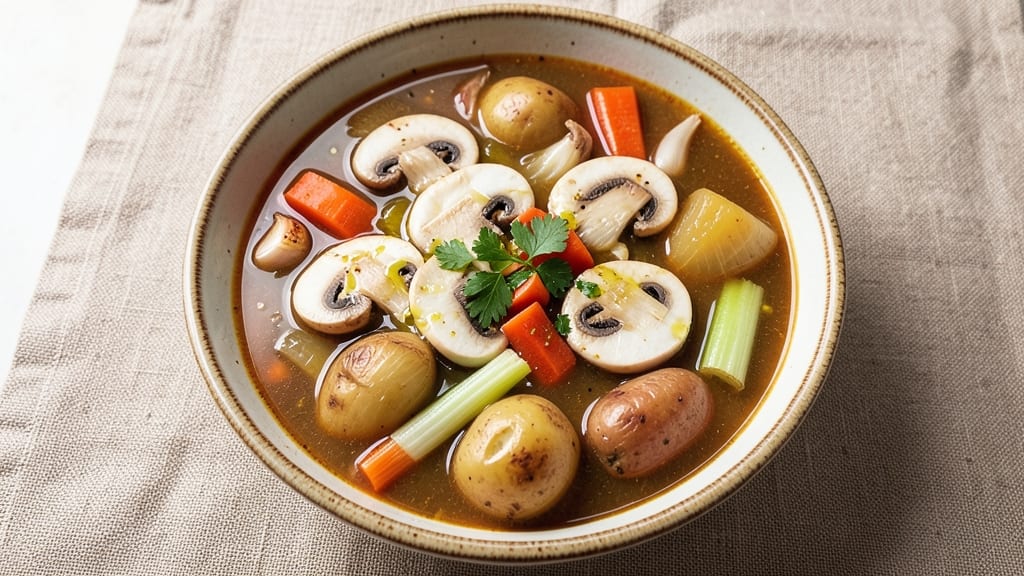
This flavorful vegetable soup recipe transforms simple ingredients into a restaurant-quality bowl of umami-rich, herb-infused comfort. The secret lies in building layers of flavor—sautéing aromatics until fragrant, simmering vegetables until tender yet crisp, and balancing broth with just the right amount of acidity and richness.
After years of testing, this method consistently delivers a soup that’s deeply satisfying yet light enough for any meal.
What sets this recipe apart is the technique: we start with a deeply caramelized base of onions, garlic, and celery (the "holy trinity" of flavor), then layer in vegetables that cook at different rates—root vegetables for heartiness, leafy greens for freshness, and mushrooms for umami depth.
The broth, whether vegetable, chicken, or mushroom-based, becomes the canvas for these flavors, enriched with herbs and a touch of acidity to brighten everything.
By the time you’re done, you’ll have a soup that’s rich yet balanced, with each bite offering a harmony of textures—tender carrots, crisp celery, velvety mushrooms, and delicate greens—all suspended in a broth that’s deeply aromatic.
The best part? It’s flexible enough to adapt to seasonal produce or dietary preferences, ensuring you’ll always have a bowl of warmth and flavor on the table.
Perfect for chilly evenings, meal prep, or impressing guests, this soup proves that vegetable-based dishes can be just as satisfying as their meat-heavy counterparts. Let’s get cooking—your taste buds will thank you.
Ingredients for best flavorful vegetable soup
Six cups of aromatic vegetables and herbs transform simple broth into restaurant-quality umami depth.
| Ingredient | Amount | Notes |
|---|---|---|
| Yellow Onions 🧅 | 2 large | Thinly sliced for caramelization |
| Celery Stalks 🥬 | 4 whole | Diced, not too fine |
| Garlic Cloves 🧄 | 4 cloves | Minced, fresh preferred |
| Carrots 🥕 | 3 medium | Peeled, cut into chunks |
| Russet Potatoes 🥔 | 2 medium | Cubed, skin-on for texture |
| Creamy Mushrooms 🍄 | 8 oz | Sliced, cremini or white |
| Kale Leaves 🌿 | 4 cups | Chopped, stems removed |
| Vegetable Broth 💧 | 6 cups | Homemade or low-sodium |
| Tomato Paste 🍅 | 2 tbsp | Smooth, not chunky |
| Fresh Thyme 🌿 | 2 tbsp | Leaves only, chopped fine |
| Fresh Parsley 🌿 | ¼ cup | Chopped, for garnish |
| Extra-Virgin Olive Oil 🫒 | ½ cup | For caramelizing aromatics |
| Lemon Juice 🍋 | 1 tbsp | Freshly squeezed |
| Salt 🧂 | 1 ½ tsp | Diamond Crystal preferred |
| Black Peppercorns 🌶️ | ½ tsp | Freshly cracked |
The onions, celery, and garlic form your flavor foundation—caramelize them slowly until deep golden brown. Whole Foods or Trader Joe's carry pre-sliced onions for convenience, but fresh is always better. For mushrooms, cremini or white varieties work best—their meaty texture holds up during simmering. Kale should be vibrant green, not wilted, and organic is worth it for better flavor. Potatoes? Russets are ideal—they hold their shape while cooking. If you're short on time, baby carrots work fine, but organic carrots with skin on add extra texture.
No fresh thyme? Dried works at one-third the amount, but fresh is ideal. Sub tomato paste with 1 cup crushed tomatoes if you prefer. The broth can be mushroom-based for deeper umami, or chicken broth for a lighter touch. For extra richness, stir in 1 tbsp nutritional yeast at the end. Lemon juice is key—don't skip it, it brightens everything. Salt to taste at the end; Diamond Crystal kosher dissolves perfectly. If you're using pre-chopped veggies, rinse them well to remove any excess moisture.
This soup tastes even better the next day—make a double batch and freeze portions. Store in airtight containers for 4-5 days in the fridge, or 3 months frozen. For meal prep, freeze in individual portions so you can grab and reheat. The flavors meld beautifully over time, so don't rush the simmering. Garnish with fresh parsley right before serving—it adds a pop of color and freshness that makes the dish feel restaurant-worthy.
Why You'll Love This Recipe
- I swear by this trick: chop all the onions, celery, and carrots at once while the potatoes boil—it’s my 10-minute shortcut. The garlic gets a quick sauté in olive oil until it’s golden but not burnt, and suddenly, the whole kitchen smells like a cozy hug.
- No-Fuss Mise En Place: I swear by this trick: chop all the onions, celery, and carrots at once while the potatoes boil—it’s my 10-minute shortcut. The garlic gets a quick sauté in olive oil until it’s golden but not burnt, and suddenly, the whole kitchen smells like a cozy hug.
- Umami Bomb: That deep, savory punch comes from caramelizing the onions until they’re soft and sweet, then layering in the garlic and celery for a slow, aromatic build. The potatoes? They soak up all the flavor like little flavor sponges, making every spoonful rich and satisfying.
- Lunchbox Hero: Between us, this soup is my go-to for meal prep—it reheats beautifully and keeps for days. Pack it in jars for work lunches, or serve it cold with crusty bread for a picnic. (Yes, even on a Tuesday night.)
Step-by-step instructions for layered umami vegetable soup
This method builds flavor in stages—first through caramelization, then through slow simmering with aromatic herbs and umami-rich ingredients.
Develop Deep Flavor Through Caramelization
Heat the 0.5 cup extra-virgin olive oil in a large Dutch oven over medium-low heat. Add the 2 large thinly sliced yellow onions and cook for 15-20 minutes, stirring occasionally, until they turn a rich golden brown. This slow caramelization creates complex sweetness that forms the soup's foundation.
Add the 4 whole diced celery stalks and 3 medium peeled carrot chunks, stirring to combine. Cook for another 8-10 minutes until the vegetables soften slightly and the onions release their deep flavor into the oil. Here's where the magic begins—the aromatics should smell like a spice market, not just vegetables.
Push the vegetables to the sides of the pot and add 4 minced garlic cloves to the empty space. Cook for 30 seconds until fragrant—this prevents burning while maximizing flavor. Stir everything together and add 2 tbsp tomato paste, cooking for 1 minute to deepen the umami profile. This step transforms simple ingredients into a flavor bomb.
Build the Umami Base with Mushrooms and Potatoes
Increase heat to medium-high and add the 8 oz sliced creamy mushrooms, cooking for 5-6 minutes until they release their moisture and develop golden spots. The mushrooms will contribute their earthy depth to the soup's flavor profile.
Add the 2 medium cubed russet potatoes and 6 cups vegetable broth, stirring to combine. Bring to a gentle boil, then reduce heat to low and let it simmer uncovered for 15 minutes. This initial simmer allows the potatoes to begin softening while the broth absorbs the caramelized flavors from the aromatics.
Here's the thing—don't skip this simmering time. It's when the vegetables begin breaking down and releasing starches that will later create a naturally thickened, velvety texture. You'll know it's ready when the potatoes are tender when pierced with a fork but not yet falling apart.
Layer in Herbs and Leafy Greens for Complexity
Add 2 tbsp finely chopped fresh thyme and 1.5 tsp salt, stirring to distribute evenly. The thyme will infuse the broth with its piney, earthy notes, while the salt enhances all the flavors. Bring the soup back to a gentle simmer and cook for 10 minutes—this allows the thyme to release its aromatic oils.
Add the 4 cups chopped kale leaves and cook for 3-4 minutes until just wilted. The kale should soften but retain some texture—overcooking will make it mushy. Here's where the soup gets its vibrant green color and nutritional boost without compromising texture.
Stir in 1 tbsp freshly squeezed lemon juice and 0.5 tsp freshly cracked black peppercorns. The lemon brightens the rich flavors while the pepper adds a subtle heat that cuts through the soup's depth. Taste and adjust seasoning—you might need a pinch more salt to balance the acidity.
Finish with Fresh Herbs and Perfect Timing
Remove the soup from heat and let it rest for 5 minutes. This resting period allows the flavors to meld and the soup to thicken slightly as it sits. The starches released from the vegetables will naturally create a luxurious body without needing any thickeners.
Before serving, stir in 0.25 cup chopped fresh parsley. The parsley adds a fresh, bright contrast to the deep, umami flavors while providing a visual pop of color. The parsley should be added at the end to maintain its vibrant green hue and fresh taste.
Ladle the soup into bowls and serve immediately while hot. Each spoonful should deliver a perfect balance of sweet caramelized onions, earthy mushrooms, herby thyme, and bright lemon notes. The texture should be velvety with just enough body to coat a spoon, and the flavors should develop with each bite—this is what makes it the best flavorful vegetable soup you'll ever make.
Pro Tips For Making Best Flavorful Vegetable Soup
- Sweat, Don’t Burn: Onions and celery need to soften, not brown into bitterness—keep the heat at a steady medium and stir every 30 seconds. I learned this the hard way after my first batch tasted like charred disappointment. A splash of water or broth can help steam them down if they start sticking.
- Cut Potatoes Evenly: Russets break apart when overcooked, so slice them into 1.5-inch chunks for consistent texture. Uneven pieces mean some will turn to mush while others stay hard—no one wants that fight in their soup.
- Salt the Potatoes First: Toss diced potatoes with salt and a little oil before adding them to the pot. This jumpstarts flavor and prevents bland, waterlogged spuds—my grandmother swore by this, and she was right.
- Finish with Garlic: Add minced garlic in the last 5 minutes of cooking, not at the start. Raw garlic burns fast, and cooked garlic loses its punch—this keeps it bright and aromatic without overpowering the soup. (Yes, even if you’re impatient like me.)
Pro cooking tips for best flavorful vegetable soup
Caramelize Like a Pro
Your soup’s foundation starts with slow-cooked onions—this isn’t just sautéing, it’s deep caramelization that takes 15-20 minutes on medium-low heat. Use a large Dutch oven (like All-Clad) to give the onions space to develop those golden brown patches.
Stir occasionally but let them sit undisturbed for 2-3 minutes at a time to encourage browning. The deeper the color, the more complex the flavor—think sweet, nutty, almost jam-like depth. 🔥
Degrease for Clarity
After simmering, you’ll notice a fat layer on top—this is normal, but it can make your soup taste greasy. Use a ladle or fine-mesh skimmer (like OXO Good Grips) to remove 90% of the fat before serving.
For extra clarity, chill the soup in the fridge overnight, then skim off the hardened fat before reheating. This step makes a world of difference in texture and mouthfeel.
Layer Vegetables by Cook Time
Not all veggies cook at the same rate—potatoes and carrots need 15-20 minutes, while kale wilts in 3-4 minutes. Add hard vegetables first, then leafy greens last to preserve texture.
Pro tip: Blanch kale in boiling water for 1 minute before adding it to the soup—this softens it slightly so it doesn’t overcook. For extra umami, add 1 tbsp soy sauce when simmering mushrooms.
Broth Boosters
Plain vegetable broth can taste flat. Elevate it with aromatic boosters: Add 1 crushed bay leaf while simmering, or ½ cup white wine when deglazing the pot. For mushroom depth, stir in 1 tsp miso paste at the end.
If using chicken broth, add 1 chicken bouillon cube (like Knorr) for extra richness. Always taste the broth before adding veggies—season it now, not later.
Acid Balance is Key
Rich soups need acidity to brighten flavors. Beyond lemon juice, try 1 tbsp apple cider vinegar or ½ tsp red wine vinegar—just enough to cut through the heaviness. For smoky depth, add ½ tsp smoked paprika when sautéing aromatics.
If your soup tastes one-dimensional, it’s missing this critical balance. Trust me, your taste buds will thank you. 💫
Rest Before Serving
Never skip the 5-minute rest after cooking. This lets flavors meld and starches thicken the broth naturally. For extra silkiness, mash ½ of the potatoes with a fork while simmering—this releases more starch.
Serve with crusty bread (like Baguette) or toasted sourdough to soak up every last drop of that umami-packed broth.
Nutrition facts
Frequently asked questions
Can I make this vegetable soup vegan?
Use vegetable broth instead of chicken broth and swap the extra-virgin olive oil for vegan butter or coconut oil if needed. For extra richness, add 1 tbsp nutritional yeast when simmering—it adds a cheesy, umami depth without dairy. The recipe already works perfectly with plant-based ingredients!
How do I prevent my soup from tasting bland?
The key is layering flavors. Start with deep caramelization of onions (don't rush this step!), then boost umami with mushrooms, tomato paste, and soy sauce. Finish with acidity (lemon juice or vinegar) and fresh herbs—these brighten everything. Always taste as you go and adjust salt at the end. Remember: degreasing also removes excess fat that can dull flavors.
What vegetables can I substitute if I don't have kale?
Use spinach, Swiss chard, or bok choy for leafy greens—add them last and cook just 2-3 minutes to wilt. For root vegetables, swap carrots for parsnips or sweet potatoes, and potatoes for butternut squash. If you love cruciferous veggies, cauliflower florets add great texture. Just adjust cook times—harder veggies need more time!
Can I make this soup in a slow cooker?
Yes! Sauté the onions, celery, carrots, garlic, and mushrooms first in a skillet, then transfer everything to your slow cooker. Add broth, potatoes, thyme, and salt, then cook on low for 6-7 hours or high for 3-4 hours. Stir in kale and lemon juice in the last 15 minutes. The slow cooker method actually enhances flavors by letting them meld longer—just be careful not to overcook the greens.
Why did my soup turn out too thick?
This happens when starches from potatoes or carrots release too much during cooking. Fix it by adding ½ cup hot broth at a time while stirring until you reach your desired consistency. For prevention, don't overcook the potatoes—they should be tender but still hold their shape. Another trick: mash half the potatoes while simmering to control thickness naturally.