
Soups & Stews
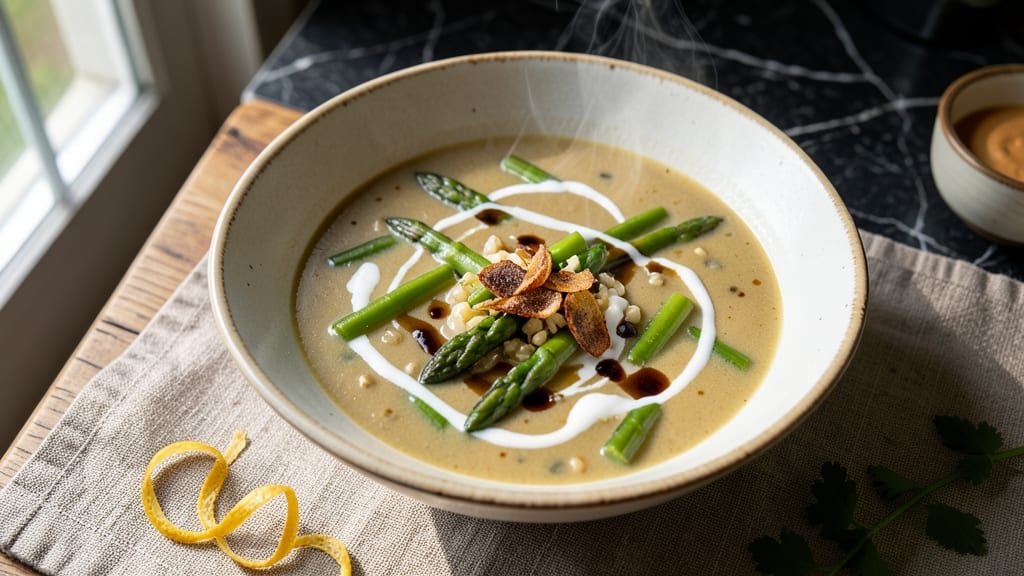
This fresh asparagus soup recipe transforms spring’s delicate green stalks into a velvety velouté that captures peak season in every spoonful. The secret lies in a two-stage cooking process—first blanching the asparagus to preserve its vibrant color, then simmering it with aromatic shallots and white wine for depth.
What sets this apart is the crisp celery crown garnish that adds satisfying crunch without overpowering the soup’s bright, herbaceous flavor.
The foundation of this recipe is a classic French velouté technique, adapted for spring’s freshest ingredients. You’ll start by blanching the asparagus to soften it just enough for blending, then build a rich broth with shallots, garlic, and white wine.
The soup emulsifies beautifully when blended with a touch of cream, creating that signature silky texture while keeping the dish light and refreshing.
By the time you serve it, you’ll have a soup that’s creamy yet bright, with the natural sweetness of fresh asparagus shining through. The crisp celery crowns add a satisfying contrast, while a drizzle of truffle oil or fresh chives elevates it to restaurant-quality.
This is the kind of soup that makes spring feel like a celebration on your table.
Perfect for brunch gatherings or a light lunch, this recipe scales effortlessly for crowds. The method ensures maximum flavor extraction from the asparagus while keeping preparation straightforward.
Whether you’re serving it as a starter or a main, the velvety texture and vibrant green color will make it the star of the meal.
Ingredients for best asparagus soup recipe with fresh asparagus
Spring’s freshest ingredients transform into this velvety velouté with crisp garnish for a restaurant-worthy starter.
| Ingredient | Amount | Notes |
|---|---|---|
| Fresh Asparagus 🌱 | 1 ½ lb | Trimmed, tough ends removed |
| Shallots 🧅 | 1 whole | Finely minced, about 0.25 cup |
| Garlic Cloves 🧄 | 3 cloves | Peeled, minced |
| Dry White Wine 🍷 | ¾ cup | Sauvignon Blanc preferred |
| Vegetable Stock 💧 | 4 cups | Homemade or low-sodium |
| Heavy Cream 🥛 | ½ cup | Full-fat for best texture |
| Unsalted Butter 🧈 | 2 tbsp | Cold, cut into pieces |
| Fresh Chives 🌿 | ¼ cup | Finely chopped, for garnish |
| Celery Crowns 🥬 | 1 cup | Thinly sliced, for garnish |
| Extra-Virgin Olive Oil 🫒 | 2 tbsp | For sautéing |
| Truffle Oil 🍄 | 1 tsp | Optional, for finishing |
| Diamond Crystal Kosher Salt 🧂 | 1 ½ tsp | Adjust to taste |
| Freshly Ground Black Pepper 🌶️ | ½ tsp | Freshly cracked |
| Lemon Juice 🍋 | 1 tbsp | Freshly squeezed |
The asparagus is the star—opt for bright green, firm stalks with tightly closed tips, available at local farmers markets or specialty grocers like Whole Foods or Trader Joe's in spring. Trim the tough ends by bending each stalk until it snaps naturally, then discard the broken portion. For maximum flavor, organic asparagus grown without pesticides ensures a cleaner, sweeter taste. Shallots and garlic should be freshly minced (not pre-minced jars) to prevent bitterness, and Sauvignon Blanc wine adds bright acidity that balances the asparagus’s natural sweetness. If using store-bought vegetable stock, low-sodium options prevent over-salting the soup.
No white wine? Substitute with additional vegetable stock and a splash of apple cider vinegar to mimic acidity. Heavy cream can be replaced with full-fat coconut milk for a dairy-free version, though texture will differ slightly. Diamond Crystal kosher salt dissolves more easily than table salt, so adjust gradually. For the celery crowns, use the leafy tops from organic celery stalks—discard any wilted or yellowed leaves. Truffle oil is optional but adds an earthy depth worth the investment if you’re serving guests. Fresh chives should be finely chopped for garnish, as their mild onion flavor complements the soup’s brightness without overpowering it.
Asparagus trims and celery crowns can be prepped ahead and stored in airtight containers in the fridge for up to 2 days. The soup itself reheats beautifully but loses some of its velvety texture—reheat gently on low heat and stir in a splash of cream or cold water to restore consistency. For make-ahead convenience, blend the soup without the cream, store it in jars, then stir in the cream and garnishes just before serving. Garnishes like celery crowns and chives should be added freshly to maintain their crisp texture and vibrant color.
Why You'll Love This Recipe
- Speedy Weeknight Win: I swear by this when I’m too tired to fuss—just sauté shallots, add garlic, deglaze with white wine, and toss in chopped asparagus. No peeling, no blanching, just 20 minutes of hands-off simmering while I pretend I’m not actually cooking.
- Wine-Infused Magic: That splash of dry white wine? It’s the secret weapon—brightens the stock, cuts through the earthiness of asparagus, and leaves you with a soup that tastes like a fancy bistro. Honestly, I’ll take it over any canned version.
- Leftovers That Lie: Between us, this soup gets better the next day. The asparagus softens into silky strands, the flavors meld, and suddenly you’ve got a freezer-friendly meal that feels like a luxury. I’ve reheated mine three times and still crave it.
- Budget-Friendly Freshness: Fresh asparagus doesn’t have to break the bank—this recipe uses the whole stalk (tough ends go in the stock!), and the rest of the ingredients are pantry staples. Feeds four for under $10, and I’ve never seen my family turn it down.
Step-by-step instructions for fresh asparagus velouté with celery garnish
Transform spring's finest asparagus into a velvety, restaurant-quality velouté with crisp celery crowns.
Prepare the Asparagus and Aromatics
Trim the tough ends from the 1.5 lb fresh asparagus, leaving you with about 12-14 inches of tender stalk. Cut the stalks into 1-inch pieces and set aside. Finely mince the 1 whole shallot (about ¼ cup) and 3 cloves garlic—the shallot should be so fine it nearly disappears when cooked.
In a large Dutch oven, heat 2 tablespoons extra-virgin olive oil over medium heat until shimmering. Add the shallot and garlic, cooking for 3-4 minutes until soft and fragrant, but not browned. This gentle cooking draws out their sweetness without bitterness. Add the asparagus pieces and toss to coat in the oil, cooking for another 3 minutes until just beginning to soften at the edges.
Deglaze and Build the Base
Pour in the 0.75 cup dry white wine, scraping up any browned bits from the bottom of the pot. Let it simmer for 2-3 minutes until reduced by half, which intensifies the wine's flavor. Add the 4 cups vegetable stock and bring to a gentle boil, then reduce heat to medium-low to maintain a steady simmer.
Here's the thing—this soup needs time to develop depth. Let it cook uncovered for 15-20 minutes until the asparagus is completely tender and the soup has reduced slightly, creating a concentrated flavor base. You'll know it's ready when the asparagus pieces collapse easily when pressed with a fork.
Blend to Silky Perfection
Carefully transfer the soup to a blender in two batches, leaving room for the steam to escape. I use an immersion blender for this step—it keeps everything contained and prevents messy spills. Blend until completely smooth, about 30-45 seconds per batch. The texture should be velvety, with no visible asparagus fibers.
Return the blended soup to the pot and stir in the 0.5 cup heavy cream and 2 tablespoons cold unsalted butter, cut into pieces. Bring to a gentle simmer over low heat for 3-4 minutes—just enough to warm through without curdling the cream. Season with 1.5 teaspoons kosher salt and 0.5 teaspoon freshly ground black pepper, adjusting to taste.
Finish with Bright Acid and Garnish
Remove the soup from heat and stir in the 1 tablespoon freshly squeezed lemon juice. This brightens the flavors and cuts through the richness of the cream. Taste and adjust seasoning—spring asparagus is naturally mild, so don't be shy with the salt and pepper.
For the final touch, ladle the soup into bowls and top each serving with thinly sliced celery crowns (about ¼ cup per bowl) and a drizzle of 1 teaspoon truffle oil. The celery adds a satisfying crunch and visual contrast, while the truffle oil elevates the dish with an earthy aroma. Garnish with finely chopped fresh chives for a pop of color and fresh herb notes.
Pro Tips For Making Best Asparagus Soup Recipe With Fresh Asparagus
- CHAR THE SHALLOTS: I learned this the hard way—don’t just toss chopped shallots into the pot. Sauté them in butter or oil over medium-low heat until they’re golden and caramelized (about 5-7 minutes), not just softened. That’s where the deep, sweet flavor comes from, and it’s the thing that makes your soup taste like it came from a restaurant, not a rushed weeknight.
- TRIM THE ASPARAGUS RIGHT: Cut the tough ends off the asparagus first, but don’t just eyeball it. Snap them instead—hold a spear at the base and bend it until it breaks. The natural break point is where the crisp, edible part ends. This saves you from peeling and ensures every bite is tender, not chewy. (Yes, even if you’re impatient like me.)
- DEGLAZE WITH WINE: After cooking the shallots and garlic, pour in the white wine and let it bubble for 2-3 minutes before adding stock. This isn’t just for flavor—it’s about extracting every last bit of caramelized goodness from the pan. Skip the rush, and the soup will taste richer and more complex. (Your future self will notice the difference.)
- STRAIN THE SOUP: This isn’t the prettiest method, but it’s the tastiest. After simmering the asparagus in stock, strain out the solids before blending. It gives you a silky, clean texture instead of a chunky, watery mess. Save the strained asparagus for another use—it’s still great in salads or scrambled eggs. (I know, I know, but trust the process.)
Dietary considerations for this best asparagus soup recipe with fresh asparagus
Vegetarian Adaptations
This asparagus soup is already vegetarian-friendly, but you can enhance its depth with umami-rich mushrooms or nutritional yeast for a cheesy, savory note. Swap the vegetable stock for mushroom broth or add 1 cup finely chopped cremini mushrooms to the sautéed aromatics.
For extra creaminess, replace heavy cream with cashew cream (blend ½ cup soaked cashews with ½ cup water).
Gluten-Free Considerations
All ingredients in this recipe are naturally gluten-free, but always double-check your vegetable stock label—some brands contain hidden gluten. For extra precaution, use certified gluten-free stock like Pacific Foods or Imagine.
The celery crowns and fresh herbs are also safe, but if you're highly sensitive, rinse them thoroughly to remove any potential cross-contamination from processing.
Dairy-Free Options
To make this soup dairy-free, replace the heavy cream with full-fat coconut milk (use ½ cup for a similar texture) and omit the butter. For richness, stir in 1 tablespoon olive oil at the end.
The soup will still be creamy but with a slightly lighter, more vegetal profile. Garnish with toasted pumpkin seeds instead of truffle oil for a nutty crunch.
Low-Carb Version
This soup is naturally low in carbs, but you can optimize it further by skipping the celery crowns (which add minimal carbs) and using cauliflower florets instead of asparagus for a keto-friendly twist.
If using asparagus, stick to the original recipe—just 1.5 lbs provides only 12g net carbs per serving. For extra fat to support ketosis, stir in 1 tablespoon ghee instead of butter.
Allergen-Friendly Swaps
For nut allergies, avoid cashew cream and stick to coconut milk or omit cream entirely. If asparagus is problematic, substitute with leeks or fennel (both work well in veloutés). For sulfite-sensitive individuals, use fresh lemon juice instead of bottled, and ensure your wine is sulfite-free.
Always verify ingredient labels, especially with stocks and wines, as hidden allergens can lurk in unexpected places.
Kid-Friendly Adjustments
Kids often prefer milder flavors, so reduce the lemon juice to ½ tablespoon and omit the truffle oil. Blend the soup extra smooth to eliminate any fibrous texture, and stir in ½ cup pureed butternut squash for natural sweetness.
Serve with crispy fried shallots (store-bought or homemade) for a fun, crunchy topping they’ll love. 🌟
Nutrition facts
Frequently asked questions about fresh asparagus soup
Can I use frozen asparagus instead of fresh?
Fresh asparagus gives the brightest flavor, but you can use frozen in a pinch. Thaw it first and squeeze out excess water before cooking. The texture won't be as velvety, but it'll still taste delicious. For best results, use frozen asparagus that's been blanched—it'll blend more smoothly than raw frozen pieces.
How do I make this soup extra creamy without heavy cream?
Blend in ½ cup silken tofu or ¼ cup cashew butter with the cream for a dairy-free, ultra-creamy texture. Another trick is to whisk in 1 tablespoon cornstarch mixed with 2 tablespoons cold water> after blending, then simmer for 2-3 minutes to thicken naturally. The soup will still be light but luxuriously smooth.
Why did my soup turn out too thin?
This usually happens if you over-blended or didn't reduce the broth enough. For next time, simmer the soup uncovered for 5-10 extra minutes before blending, or stir in 1 tablespoon butter or cream> and let it melt slowly. If it's already too thin, make a quick roux with 1 tbsp flour> and 1 tbsp cold butter>, whisk into the soup, and simmer for 3-4 minutes>.
Can I make this soup ahead of time?
Yes! Prepare it up to 2 days ahead>, but hold off on adding the cream until serving. Store the blended base in airtight containers in the fridge. When ready to serve, reheat gently, stir in fresh cream, and garnish with crisp celery crowns. The flavors actually improve overnight as they meld together.
What's the best wine to use if I don't have Sauvignon Blanc?
Any dry white wine with bright acidity works—try Pinot Grigio>, Chardonnay>, or even dry Riesling>. Avoid sweet wines like Moscato. If you're avoiding alcohol, substitute with ½ cup apple cider vinegar> plus ¼ cup water>—it mimics the acidity perfectly. The key is balancing the asparagus's natural sweetness with something tangy.