
Soups & Stews
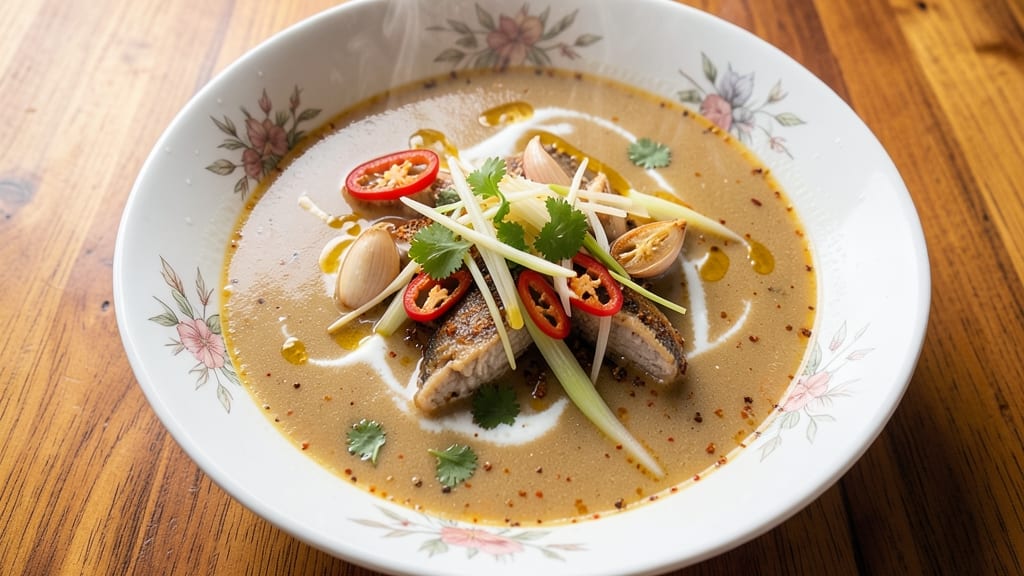
This Bengali Thai soup recipe blends golden turmeric and creamy coconut milk into a fragrant, comforting broth that bridges two culinary worlds. The secret lies in balancing traditional Bengali spices with Thai aromatics—lemongrass, galangal, and kaffir lime—simmered in a rich fish or vegetable stock.
What makes this dish special is how it transforms simple ingredients into a complex, restaurant-quality soup with minimal effort.
The foundation begins with a fragrant paste of ginger, garlic, and chili, toasted to deepen their flavors before adding coconut milk for natural richness. Turmeric infuses the broth with its signature golden hue and earthy warmth, while Thai herbs add brightness.
The result is a velvety, aromatic soup that’s both comforting and invigorating—perfect for chilly evenings or as a light yet satisfying meal.
What you’ll achieve is a harmonious blend of textures and flavors: tender vegetables, delicate fish or tofu, and a broth so flavorful it needs little more than a sprinkle of fresh cilantro and a drizzle of lime.
Each spoonful delivers layers of spice, creaminess, and herbal notes, making this soup a standout centerpiece for any table.
Serve with steamed jasmine rice or crusty bread to soak up every drop of that fragrant broth. The beauty of this recipe is its adaptability—use fish stock for depth or vegetable broth for a lighter version. Here’s how to create this fusion masterpiece in one pot.
Ingredients for bengali thai soup
Golden turmeric meets Thai aromatics in this fragrant, one-pot fusion masterpiece.
| Ingredient | Amount | Notes |
|---|---|---|
| Fish Stock 🐟 | 4 cups | Homemade or high-quality store-bought |
| Coconut Milk 🥥 | 1 can (13.5 oz) | Full-fat for creaminess |
| Turmeric Powder 🌿 | 1 tbsp | Freshly ground preferred |
| Ginger Root 🧅 | 2 tbsp | Freshly grated, peeled |
| Garlic Cloves 🧄 | 4 cloves | Peeled, minced |
| Red Chili Peppers 🌶️ | 2 whole | Bird's eye or Thai chili |
| Lemongrass 🌿 | 2 pieces | White part only, sliced |
| Galangal 🌿 | 1 piece | Fresh, sliced thin |
| Kaffir Lime Leaves 🍋 | 2 whole | Bruised slightly |
| Vegetable Oil 🫒 | 2 tbsp | For toasting paste |
| White Fish Fillets 🐟 | 1 lb | Cod or snapper preferred |
| Fresh Cilantro 🌿 | ¼ cup | Chopped, for garnish |
| Lime Juice 🍋 | 1 tbsp | Freshly squeezed |
| Salt 🧂 | 1 tsp | Adjust to taste |
| Black Pepper 🌶️ | ½ tsp | Freshly ground |
The coconut milk and fish stock form the soul of this soup—full-fat coconut milk ensures richness, while a high-quality fish stock (like Pacific Foods or homemade) delivers depth. For the galangal and kaffir lime leaves, Asian markets are your best bet—they often carry fresh galangal, which has a citrusy, ginger-like punch. If you can't find galangal, extra ginger at double the amount works in a pinch. The lemongrass should be vibrant and fragrant—squeeze the base to release oils before slicing. For turmeric, freshly ground gives the best color and flavor, but powdered is fine if you're in a hurry.
No fish stock? Vegetable stock works beautifully—just add a splash of soy sauce for umami. Running short on kaffir lime leaves? Double the lime juice and add a bay leaf for complexity. The chili peppers pack serious heat—adjust to taste by removing seeds. For the fish, cod or snapper stay delicate when cooked in broth, but firm white fish like halibut holds up well too. If you prefer a vegetarian version, swap the fish for extra-firm tofu and add a splash of vegetable broth for extra flavor. The ginger and garlic should be freshly grated and minced—pre-minced garlic lacks punch.
This soup tastes even better the next day—reheat gently on the stove with a splash of water or coconut milk to restore creaminess. Store in an airtight container for 3-4 days in the fridge, or freeze for up to 3 months. For meal prep, portion into containers with a layer of coconut milk on top to preserve freshness. The broth keeps for 5 days in the fridge if you remove the fish first—perfect for quick lunches or as a base for other dishes. Fresh herbs like cilantro and lime should be added just before serving to keep their brightness.
Why You'll Love This Recipe
- One-Pot Magic: I swear by this—just a pot, a few ingredients, and 20 minutes later, you’ve got something that smells like a hug. No chopping boards full of scraps, no messy cleanup. The fish stock and coconut milk do all the heavy lifting while you stir.
- Golden Creamy Heat: That first sip? Turmeric and ginger team up for a warmth that lingers, but the coconut milk cools it into something silky. Honestly, the garlic cloves caramelizing at the bottom? That’s the secret—crispy, fragrant, and impossible to resist.
- Leftover Lover: Between us, this soup only gets better the next day. The flavors meld like old friends, and reheating it is zero effort—just a splash of water, a quick simmer. My freezer’s full of it because I make it so often, and it’s always a win.
- Budget Bright Spot: Fish stock and coconut milk stretch this into a full meal without breaking the bank. I’ll be real: it’s cheaper than takeout, but way more impressive. Plus, turmeric and ginger are pantry staples—no last-minute grocery runs needed.
Step-by-step instructions for turmeric-coconut harmony soup
Master this fusion of Bengali and Thai flavors with a method designed for depth and balance.
Toast the Aromatic Paste
Heat the 2 tablespoons vegetable oil in a large pot over medium heat. Add the 2 pieces lemongrass (white parts only), 1 piece galangal (sliced thin), 4 cloves garlic cloves (minced), and 2 whole red chili peppers (whole, not chopped). Toast for 2-3 minutes until the lemongrass and galangal release their fragrance and the garlic turns golden.
Here's where the magic begins: add the 2 whole kaffir lime leaves (bruised slightly between your palms) and 1 tablespoon turmeric powder. Stir constantly for 30 seconds—you'll see the turmeric transform from dull to vibrant yellow. This step develops the complex aromatic base that defines the soup's character. Remove the whole chili peppers and lime leaves before proceeding.
Build the Spiced Coconut Base
Add the 2 tablespoons ginger root (freshly grated) and cook for 1 minute until fragrant. Immediately pour in the 1 can (13.5 oz) coconut milk and stir vigorously to combine with the toasted spices. Let this mixture simmer gently for 3-4 minutes until slightly thickened—this creates the velvety foundation of the soup.
Now add the 4 cups fish stock and bring to a gentle boil. The soup should smell like a tropical storm meeting a spice market. Reduce heat to medium-low and let it simmer uncovered for 10 minutes, stirring occasionally. This slow reduction allows the flavors to meld while preventing the coconut milk from curdling.
Season and Prepare the Fish
Season the simmering broth with 1 teaspoon salt and 0.5 teaspoon black pepper. Taste and adjust the seasoning—this is where you'll notice if the balance is right. The soup should be aromatic with a gentle heat from the chili and galangal, a citrusy brightness from the lemongrass, and an earthy warmth from the turmeric and ginger.
While the broth simmers, pat the 1 lb white fish fillets (cod or snapper preferred) dry with paper towels. Season lightly with a pinch of salt and pepper—just enough to enhance their natural flavor without overpowering the complex broth. Cut each fillet into 4 equal portions for even cooking.
Cook the Fish to Perfect Tenderness
Carefully add the fish portions to the simmering broth. The water should be at a gentle simmer—not a rolling boil, or the fish will cook unevenly. Cover the pot and cook for 4-5 minutes until the fish is just opaque throughout and flakes easily with a fork. Overcooking will turn the fish rubbery, so watch closely during this final stage.
Here's the professional trick: the fish is done when it reaches an internal temperature of 140°F at its thickest part. Remove the fish with a slotted spoon and set aside on a warm plate, tented with foil to keep warm. The broth should remain flavorful and aromatic—this is your sauce.
Finish and Serve with Fresh Herbs
Return the pot to medium heat and simmer the broth uncovered for 2-3 minutes to reduce slightly and intensify the flavors. Stir in the 1 tablespoon lime juice and taste again. The acidity should brighten the dish, cutting through the richness of the coconut milk.
To serve, divide the fish portions among bowls, then ladle the hot broth generously over each serving. Garnish immediately with 0.25 cup chopped fresh cilantro—this adds a final layer of freshness that contrasts beautifully with the warm, spiced broth. The soup should be creamy yet light, aromatic with a gentle heat, and perfectly balanced between the earthy spices and bright citrus notes.
Pro Tips For Making Bengali Thai Soup
- Bloom the Spices Slow: Simmer your turmeric and ginger in the fish stock for 5 minutes before adding coconut milk—this pulls out their full flavor without bitterness. I used to toss them in last-minute, and the soup always tasted flat by comparison.
- Toast the Garlic: Lightly fry your minced garlic in a dry pan until it smells nutty (about 1-2 minutes) before adding it to the soup. This deepens its aroma and prevents that raw, pungent aftertaste that ruins the balance.
- Strain the Stock: Skip the cloudy fish stock—strain it through a fine-mesh sieve before using. I learned this the hard way when my soup turned murky, and no amount of simmering fixed it.
- Thin the Coconut Milk: Mix equal parts coconut milk and warm water (or stock) before adding it to the pot—this prevents curdling and gives a smoother texture. Yes, it’s an extra step, but your soup will thank you.
Pro cooking tips for perfect results
Toast Spices Properly
Never skip toasting your aromatics—this step unlocks their full potential. Heat the 2 tablespoons vegetable oil over medium heat until shimmering, then add the lemongrass, galangal, garlic, and chili peppers. Toast for 2-3 minutes until fragrant and the garlic turns golden.
This process enhances their natural oils and deepens the flavor profile. I swear by using fresh galangal here—it has a citrusy, peppery kick that dried substitutes can't match. 🌿
Control Coconut Milk Heat
Coconut milk is delicate—too much heat and it curdles. After adding the 1 can coconut milk, keep the heat at medium-low and stir constantly for 3-4 minutes. Never let it boil vigorously. The goal is to create a velvety base without breaking the emulsion.
I like to whisk it gently with a silicone spatula to distribute the fat evenly throughout the broth. This ensures a smooth, luxurious texture in every spoonful.
Simmer Gently for Depth
The 10-minute simmer at medium-low heat is where the magic happens. This slow reduction allows the turmeric to infuse the broth with its golden hue and earthy warmth while the lemongrass and galangal release their citrusy notes.
Stir occasionally to prevent a skin from forming, but don't over-stir—you want those spices to meld naturally. The broth should smell like a tropical spice market when ready. ⏰
Fish Cooking Precision
Fish cooks in a flash—4-5 minutes is all it takes for perfect tenderness. Use a gentle simmer (not a boil) to prevent the fish from turning rubbery. The internal temperature should reach 140°F at its thickest part.
I recommend using a thermometer for accuracy, especially if you're new to cooking fish. Remove the fish just as it turns opaque and flakes easily—overcooking is the fastest way to ruin this dish.
Acid Balance at the End
The final touch is the 1 tablespoon lime juice, added just before serving. This brightens the rich coconut milk and balances the earthy spices. Taste the broth before adding the lime—if it's already tangy enough, you can reduce to ½ tablespoon.
The acidity should cut through the creaminess without overpowering the other flavors. Fresh cilantro adds a final herbal note that ties everything together. 💫
Garnish Like a Pro
Presentation matters—don't just sprinkle cilantro randomly. Use a microplane to create fine, even strands that float beautifully on the broth. A few lime zest strips along the rim of the bowl adds a pop of color and extra citrus aroma.
For an elegant touch, drizzle a thin stream of chili oil (made by infusing neutral oil with red chili flakes) over the top. This garnish elevates the dish from homey to restaurant-worthy in seconds.
Nutrition facts
Frequently asked questions
Can I make this soup vegetarian?
Yes! Swap the fish for extra-firm tofu (pressed and cubed) and use vegetable broth instead of fish stock. Add 1 tablespoon soy sauce to the broth for extra umami depth. The coconut milk and spices will still shine while keeping the dish plant-based.
What if I can't find galangal?
No problem! Use double the ginger (4 tbsp) for a similar citrusy kick, though galangal's peppery note is unique. Alternatively, add ½ teaspoon ground coriander and ¼ teaspoon ground white pepper to mimic its complexity. The soup will still taste amazing—just slightly different.
How spicy is this soup?
The recipe uses whole chili peppers (not chopped) for mild heat—remove them before adding coconut milk to reduce spice. For extra heat, mash one chili into the broth or add ½ teaspoon chili flakes after cooking. Always taste first! The galangal and turmeric provide warmth without intense heat.
Can I make this soup ahead of time?
Store the broth (without fish) in an airtight container for 3-4 days in the fridge or 3 months in the freezer. Reheat gently on the stove with a splash of coconut milk to restore creaminess. Add fresh fish or tofu when reheating—it cooks quickly in hot broth. Fresh herbs should be added just before serving.
What's the best way to serve this soup?
Pair it with steamed jasmine rice or crusty bread to soak up the aromatic broth. For extra flair, serve with Thai-style cucumber salad (julienned cucumber, lime, chili, and fish sauce) to balance the richness. The soup's golden hue makes it perfect for special occasions—presentation matters!