
Soups & Stews
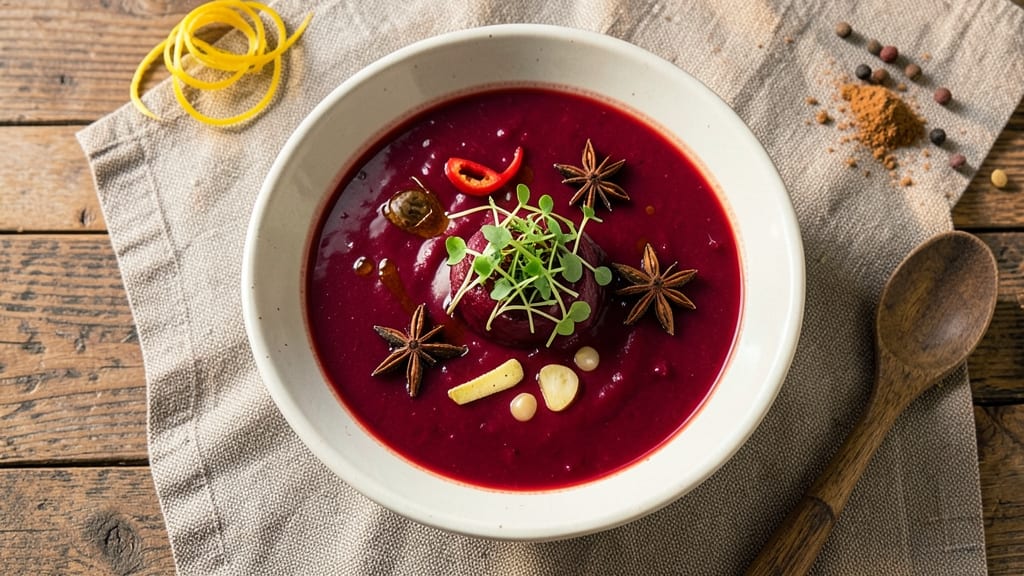
This Chinese-style beetroot soup transforms humble vegetables into a fragrant, warming bowl of comfort that balances earthy sweetness with aromatic spices. The secret lies in slow-simmered star anise and fresh ginger, which infuse the broth with layers of warmth and complexity—far beyond basic beetroot preparations. What makes this recipe special is the harmony of textures: silky soup meets tender beetroot chunks, all framed by a delicate spice crust that lingers on the tongue.
The process begins with sautéing garlic and ginger until fragrant, then building depth with star anise and soy sauce before adding water and beetroot. Simmering until the vegetables soften creates a naturally sweet, velvety broth without needing added sugar.
The result is a soup that's both nourishing and sophisticated—perfect for chilly evenings or as a vegetarian centerpiece for any meal.
What you'll achieve is a bowl that's rich in flavor yet light enough to pair with steamed rice or dumplings. The star anise adds a subtle licorice note, while ginger keeps the palate bright and refreshing.
Garnish with fresh cilantro or a drizzle of chili oil for extra dimension, and you'll have a soup that feels like a culinary journey through China's most comforting traditions.
This recipe delivers restaurant-quality results with simple techniques—no special equipment required. The slow simmering develops the flavors naturally, while the aromatic spices create depth that elevates beetroot from ordinary to extraordinary. Ready in about 45 minutes, it's the perfect balance of effortless preparation and impressive outcome.
Ingredients for beetroot soup recipe chinese style
Earthy beetroot meets aromatic spices in this Chinese-inspired vegetarian bowl of warmth.
| Ingredient | Amount | Notes |
|---|---|---|
| Fresh Beetroot 🍠 | 2 lb | Medium-sized, peeled and cut into chunks |
| Fresh Ginger Root 🌿 | 2 tbsp | Grated, peeled, finely chopped |
| Garlic Cloves 🧄 | 4 cloves | Peeled, minced for aromatic base |
| Star Anise 🌶️ | 2 whole | Whole pods for infusion |
| Light Soy Sauce 🥄 | 2 tbsp | For umami depth, low-sodium preferred |
| Water 💧 | 4 cups | Filtered preferred for clarity |
| Vegetable Oil 🫒 | 2 tbsp | High smoke point for sautéing |
| Fresh Cilantro 🌿 | ¼ cup | Chopped, for garnish (optional) |
| Chili Oil 🌶️ | 1 tbsp | For finishing, optional |
| Diamond Crystal Kosher Salt 🧂 | 1 tsp | Adjust to taste, fine grain |
| Black Peppercorns 🌶️ | ½ tsp | Freshly cracked for heat |
| White Rice Vinegar 🍶 | 1 tbsp | For brightness, optional |
The star anise and fresh ginger are non-negotiable for authentic depth. Star anise pods should be whole and plump—Whole Foods or specialty Asian markets carry the best quality. For ginger, organic from the produce section ensures maximum freshness and zing. The beetroot's natural sweetness develops beautifully during simmering, so medium-sized roots with vibrant color are ideal. If using pre-peeled beets, rinse thoroughly to remove any residual starch. For the soy sauce, light varieties like Kikkoman provide the right balance without overpowering the delicate broth.
No star anise? Anise seeds or fennel seeds work in a pinch, though the flavor will differ slightly. Substituting fresh ginger with powdered? Use one-third the amount—it lacks the bright punch of fresh. For the chili oil, homemade with Sichuan peppercorns elevates the dish, but store-bought varieties like Lao Gan Ma are perfectly acceptable. The white rice vinegar adds a subtle tang; if unavailable, apple cider vinegar at half the amount suffices. For a richer broth, consider adding a 1-inch piece of kombu seaweed during simmering—it dissolves completely but adds umami depth.
This soup tastes even better the next day as flavors meld. Store in an airtight container in the fridge for up to 5 days, or freeze for 3 months in portion-sized containers. For serving, reheat gently on the stove with a splash of water to restore silkiness. The chili oil and cilantro should be added fresh at the table—cilantro wilts quickly, so store the stems in a jar of water in the fridge for up to 1 week. Garnish with a sprinkle of toasted sesame seeds for extra texture if desired.
Why You'll Love This Recipe
- Few Ingredients, Big Payoff: That’s it—just a handful of pantry staples and fresh beets. No fancy prep, no hidden spices, just the earthy sweetness of roasted beetroot meeting the zing of ginger and garlic. Honestly, I’ve made it with whatever I had on hand, and it still tastes like a restaurant dish.
- Umami Bomb: The star anise and light soy sauce? They’re the secret weapons. That deep, savory punch turns a simple vegetable soup into something you’ll want to sip slowly—especially when the star anise infuses the broth with a subtle licorice warmth that lingers.
- Lunchbox or Lounge: Between us, this soup is that versatile. Pack it in a thermos for a workday lunch (it reheats beautifully) or serve it chilled with a drizzle of chili oil for a cozy night in. My college-aged son even brings it to his apartment—no judgment, just great soup.
- Budget Meal That Lasts: A single bag of beets and a root of ginger stretch across multiple servings. I’ve had this soup for three days running, and it only gets better as the flavors meld. Plus, the ginger and garlic are so cheap—you’ll have leftovers before you know it.
Step-by-step instructions for Chinese-style beetroot soup
This aromatic soup balances earthy beets with fragrant star anise and ginger - here's how to achieve perfect harmony.
Sauté Aromatics Until Fragrant
Heat the 2 tablespoons vegetable oil in a heavy-bottomed pot over medium heat. Add the 4 minced garlic cloves and 2 tablespoons grated fresh ginger root, stirring constantly for 1-2 minutes until the ginger becomes translucent and the garlic releases its pungent aroma. This foundational step develops the soup's complex flavor profile.
Add the 2 whole star anise pods and continue cooking for 30 seconds until you can detect their warm, licorice-like scent. The star anise should remain whole - crushing them releases too much bitterness. This aromatic base will infuse throughout the soup, creating its signature depth.
Cook Beets Until Tender
Add the 2 pounds fresh beetroot chunks to the pot, stirring to coat them in the aromatic oil. Pour in the 4 cups water and bring to a gentle boil. Reduce heat to medium-low and simmer uncovered for 30-40 minutes, stirring occasionally, until the beets are fork-tender when pierced with a knife.
Real talk: The beets should collapse easily but still hold their shape. If they're breaking apart too quickly, reduce heat slightly to prevent mushiness. This simmering time allows the star anise to fully infuse its flavor while tenderizing the beets without overcooking them.
Season and Simmer to Develop Flavor
Add the 2 tablespoons light soy sauce and 1 teaspoon diamond crystal kosher salt to the pot. Stir well to distribute the seasoning evenly. The soup should taste balanced at this stage - slightly salty with umami depth from the soy sauce. If using, add the 1 tablespoon white rice vinegar now for brightness.
Simmer uncovered for an additional 15-20 minutes to allow the flavors to meld. The liquid should reduce slightly, intensifying the beet flavor. Taste periodically and adjust seasoning if needed - you may need to add a pinch more salt or vinegar depending on your preference.
Finish with Fresh Herbs and Chili Oil
Remove the pot from heat and discard the star anise pods using a slotted spoon. Stir in the 0.25 cup chopped fresh cilantro, reserving a small amount for garnish. The cilantro adds freshness that cuts through the soup's richness while maintaining its traditional Chinese presentation.
Drizzle with 1 tablespoon chili oil just before serving. This final touch adds heat and visual appeal, creating a beautiful contrast against the deep red soup. The chili oil should be incorporated lightly - just enough to enhance without overwhelming the delicate beet flavor.
Serve Warm with Garnishes
Ladle the soup into bowls and garnish immediately with additional cilantro and a final drizzle of chili oil. The soup should be served piping hot - the heat helps release its full aromatic profile. Each spoonful should deliver a harmonious balance of earthy beets, warm spices, umami from the soy sauce, and bright finishing touches.
For best results, serve with steamed rice or crusty bread to soak up the flavorful broth. The soup keeps well in the refrigerator for up to 3 days, though its flavors develop best when enjoyed fresh within 24 hours of preparation.
Pro Tips For Making Beetroot Soup Recipe Chinese Style
- Peel Beets After Cooking: I learned this the hard way—raw beet peels are stubborn and slippery. Cook them whole first, then slip off the skins after simmering; they’ll peel like butter. (Yes, even if you’re impatient like me.)
- Toast Star Anise First: Crank the heat to medium-high and dry-toast the star anise for 30 seconds before adding liquid. This deepens the aroma and stops it from floating like a weird boat in your soup—trust the process.
- Blitz Ginger Rough: Skip the fine mincing—chop ginger into thick matchsticks before simmering. After cooking, pulse it briefly in the blender to break it down. This keeps the texture balanced and avoids that cloying, over-mashed ginger taste.
- Simmer Low and Long: Don’t rush the simmer—aim for 45 minutes at a gentle bubble. High heat turns beetroot soup bitter, and the flavors need time to marry. (Your future self will notice the difference.)
Essential equipment for perfect results
Heavy-Bottomed Pot
Your soup's foundation starts with a heavy-bottomed pot—I swear by my Le Creuset Dutch oven for even heat distribution and flavor development. The thick base prevents hot spots that can burn your aromatics, while the tall sides contain the simmering liquid.
If you don’t have one, a 5-quart stainless steel pot works perfectly. Avoid thin aluminum pots—they react with acidic ingredients and can’t maintain consistent temperatures. 🔥
Immersion Blender
For that signature silky texture without overcooking the beets, an immersion blender is your best friend. I use the Ninja Professional 1100—it’s powerful enough to puree the soup directly in the pot, saving you the hassle of transferring to a blender.
If blending separately, use a high-speed blender like the Vitamix for ultra-smooth results. Just be cautious with hot liquids—always let the soup cool slightly first. ✨
Slotted Spoon
A slotted spoon is essential for removing the star anise pods without losing broth. I keep a stainless steel version from OXO in my kitchen—it’s sturdy, easy to clean, and won’t warp like plastic.
Use it to fish out the pods after simmering, then stir in fresh cilantro for that final bright touch. Pro tip: Skip the strainer unless you want a completely smooth texture—the pods add depth, but you’ll want to remove them before serving. 💫
Fine-Mesh Strainer
If you prefer a completely smooth soup, a fine-mesh strainer helps remove any fibrous bits from the beets or herbs. I use a Mesh King strainer—it’s durable and won’t clog easily. Place it over a bowl and ladle the soup through after blending.
For extra clarity, line the strainer with a cheesecloth or coffee filter for a restaurant-quality finish. This step is optional but elevates the presentation for special occasions. 💡
Measuring Spoons
Precision matters with spices and liquids in this recipe. Invest in a set of stainless steel measuring spoons—I love the OXO Good Grips for their ergonomic handles and accurate measurements.
Use them for the 2 tablespoons grated ginger, 2 tablespoons soy sauce, and 1 tablespoon chili oil. A mismeasured ingredient can throw off the balance of flavors, so don’t skip this step. Trust me, your taste buds will thank you. 🧂
Optional: Wok for Wok-Hei
For an extra layer of depth, finish the soup in a carbon steel wok to capture wok-hei—that smoky, charred aroma. Heat the wok until smoking, then swirl the soup for 30 seconds before serving.
This step is purely optional but adds a professional touch. If you don’t own a wok, a cast iron skillet works in a pinch. Just be cautious—wok-hei is all about speed and control. 🔥
Nutrition facts
Frequently asked questions
Can I make this Chinese-style beetroot soup without star anise?
Yes, but the flavor will differ. Substitute with 2 teaspoons ground anise seeds or 1 teaspoon fennel seeds for a similar licorice note. For a completely different profile, try 1 cinnamon stick or ½ teaspoon ground coriander. The key is to maintain balance—reduce any substitute by half since concentrated flavors pack more punch.
How do I prevent the soup from turning too watery?
Simmer uncovered for the full 45 minutes to reduce liquid naturally. For thicker texture, mash some cooked beetroot chunks with a fork before blending. If needed, remove the pot from heat and let it sit for 10 minutes—the starches will release and thicken the broth. Avoid adding cornstarch unless absolutely necessary.
What's the best way to store leftovers?
Store in an airtight container in the fridge for up to 5 days. The flavors actually improve overnight! For freezing, portion into individual containers and freeze for 3 months. Reheat gently on low heat, adding a splash of water if needed. Never microwave from frozen—it creates a watery texture. Garnishes like cilantro should be added fresh when reheating.
Can I add protein to make it non-vegetarian? Add ½ lb shrimp or ½ lb chicken breast during the final 15 minutes of simmering. For pork lovers, try ½ lb ground pork cooked with the aromatics at the start.
Why does my soup taste bitter?
Overcooked beets or star anise are usually the culprits. Check if the star anise pods were crushed (they release bitterness when damaged). For beets, reduce simmering time to 30 minutes. Balance bitterness by adding ½ teaspoon sugar or 1 extra tablespoon vinegar. If using canned beets, they often contain preservatives that add bitterness—always use fresh for authentic flavor.