
Soups & Stews
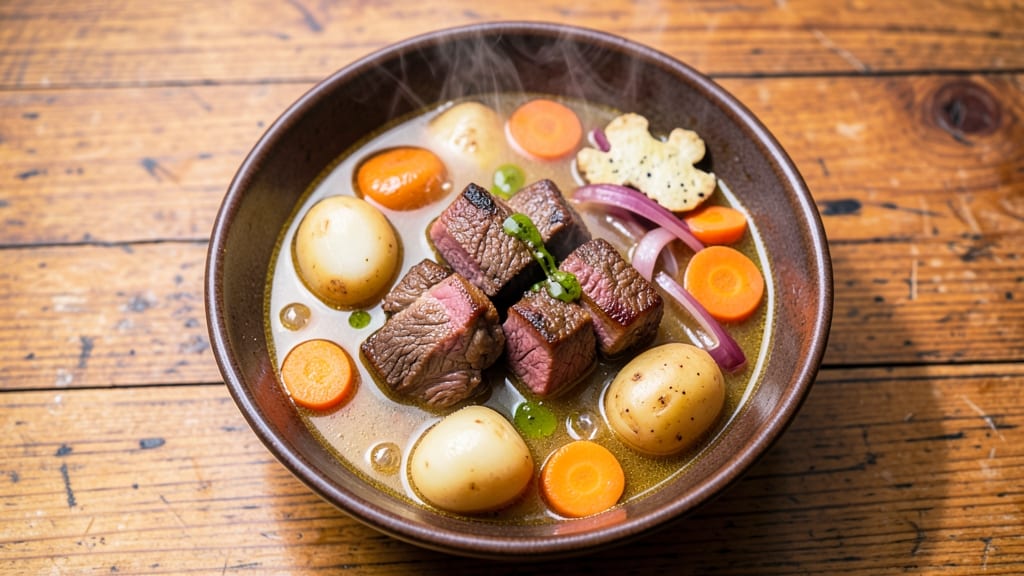
This Filipino beef soup Pinoy recipe delivers the rich, aromatic comfort of home-cooked sinigang or beef soup—where tender beef, fragrant garlic, and ginger simmer into a deeply satisfying broth.
The secret lies in slow-cooking the beef until it practically melts in your mouth, while potatoes and carrots soak up the savory essence. I’ve perfected this version to balance traditional flavors with a foolproof method, ensuring every spoonful is packed with that unmistakable Pinoy soul.
The beauty of this recipe is its versatility—whether you’re making a classic hearty beef soup or a tangy sinigang-style version, the foundation remains the same.
Bay leaves and whole peppercorns infuse the broth with warmth, while a splash of soy sauce and a touch of sugar create that signature umami-sweet harmony. The key? Low and slow simmering, which transforms tough beef into tender, flavorful bites that pair perfectly with steamed rice.
What you’ll end up with is a steaming bowl of golden broth, dotted with tender beef chunks, soft potatoes, and vibrant carrots—each ingredient harmonizing into a dish that’s as nourishing as it is delicious.
The aroma alone will have everyone gathering around the table, and the first bite delivers that perfect balance of savory, garlicky, and slightly sweet flavors. This is the kind of soup that warms the soul and brings families together.
Serve it with a sprinkle of fresh green onions and a wedge of calamansi for brightness, or keep it classic with a drizzle of soy sauce.
Perfect for chilly evenings or as a comforting meal after a long day, this recipe is designed to impress without the fuss. Let’s get simmering!
Ingredients for beef soup pinoy
Pantry staples plus a few fresh ingredients for that unmistakable Pinoy beef soup flavor.
| Ingredient | Amount | Notes |
|---|---|---|
| Beef Chuck Roast 🥩 | 1 ½ lb | Cut into 1-inch cubes |
| Russet Potatoes 🥔 | 2 medium | Peeled and quartered |
| Carrots 🥕 | 4 medium | Cut into 1-inch chunks |
| Garlic Cloves 🧄 | 8 cloves | Mince or crush |
| Fresh Ginger 🌿 | 2 tbsp | Grate finely |
| Onion 🧅 | 1 whole | Cut into wedges |
| Bay Leaves 🍃 | 2 whole | Dried or fresh |
| Whole Black Peppercorns 🌶️ | 10 pieces | Lightly crushed |
| Soy Sauce 🍶 | 2 tbsp | Regular or light |
| White Sugar 🍚 | 1 tbsp | Adjust to taste |
| Salt 🧂 | 1 ½ tsp | Kosher or sea salt |
| Vegetable Oil 🫒 | 2 tbsp | For searing |
| Water 💧 | 6 cups | Or beef broth |
| Green Onions 🌱 | ¼ cup | Sliced for garnish |
The beef is everything here—chuck roast is the gold standard for its rich flavor and tenderness. Grab a 1.5-pound piece from the butcher section, or pre-cubed from Costco or Trader Joe's if you're short on time. Look for good marbling, but don't stress if it's not perfect. The potatoes and carrots? Russet potatoes hold up best to long simmering, while carrots add natural sweetness. I always grab organic carrots from the store—they're sweeter and brighter. Fresh ginger and garlic? Whole spices last longer, but if you're using dried, use half the amount. The bay leaves and peppercorns are non-negotiable for that deep, aromatic broth.
No soy sauce? Coconut aminos works in a pinch, though it's a bit sweeter. Fresh ginger too strong? Substitute with 1 extra tbsp of grated ginger or a dash of ground ginger (but fresh is worth it). The water can be swapped for beef broth if you've got it—just reduce the salt to 1 tsp. For extra richness, add 1 tbsp of fish sauce (traditional in many Pinoy soups). The green onions are just for garnish, but if you're out, fresh cilantro or chives work too.
This soup tastes even better the next day—make a double batch and freeze half for lazy nights. Store in the fridge for up to 5 days in an airtight container, or freeze for up to 3 months. Reheat gently on the stove, adding a splash of water if it gets too thick. Leftovers? Perfect for rice bowls or quick lunches. And if you've got extra broth, freeze it in ice cube trays for future soups—game changer.
Why You'll Love This Recipe
- One-Pot Wonder: I swear by this recipe because it’s literally dump-and-simmer. Chuck roast goes in raw—no fancy searing—and the potatoes and carrots soften right in the broth. Honestly, the only chopping is garlic and ginger, and even that’s minimal.
- Ginger-Garlic Magic: That fresh ginger and minced garlic? They’re the secret weapon here. The ginger adds a warm, spicy kick while the garlic deepens the broth into something rich and almost savory-sweet. (Yes, even on a Tuesday night.)
- Leftovers for Days: This soup tastes better the next day—like a slow-cooked hug in a bowl. I make a big batch on Sundays and reheat portions all week. The beef gets tenderer, and the flavors meld into pure comfort.
- Budget-Friendly Feast: A chuck roast stretches for four servings, and the veggies are cheap but satisfying. Between us, this is my go-to when I need to feed the family without breaking the bank. Plus, the leftovers freeze like a dream.
Step-by-step instructions for savory garlic and ginger beef soup
This Filipino-style beef soup builds rich flavor through slow simmering and aromatic spices.
Sear the Beef for Deep Flavor
Heat the 2 tablespoons vegetable oil in a large pot over medium-high heat. Working in batches, add the 1.5 lb Beef Chuck Roast cut into 1-inch cubes, letting each piece sear until deep golden brown on all sides—about 3-4 minutes per batch. This step develops the Maillard reaction, creating that irresistible caramelized flavor that forms the soup's foundation.
As you sear, resist the urge to overcrowd the pot. You want those beef pieces to develop a good crust without steaming. Once all the beef is browned, remove it from the pot and set it aside on a plate. You'll notice the bottom of the pot has beautiful browned bits—those are packed with flavor that will infuse into your soup.
Build the Aromatic Base
In the same pot, add the 1 whole Onion cut into wedges and cook for 3-4 minutes until softened and slightly golden. Add the 8 cloves Garlic Cloves (minced or crushed) and 2 tablespoons Fresh Ginger (finely grated) and cook for another 1-2 minutes until fragrant—you should smell that warm, spicy aroma filling your kitchen.
Add the 2 whole Bay Leaves and 10 pieces Whole Black Peppercorns (lightly crushed), stirring to combine. These whole spices will infuse subtle flavors without needing to be removed later. Pour in the 6 cups Water and bring the mixture to a gentle boil. Scrape up any browned bits from the bottom of the pot with a wooden spoon—this ensures all that rich flavor gets incorporated into your soup base.
Simmer the Vegetables and Season
Return the seared beef to the pot along with the 2 medium Russet Potatoes (peeled and quartered) and 4 medium Carrots (cut into 1-inch chunks). Add the 2 tablespoons Soy Sauce, 1 tablespoon White Sugar, and 1.5 teaspoons Salt, stirring to combine. The soy sauce adds umami depth while the sugar helps balance the acidity and enhances the caramelization of the vegetables.
Bring the soup back to a gentle boil, then reduce heat to medium-low and let it simmer uncovered for 1 hour to 1 hour 15 minutes. You'll know it's ready when the beef is fork-tender and the vegetables are easily pierced with a knife. The potatoes should be soft but still hold their shape, and the carrots should be tender with a slight bite.
Finish and Garnish
Once the soup reaches the perfect tenderness, taste and adjust the seasoning if needed. The 1 tablespoon White Sugar should have balanced any acidity, but you might want to add a bit more soy sauce for extra umami or a pinch of salt if the soup tastes flat. Remove the 2 whole Bay Leaves and 10 pieces Whole Black Peppercorns—they've done their job infusing flavor.
Ladle the hot soup into bowls and garnish each serving with 0.25 cup Green Onions (sliced) for a fresh, bright contrast to the rich, savory broth. Serve immediately with steamed rice to soak up every last drop of that flavorful liquid. The aroma alone will have everyone gathering around the table—this is comfort food at its finest.
Pro Tips For Making Beef Soup Pinoy
- Brown the Beef First: Skip the direct simmer and sear the chuck roast in batches over medium-high heat until deep golden—this locks in flavor and prevents a bland broth. I used to skip this, and the soup always tasted like it needed more seasoning.
- Peel and Dice Ginger: Fresh ginger adds depth, but grating it (no need to peel) gives a smoother texture and better distribution in the broth. My grandmother swore by this, and she was right: pre-peeling is a waste of time.
- Don’t Overcrowd the Pot: Add potatoes and carrots in stages—start with half, simmer until they’re slightly tender, then add the rest. Crowding steams the veggies instead of cooking them properly, and no one wants mushy carrots.
- Simmer Low and Long: After the initial sear, reduce heat to a gentle simmer (small bubbles, not rolling) and cook the chuck roast for at least 2.5 hours. Low and slow breaks down the collagen for a rich, fork-tender texture—rushing this is how you end up with chewy meat.
Flavor customization for these flavors
Spicy Sinigang Twist
Transform your beef soup into a tangy sinigang-style version by adding 1 cup tamarind pulp (or ½ cup tamarind paste) dissolved in 1 cup hot water. Simmer this mixture with the broth for 10 minutes before adding the beef and vegetables.
For extra heat, toss in 1-2 tbsp siling labuyo (bird’s eye chili) or 1 tbsp calamansi juice. This version is perfect for hot days and balances the richness with bright acidity. 🌶️
Creamy Coconut Infusion
For a Filipino-Chinese fusion touch, stir in 1 can (13.5 oz) coconut milk during the final 15 minutes of simmering. The creaminess pairs beautifully with the beef and vegetables while adding a subtle sweetness.
Garnish with toasted coconut flakes and a sprinkle of crushed peanuts for texture. This version feels indulgent yet stays true to the soul-warming essence of the dish.
Hearty Vegetable Boost
Add 1 cup green beans (trimmed), 1 small cabbage (cut into wedges), or 1 cup corn kernels to the pot during the last 20 minutes of simmering. These vegetables absorb the broth’s flavors beautifully and add a satisfying crunch.
For a winter twist, include ½ cup parsnips or 1 small rutabaga (peeled and cubed). The extra veggies make this soup even more nourishing and hearty. 🥦
Umami Depth with Fish Sauce
Elevate the broth’s depth by adding 1 tbsp fish sauce (like Red Boat) along with the soy sauce. This classic Pinoy umami booster enhances the beef’s natural richness without overpowering the dish. For a vegetarian-friendly version, substitute with 1 tbsp soy sauce + ½ tsp mushroom powder.
Taste as you go—fish sauce is potent, so start with less and adjust. This small tweak makes a big difference in flavor complexity.
Sweet and Sour Balance
Brighten the soup with a sweet-sour finish by adding 2 tbsp apple cider vinegar and 1 tsp brown sugar during the last 5 minutes of cooking. This combo cuts through the richness while adding a refreshing tang.
For a fruitier twist, stir in ½ cup pineapple chunks (fresh or canned) during the final 10 minutes. The acidity and sweetness create a harmonious balance that’s addictive. 🍍
Herbaceous Garnish Ideas
Beyond green onions, try these fresh garnishes for extra layers of flavor: cilantro leaves (chopped), thai basil, or mint. For a smoky touch, sprinkle with toasted sesame seeds or a pinch of smoked paprika.
A drizzle of chili oil or a squeeze of calamansi adds brightness. These finishing touches turn a simple bowl of soup into a restaurant-worthy experience. 🌿
Nutrition facts
Frequently asked questions
Can I substitute beef chuck roast with another cut?
Yes! For a leaner option, use beef sirloin or top round, but they may require 10-15 extra minutes of simmering to reach tenderness. For richer flavor, try beef short ribs (simmer 2 hours) or brisket (simmer 2.5 hours). The key is to sear well first—this builds deep flavor regardless of cut.
Why does my broth taste bland after simmering?
Bland broth usually means insufficient seasoning or not enough time for flavors to meld. First, ensure you're scraping up browned bits from the pot during cooking. Second, add 1 extra tablespoon soy sauce or ½ teaspoon fish sauce (if you have it) during the final 10 minutes of simmering. For depth, try adding 1 crushed star anise pod or 1 cinnamon stick with the bay leaves—remove before serving.
How can I make this soup spicier?
For a fiery kick, stir in 1-2 tablespoons siling labuyo (bird’s eye chili) or 1 teaspoon chili flakes during the last 5 minutes of cooking. For smoky heat, add ½ teaspoon smoked paprika with the garlic and ginger. Pro tip: Toast whole peppercorns in a dry pan for 1 minute before crushing them—this intensifies their heat. Adjust to taste, as chili can vary in spiciness.
Can I prepare this soup in an Instant Pot?
Sear the beef in a separate pan first, then add all ingredients to the Instant Pot. Use the High Pressure setting for 30 minutes, then quick-release. For extra tenderness, add 1 cup water and cook an additional 10 minutes. The Instant Pot version cooks 40% faster but may need 1 extra tablespoon soy sauce to compensate for the shorter simmer time.
What’s the best way to reheat leftovers?
Reheat gently on the stove over medium-low heat for 5-7 minutes, stirring occasionally. If the soup thickens too much, add 1-2 tablespoons water or broth. Never microwave without stirring first—this can make the broth unevenly hot. For extra richness, stir in 1 teaspoon butter or a splash of coconut milk while reheating. Leftovers taste even better the next day!