
Soups & Stews
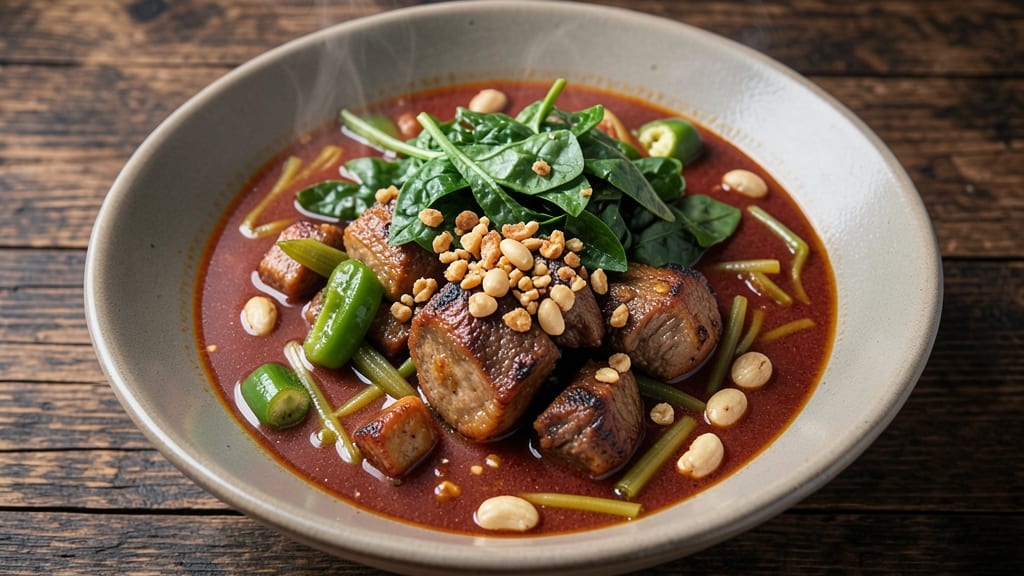
This Banga soup recipe Cameroon brings the heart of West African cuisine to your kitchen with its signature smoky, nutty depth and tender meat.
The soul of Cameroon's most beloved dish lies in its rich peanut-palm nut velouté, where earthy spices and slow-cooked protein create a velvety broth that clings to every bite.
What sets this recipe apart is the traditional blend of goat or beef, leafy greens, and the secret ingredient: a toasted palm nut-peanut paste that forms the base of the soup's unmistakable flavor.
The magic happens in layers—first, the meat is slow-cooked until fork-tender, then the vegetables are added in stages to preserve their texture. Okra lends its signature sliminess, while spinach or pumpkin leaves contribute a vibrant green color and subtle bitterness that balances the soup's richness.
The broth reduces until it reaches that perfect velouté consistency, where every spoonful delivers a symphony of smoky, nutty, and slightly spicy notes. This is a dish that demands patience, but the reward is a soup so deeply flavorful it becomes the centerpiece of any meal.
What makes this Banga soup truly special is the contrast of textures: the creamy velouté broth, the tender meat that falls apart at the touch of a fork, and the crispy plantain bites that add a satisfying crunch.
Served with fufu or attiéké, this soup becomes a complete culinary experience that transports you to the bustling streets of Cameroon, where it's a staple in homes and restaurants alike. The aroma alone—smoky, nutty, and spiced—will have everyone at the table anticipating the first bite.
Perfect for special occasions or when you want to impress with an authentic African dish, this Banga soup recipe captures the essence of Cameroon's culinary tradition. The slow-cooked flavors deepen over time, making it even more delicious the next day.
Let's bring the flavors of Cameroon to your table with this timeless recipe.
Ingredients for banga soup recipe cameroon
Six ingredients make the base—meat, nuts, greens, and spices—but it's the palm nut-peanut paste that steals the show.
| Ingredient | Amount | Notes |
|---|---|---|
| Goat Meat or Beef Chuck 🐐 | 2 lb | Cut into 2-inch chunks |
| Palm Nut Kernels 🌰 | 1 cup | Toasted until fragrant |
| Peanuts 🥜 | ½ cup | Raw, unsalted peanuts |
| Dried Okra 🌿 | 1 cup | Or 2 medium fresh okra |
| Spinach or Pumpkin Leaves 🌱 | 4 cups | Chopped, fresh or frozen |
| Green Bell Peppers 🌶️ | 2 whole | Cut into chunks |
| Fresh Tomatoes 🍅 | 4 whole | Medium-sized, chopped |
| Fresh Ginger 🧅 | 1 ½ tbsp | Grated, fresh root |
| Garlic Cloves 🧄 | 6 cloves | Minced, fresh preferred |
| Red Palm Oil 🫒 | ½ cup | For authentic smoky flavor |
| Groundnut Oil 🫒 | ¼ cup | Or vegetable oil |
| Dried Fish (Optional) 🐟 | ½ cup | Crumbled, traditional addition |
| Ripe Plantains 🍌 | 2 whole | For crispy bites |
| Salt 🧂 | 1 ½ tsp | Adjust to taste |
| Ground Black Pepper 🌶️ | ½ tsp | Freshly ground |
The meat is non-negotiable—goat gives that authentic African flavor, but beef works too (though it's pricier). Look for chuck or shoulder cuts at your local butcher or Costco—they'll cut it for you. Palm nuts and peanuts? African markets have them in bulk, but Trader Joe's carries palm nuts if you're in a pinch. Toast them together until they smell like heaven—that's where the magic starts. Fresh ginger and garlic? Grab whatever's freshest at the store, but don't skip the red palm oil—it's the soul of this soup. African grocery stores sell it, but if you can't find it, a mix of vegetable oil and smoked paprika gets you close.
No palm nuts? Extra peanut butter plus a pinch of smoked salt is a decent swap, though it won't be identical. Dried fish optional, but worth it if you can find it—Asian markets often carry it. Fresh okra? Trader Joe's sells it frozen, which works great. The plantains should be ripe but firm—yellow with black spots is perfect. Too green and they'll be tough; too brown and they'll be mushy. For the greens, spinach is easiest, but pumpkin leaves add that authentic African touch. Mexican or Latin markets often carry them fresh or frozen.
This soup tastes even better the next day—make a double batch. Store the broth separately from the meat and plantains. The broth keeps for 5 days in the fridge, and the meat reheats beautifully. For plantains, fry them fresh before serving—they lose crispiness fast. Freeze the broth in portions if you're prepping ahead. Fufu or attiéké are traditional sides, but rice or crusty bread works too. The plantains? Eat them right away—they're the star of the show.
Why You'll Love This Recipe
- One-Pot Magic: I swear by this—just toss the meat, palm nuts, and peanuts into one pot, let it simmer, and boom, you’ve got a rich, velvety base. No fancy techniques, no last-minute scrambling for pots.
- Rich Without Effort: Between us, that palm nut paste is pure flavor gold—creamy, nutty, and deep. The okra thickens it just enough to coat every bite, while the peanuts add a satisfying crunch. (Yes, even on a Tuesday night.)
- Weeknight to Celebration: This soup starts as my lazy-night go-to but somehow becomes the star at gatherings. Swap goat for beef, add extra leaves, or serve it with fufu—it adapts without breaking a sweat.
- Budget-Friendly Feast: A single goat cut or beef chuck stretches for days, and the pantry staples (palm nuts, peanuts) keep costs low. Honestly, the leftovers taste better the next day—proof it’s a keeper.
Step-by-step instructions for Banga soup Cameroon: rich palm nut and peanut velouté
Here's how to build this soul-warming Cameroon classic with smoky depth and satisfying texture.
Prepare the Meat and Base Aromatics
In a large pot, combine the 2 lb goat meat or beef chuck cut into 2-inch chunks with 0.5 cup red palm oil and 0.25 cup groundnut oil. Heat over medium-high heat for 5 minutes until the meat begins to brown and release its juices. This step develops deep flavor through the Maillard reaction.
Add the 6 cloves minced garlic and 1.5 tbsp grated fresh ginger, stirring constantly for 2 minutes until fragrant. The garlic should turn golden without burning—watch closely as it darkens quickly. If using the optional 0.5 cup dried fish, sprinkle it in now and stir for 1 minute to toast its flavor. This aromatic foundation is where the soup's complexity begins.
Build the Palm Nut and Peanut Base
In a separate skillet, toast the 1 cup palm nut kernels and 0.5 cup peanuts over medium heat for 5-7 minutes, stirring constantly, until they turn a rich golden brown and release their nutty aromas. This toasting is crucial—it removes any bitterness and intensifies their flavors. Transfer the toasted nuts to a bowl and set aside.
In the same skillet, add 1 cup dried okra and toast for 2 minutes until it darkens slightly. Pour in 2 cups boiling water and let it soak for 5 minutes to soften. Drain and add both the soaked okra and toasted nuts to the meat pot. Stir well to combine, letting the okra release its natural thickening properties into the oil.
Simmer the Vegetable Medley
Add the chopped 2 whole green bell peppers and 4 whole fresh tomatoes to the pot. Cook for 10 minutes over medium heat until the tomatoes soften and begin to break down. The mixture should develop a rich, slightly chunky texture—this is where the soup's velvety body begins to form.
Stir in the 4 cups chopped spinach or pumpkin leaves and cook for another 5 minutes until wilted. The leaves will transform from vibrant green to a deep, rich color as they incorporate into the sauce. Season with 1.5 tsp salt and 0.5 tsp freshly ground black pepper, tasting as you go. This is your flavor checkpoint—adjust seasoning now to avoid over-salting later.
Finish with Crispy Plantain Bites
While the soup simmers, slice the 2 whole ripe plantains into 1-inch chunks. Heat 1 tablespoon groundnut oil in a separate skillet over medium-high heat until shimmering. Add the plantain chunks in a single layer and fry for 3-4 minutes until golden brown and crispy on all sides. The plantains should be tender inside with a satisfying crunch—this contrast is what makes Banga so special.
Return the fried plantains to the soup pot and simmer together for 5 minutes to allow the flavors to meld. The plantains will soften slightly but maintain their crisp edges. Taste one final time and adjust seasoning if needed. Serve immediately with the plantains scattered throughout each bowl, offering that perfect textural contrast with every spoonful.
Pro Tips For Making Banga Soup Recipe Cameroon
- CRUSH THE PALM NUTS: I learned this the hard way—don’t just grind them in a blender. Toast the kernels first (5-7 minutes in a dry pan until golden), then grind with peanuts and a splash of water. This stops the soup from tasting bitter and makes the nutty flavor sing. (Yes, even if you’re impatient like me.)
- SIMMER LOW AFTER SEARING: Banga needs that deep, slow cook, but don’t rush it. After browning the meat, add just enough water to cover—about 2 inches—and let it bubble hard for 10 minutes. Then drop to a gentle simmer. I used to keep it too hot, and the okra turned to mush instead of thickening the soup properly.
- SOAK THE OKRA FIRST: Skip the dried okra straight from the jar—soak it in warm water for 20 minutes before adding. This prevents clumping and lets it release its natural thickening power. (Your future self will thank you when the soup isn’t gloppy.)
- SALT THE MEAT TWICE: Season the meat before browning, but save half the salt for later. Add the rest after the soup has simmered for 45 minutes—this balances the flavors as the meat tenderizes. I was skeptical until I tried it; the second hit of salt actually makes the palm-nut base richer.
Dietary considerations for this banga soup recipe cameroon
Vegetarian Adaptations
Skip the meat entirely and build flavor around the nut base. Use 1.5 lbs extra-firm tofu or 2 cups chickpeas instead of goat/beef—both absorb the rich palm nut-peanut sauce beautifully.
I like to press and cube the tofu, then pan-fry it in 1 tbsp red palm oil until golden before adding to the soup. For extra protein, add ½ cup lentils during the simmering stage. 🌱
Gluten-Free Considerations
Banga soup is naturally gluten-free, but check your ingredients carefully. Use certified gluten-free peanut butter if substituting for palm nuts, and verify that your groundnut oil is processed in a gluten-free facility.
The traditional recipe avoids gluten entirely, so no modifications are needed beyond ingredient sourcing. Always double-check dried fish and spices for hidden gluten. ✨
Nut-Free Version
For nut allergies, replace the palm nuts and peanuts with 1 cup sunflower seeds and ½ cup tahini (sesame paste). Toast the sunflower seeds until fragrant, then blend with 2 tbsp water to create a paste similar to the nut base.
Add this to the soup during the simmering stage. The flavor will be different but still rich and satisfying. 💛
Lower-Fat Options
Reduce the oil by half—use just ¼ cup red palm oil and 1 tbsp groundnut oil—while keeping all other ingredients the same. The palm nut-peanut base provides enough richness without excess fat.
For extra flavor, add 1 tbsp tomato paste when sautéing the aromatics. The soup will still be deeply flavorful but lighter. 💡
Protein Boost
Add ½ cup quinoa or ½ cup brown rice to the soup during the final 15 minutes of cooking. This increases the protein content and adds a satisfying bite.
For a meaty texture, try ½ lb mushrooms (like oyster or cremini) sautéed in 1 tbsp oil until tender before adding to the pot. 💪
Nutrition facts
Frequently asked questions about Cameroon Banga soup
Why does traditional Banga soup have that distinct smoky flavor?
The signature smoky depth comes from red palm oil, which is toasted and infused with natural spices during cooking. This oil carries the essence of Cameroon's culinary traditions, giving the soup its unmistakable aroma. The slow cooking process allows the smoky notes to meld perfectly with the nutty palm nut-peanut base.
Can I substitute goat meat with chicken or fish?
While goat is traditional, you can use chicken thighs or white fish like cod for a lighter version. For chicken, increase cooking time to 20 minutes to ensure tenderness. Fish cooks in 10 minutes but requires careful monitoring to avoid overcooking. The palm nut-peanut base will still shine through!
How do I make the plantain bites extra crispy?
For maximum crunch, slice plantains 1/4-inch thick and fry in small batches at medium-high heat with just enough oil to coat the pan. Keep them moving constantly for 3-4 minutes until golden. Drain on paper towels immediately to remove excess oil. Pro tip: Add a pinch of salt to the oil for extra flavor!
What's the secret to getting that perfect velouté consistency?
The velouté texture comes from simmering the soup uncovered for 45-60 minutes after adding all ingredients. This allows the okra to naturally thicken the broth while reducing it to the right consistency. Stir occasionally and taste frequently—it should coat the back of a spoon but still be pourable.
Can I make Banga soup ahead of time?
The flavors actually improve overnight. Cook the soup completely, then store it in the fridge for up to 3 days. Reheat gently on the stove, adding 1/4 cup water if it's too thick. The plantains should be fried fresh before serving—they lose crispness when reheated.