
Soups & Stews
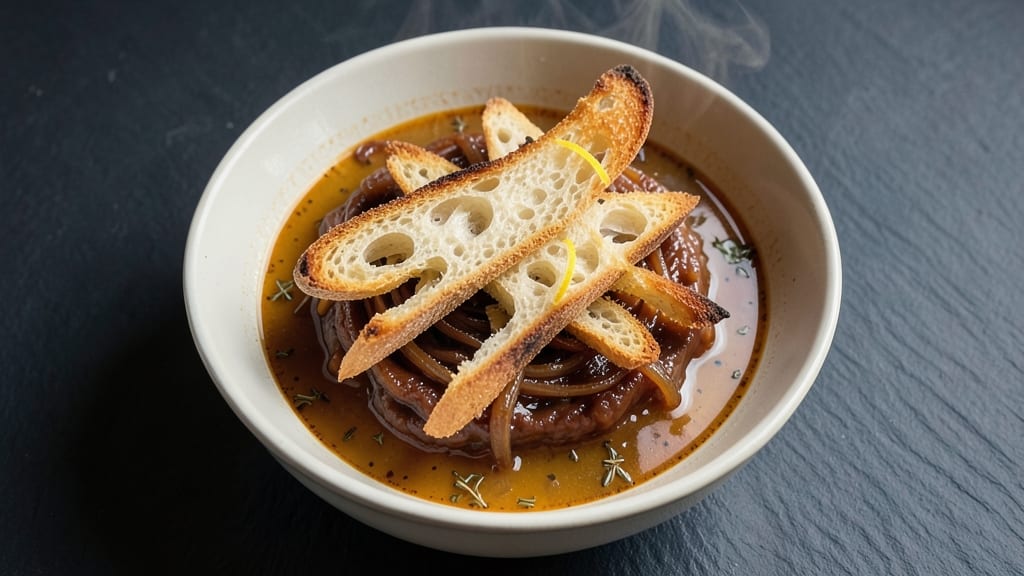
This Balthazar French onion soup recipe brings Parisian bistro magic to your kitchen with layers of caramelized onions, rich beef broth, and melted Gruyère cheese. The secret lies in slow-cooking onions until deep golden brown—a process that transforms simple onions into sweet, complex flavor bombs.
I've perfected this technique to recreate the iconic dish from Paris's legendary Balthazar restaurant, where every spoonful feels like a taste of France.
The foundation of great French onion soup is patience—letting onions caramelize for 45 minutes develops their natural sugars into a sweet, jam-like consistency. Aromatic beef broth infused with thyme and bay leaf builds the soup's depth, while toasted baguette slices create the perfect crunchy base for the signature Gruyère topping.
This isn't just soup; it's a comforting, restaurant-quality experience you can make at home.
What makes this recipe special is the balance of textures and flavors: silky broth, tender onions, crispy bread, and gooey melted cheese that blankets every bite. The Gruyère's nutty richness pairs perfectly with the caramelized onions, creating a harmony that's both simple and sophisticated.
Serve with a crisp white wine or a simple green salad to complete the meal.
For modern adaptations, you can easily make this vegetarian by using vegetable broth and adding mushrooms to the caramelization process. The technique remains the same—just swap out the beef for plant-based ingredients.
Whether you stick to tradition or experiment with variations, this soup delivers warmth and satisfaction that's hard to resist.
Ingredients for balthazar french onion soup
Parisian bistro quality starts with these 13 ingredients—each playing its part in creating the iconic Balthazar French onion soup.
| Ingredient | Amount | Notes |
|---|---|---|
| Yellow Onions 🧅 | 4 whole | Thinly sliced, yellow or sweet variety |
| Unsalted Butter 🧈 | ½ cup | European-style preferred for flavor |
| Beef Broth 🍲 | 6 cups | Homemade or high-quality store-bought |
| Dry White Wine 🍷 | ½ cup | Sauvignon Blanc or Chardonnay preferred |
| Fresh Thyme 🌿 | 2 sprigs | Stems removed, leaves only |
| Bay Leaves 🍃 | 2 whole | Dried or fresh, removed before serving |
| Gruyère Cheese 🧀 | 1 ½ cups | Freshly grated, aged 12+ months |
| Baguette 🥖 | 1 whole | Crusty, day-old preferred |
| Olive Oil 🫒 | 2 tbsp | For toasting bread slices |
| Salt 🧂 | 1 ½ tsp | Diamond Crystal kosher preferred |
| Black Pepper 🌶️ | ½ tsp | Freshly ground for best flavor |
| Garlic Cloves 🧄 | 4 cloves | Minced for aromatics |
| All-Purpose Flour 🌾 | 1 tbsp | For thickening broth |
The onions are non-negotiable—yellow or sweet varieties caramelize best, developing that signature jam-like sweetness. For the butter, European-style unsalted (like Plugrá) adds deeper flavor than American brands. Whole Foods Market or specialty grocers carry it, but if you can't find it, Land O'Lakes European-style works well. The Gruyère is the star of the show—aged 12+ months for maximum nutty depth. Murray's Cheese or Whole Foods sell pre-grated, but grating your own from a wedge is worth the effort. The beef broth should be rich and aromatic—homemade is ideal, but Kettle & Fire or Pacific Foods brands deliver restaurant-quality results.
No white wine? Substitute extra beef broth with 1 tsp lemon juice for acidity. Fresh thyme unavailable? Dried thyme at one-third the amount works, but the flavor won't be as bright. For a vegetarian adaptation, swap beef broth for vegetable broth and add 8 oz sliced mushrooms to caramelize with the onions. The baguette should be crusty and day-old—fresh bread gets soggy. No baguette? Ciabatta or a sturdy sourdough works in a pinch. The flour is just for thickening—if you're sensitive to gluten, arrowroot powder at double the amount is a good substitute.
Caramelized onions keep for 5 days in the fridge, covered tightly. The broth can be made ahead and reheated gently—never boil after adding wine. Gruyère should be grated fresh before serving, as pre-grated cheese loses its texture when melted. For make-ahead convenience, assemble the soup (without cheese) up to 2 days ahead, then broil with cheese for 5-7 minutes before serving. The bread topping stays crispest when toasted just before serving—3-4 minutes under the broiler with olive oil and a sprinkle of salt.
Why You'll Love This Recipe
- I swear by this trick: just slice the onions thick, not paper-thin. They caramelize faster and you won’t spend 20 minutes crying over a cutting board. The butter handles the rest—golden, glossy layers that take almost no effort.
- Minimal Chopping Required: I swear by this trick: just slice the onions thick, not paper-thin. They caramelize faster and you won’t spend 20 minutes crying over a cutting board. The butter handles the rest—golden, glossy layers that take almost no effort.
- Wine’s Secret Weapon: That splash of dry white wine? It’s not just for show. It cuts through the richness of the beef broth and butter, brightening every spoonful with a crisp, clean finish. Honestly, I’d argue it’s the soul of the dish—skip it, and you’re missing the magic.
- Weeknight Crowd-Pleaser: Between us, this is the soup I make when friends drop by unannounced. It’s hearty enough to fill a hungry group but simple enough that I’m not stressing over plating. The toasted bread on top? Instant wow factor with zero extra work.
Step-by-step instructions for Balthazar French onion soup
Master the art of slow caramelization and rich broth development for a soup worthy of Parisian bistros.
Caramelize the Onions to Deep Golden Perfection
Slice the 4 whole yellow onions paper-thin using a mandoline or sharp knife. Melt the 0.5 cup unsalted butter in a large Dutch oven over medium-low heat. Add the onions and stir immediately to distribute the butter evenly. The key here is patience—caramelization takes 45-60 minutes and requires constant stirring.
As the onions cook, they'll release moisture and gradually reduce. Use a wooden spoon to scrape up any browned bits from the bottom of the pot—they're packed with flavor. When the onions reach a deep golden brown color with a rich, sweet aroma (not burnt), they're ready. This is where the magic happens—proper caramelization forms complex sugars that create the soup's signature depth.
Develop the Rich Broth Foundation
Once the onions are perfectly caramelized, sprinkle the 1 tablespoon all-purpose flour over them and stir for 1-2 minutes to create a roux. This will help thicken the broth slightly. Deglaze the pot with the 0.5 cup dry white wine, scraping up all those flavorful browned bits from the bottom. Let the wine simmer for 2-3 minutes until it reduces by half.
Add the 6 cups beef broth, 2 sprigs fresh thyme, 2 whole bay leaves, 1.5 teaspoons salt, and 0.5 teaspoon black pepper. Bring to a gentle simmer and let it cook uncovered for 20-25 minutes. This slow reduction allows the flavors to meld and intensify. Stir occasionally, but avoid vigorous stirring which can break up the delicate caramelized onions.
Finish with Aromatics and Prepare the Baguette
Remove the thyme sprigs and bay leaves. Stir in the 4 minced garlic cloves and cook for 1 minute until fragrant. Taste and adjust seasoning if needed—this is your flavor checkpoint. The soup should be rich and well-seasoned, with the caramelized onions providing sweetness and depth.
While the soup simmers, prepare the baguette by cutting it into ½-inch thick slices. Brush both sides of each slice with the 2 tablespoons olive oil and toast them in a 400°F oven for 5-7 minutes until golden and crisp. The toasted bread will provide the perfect crunchy contrast to the creamy soup.
Assemble and Melt the Gruyère Cheese
Preheat your broiler to high. Ladle the hot soup into 4 oven-safe bowls, placing 2 slices of toasted baguette in each bowl. Top each portion generously with the 1.5 cups freshly grated Gruyère cheese. The cheese should be spread evenly over the soup and bread to ensure even melting.
Place the bowls under the broiler for 3-5 minutes until the cheese is bubbly and golden brown on top. Watch carefully—this happens quickly and you want that beautiful golden crust without burning. The cheese should melt completely, creating a luscious blanket over the soup. Serve immediately while the bread is still crisp.
Pro Tips For Making Balthazar French Onion Soup
- Sweat, Don’t Burn: Onions should caramelize slowly—think 30-40 minutes on medium-low heat, not rushed bursts that turn them bitter. Cover the pot for the first 20 minutes to help them break down faster, but uncover after the liquid evaporates. I used to walk away too soon, and the edges always burned while the center stayed pale.
- Use Butter Like a Boss: Cold butter is your friend here. Add the unsalted butter in chunks to the onions early, letting it melt and coat them gradually. This creates a richer fond without scorching. I learned this after one batch where I dumped all the butter in at once—ended up with a greasy, uneven mess.
- Deglaze with Wine Twice: After the onions caramelize, pour in the white wine and let it reduce by half before adding broth. Then, when the broth simmers, add another splash of wine at the end—just 2 tablespoons—to brighten the flavor. Sounds weird, but it works: the second hit of acidity cuts through the richness without overpowering.
- Thyme Stems Matter: Strip the thyme leaves from the stems and toss the stems into the broth while simmering. They’ll infuse subtle earthiness without making the soup look like a herb salad. I skip this now, but the stems add depth—just fish them out before serving. (Yes, even if you’re impatient like me.)
Creative variations of balthazar french onion soup
Vegetarian Twist
Swap the beef broth for 6 cups vegetable broth and add 8 oz sliced cremini mushrooms to caramelize with the onions. The mushrooms absorb the butter beautifully and add an earthy depth that mimics beef.
I like to use wild mushroom blend from Whole Foods for extra complexity. For umami richness, add 1 tbsp soy sauce or 1 tsp mushroom powder when combining with the broth. 🌱
Creamy Upgrade
For a luxurious texture, stir in ½ cup heavy cream during the final 5 minutes of simmering. This creates a velvety consistency while keeping the dish light. If you prefer a dairy-free option, use ½ cup coconut cream—just heat it gently to avoid curdling.
The cream should be warmed to 100°F before adding to prevent curdling the soup. 🥛
Spiced Variations
Add warmth with ½ tsp smoked paprika or ¼ tsp cayenne pepper during the caramelization stage. For a Moroccan-inspired twist, include ½ tsp ground cumin and ¼ tsp cinnamon with the thyme.
These spices complement the caramelized onions beautifully while adding unexpected depth. I recommend Penzeys Spices for high-quality blends. 🌶️
Protein Additions
Boost heartiness with ½ lb shredded rotisserie chicken or ½ lb cooked beef short ribs (shredded). Add the protein during the final 10 minutes of simmering so it absorbs the broth's flavors.
For a seafood option, try ½ lb shrimp cooked separately and added just before serving. The protein pairs perfectly with the rich Gruyère topping. 🍗
Herb Infusions
Experiment with fresh herbs like 1 sprig rosemary or 1 tbsp fresh tarragon during the simmering stage. Remove herbs before serving. For a bright finish, garnish with chopped chives or fresh parsley.
The herbs add freshness that cuts through the richness of the cheese and onions. I keep fresh herbs on hand from my local farmers' market. 🌿
Make-Ahead Adaptations
Prepare the soup base (without cheese) up to 2 days ahead and store in an airtight container in the fridge. Reheat gently on the stovetop, then toast the baguette slices fresh.
For the cheese topping, grate it fresh before broiling—pre-grated cheese loses its texture when melted. This method keeps the bread crisp and the soup flavorful. ⏰
Nutrition facts
Frequently asked questions
Can I make this soup without wine?
Replace the 0.5 cup white wine with an equal amount of beef broth plus 1 teaspoon lemon juice for acidity. The wine adds depth, but this substitution works perfectly. For extra flavor, try 1 teaspoon apple cider vinegar instead—it mimics the wine's tang while keeping the dish rich and savory.
Why does my caramelized onion soup taste bitter?
Bitterness usually means the onions burned or the broth over-reduced. Use medium-low heat for caramelization and stir constantly to prevent browning. For the broth, simmer gently—never boil vigorously. If the soup tastes bitter, balance it with a splash of wine or a pinch of sugar to restore sweetness.
What's the best way to store leftovers?
Store the soup (without cheese) in an airtight container in the fridge for up to 3 days. Reheat gently on the stove, then toast fresh baguette slices and add freshly grated Gruyère when serving. The cheese should always be added fresh to maintain its perfect melt. For longer storage, freeze the soup base for up to 3 months.
Can I use a different cheese besides Gruyère?
Gruyère is ideal for its nutty flavor and melt, but Comté or Emmental work well too. For a sharper taste, try Parmesan mixed with Gruyère. Avoid pre-shredded cheese—it contains anti-caking agents that prevent proper melting. Always grate fresh for the best texture.
How do I make this soup vegetarian?
Replace the beef broth with 6 cups vegetable broth and add 8 oz sliced mushrooms to caramelize with the onions. For umami, stir in 1 tbsp soy sauce or 1 tsp mushroom powder when combining with the broth. The result is just as rich and flavorful!