
Soups & Stews
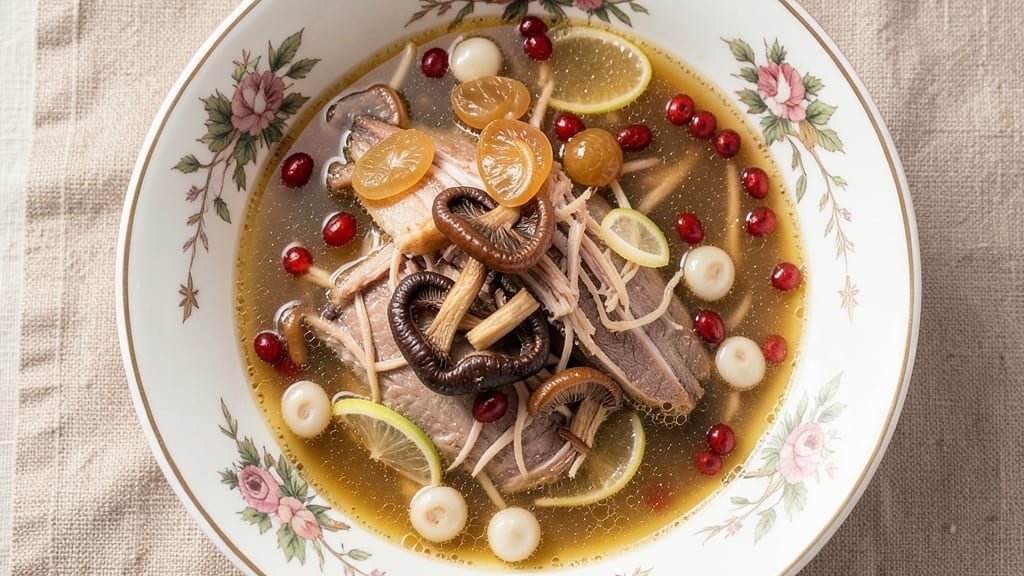
This Ba Wang Hua soup recipe transports you to traditional Chinese kitchens where pork, lotus seeds, and ginger create a fragrant, silky broth that feels like comfort in a bowl. 🌸 The dish balances earthy mushrooms, tender pork, and delicate lotus flowers—each ingredient playing its part in a harmony of textures and flavors that's both nourishing and elegant.
The secret lies in slow simmering, which transforms tough pork into melt-in-your-mouth tenderness while extracting the natural sweetness of lotus seeds and the aromatic depth of ginger. This isn't just soup; it's a celebration of Chinese culinary tradition, where every spoonful tells a story of warmth, health, and family gatherings.
By the time you finish, you'll have a rich, golden broth with floating lotus seeds that burst with subtle sweetness and tender pork that practically dissolves on your tongue. The aroma alone—ginger, pork, and lotus—will fill your kitchen with memories of home-cooked meals.
Perfect for special occasions or cozy weeknights, this soup serves as both a nourishing meal and a cultural experience. Let's bring this timeless recipe to life in your kitchen.
Ingredients for ba wang hua soup
These traditional Chinese ingredients transform simple water into a fragrant, silky broth that feels like a hug in a bowl.
| Ingredient | Amount | Notes |
|---|---|---|
| Pork Shoulder 🥩 | 1 ½ lb | Cut into 1-inch cubes |
| Dried Shiitake Mushrooms 🍄 | 8 whole | Rehydrated in hot water |
| Fresh Ginger Root 🧄 | 2 tbsp | Julienned, skin removed |
| Dried Lotus Seeds 🌸 | ½ cup | Soaked overnight |
| Dried Dried Longan Fruit 🍈 | ¼ cup | Rinsed before using |
| Goji Berries 🍇 | ¼ cup | Dried, rinsed clean |
| Rock Sugar 🍬 | ¼ cup | Or brown sugar substitute |
| Dried Tangerine Peel 🍊 | 1 tbsp | Cut into matchsticks |
| Shaoxing Wine 🍷 | ½ cup | Or dry sherry substitute |
| Light Soy Sauce 🍶 | 2 tbsp | Kikkoman preferred |
| Dark Soy Sauce 🍶 | 1 tbsp | For color depth |
| Sesame Oil 🥜 | 1 tsp | Toasted, for finishing |
| Green Onions 🧅 | 2 whole | Sliced, for garnish |
| Water 💧 | 6 cups | Filtered preferred |
| Salt 🧂 | 1 tsp | Kosher or sea salt |
The pork shoulder is your secret weapon here—ask for bone-in cuts at your local Asian market for richer flavor. If you can't find dried lotus seeds, substitute with canned baby corn (drained), though purists will notice the difference. Gourmet Grocer or H Mart usually carry all the specialty items, but if you're in a pinch, check the bulk section at Whole Foods. The ginger should be vibrant and firm—no wrinkly roots here. For the mushrooms, soak them in hot water for 20 minutes, then slice the stems off and use the rehydrated caps.
No Shaoxing wine? Dry sherry or even a splash of apple cider vinegar will do in a bind, though the flavor won't be identical. The rock sugar is non-negotiable for that authentic sweetness—brown sugar works in a pinch, but it won't caramelize the same way. Dried longan and goji berries can be found in the tea section of most Asian markets. If you're using pre-soaked lotus seeds, rinse them thoroughly to remove any grit. The tangerine peel adds that signature citrus aroma—use only the outer peel, no pith. For the soy sauces, Kikkoman light and Lee Kum Kee dark are my go-tos, but any good-quality brands will work.
This soup tastes even better the next day as the flavors meld. Store it in an airtight container in the fridge for up to 5 days, or freeze portions for 3 months. The broth reduces as it cools, so add a splash of water when reheating. I always make a double batch—one for dinner, one for lunch—because it reheats beautifully. For serving, keep the green onions and sesame oil separate until the last minute to preserve their freshness. The aroma alone will have everyone at the table waiting.
Why You'll Love This Recipe
- Pantry Magic: I swear by this soup because it’s basically a "use what you’ve got" masterpiece. Soak those dried shiitake and lotus seeds overnight—boom, instant depth—while the pork shoulder simmers into melt-in-your-mouth tenderness. No fancy prep, just layering flavors from ingredients you might already own.
- Ginger-Lotus Crunch: Between us, the ginger and dried longan fruit add a bright, almost floral sweetness that cuts through the richness of the pork. The lotus seeds? Tiny bursts of chew that make every spoonful feel special—like a little surprise in every bite. (Yes, even on a Tuesday night.)
- Leftovers That Shine: This soup actually improves the next day. The flavors meld even more, and the texture of the pork gets even better—perfect for lunchboxes or quick reheats. Honestly, I make a double batch just so I can enjoy it twice without guilt.
- Budget-Friendly Luxury: Pork shoulder is affordable, and those dried ingredients (shiitake, lotus, longan) stretch your dollar and add restaurant-worthy texture. I’ll be real: it’s the kind of dish that makes me feel like I’m treating myself, even when I’m cooking on a tight budget.
Step-by-step instructions for Ba Wang Hua soup
Here's how to craft this luxurious Cantonese classic with its signature silky texture and aromatic depth.
🍳 Step 1: Rehydrate and Prep the Key Ingredients
Begin by soaking the 8 whole dried shiitake mushrooms in 6 cups hot water for 20 minutes—this jumpstarts their flavor extraction. While they soak, rinse the 0.25 cup dried dried longan fruit and 0.25 cup goji berries under cold water to remove any dust, then drain well. For the 0.5 cup dried lotus seeds, soak them overnight in water (they'll triple in size)—this ensures their signature silky texture in the final soup.
Julienne the 2 tbsp fresh ginger root (skin removed) into matchstick-thin strips—this maximizes surface area for quick infusion. Cut the 1 tbsp dried tangerine peel into fine matchsticks as well. Here's the thing—proper preparation of these components creates that delicate balance of floral, citrus, and umami notes that defines this soup.
🔥 Step 2: Build the Aromatic Base
In a 6-quart pot, combine the rehydrated shiitake mushrooms (with their soaking liquid), ginger, tangerine peel, and 1.5 lb pork shoulder cubes. Add 6 cups fresh water and bring to a rolling boil over high heat. Once boiling, reduce to a gentle simmer and skim off any foam that rises to the surface—this ensures a crystal-clear broth.
Simmer uncovered for 45 minutes, stirring occasionally. The pork should begin to soften noticeably, and you'll smell that deep, savory aroma developing. This initial cooking phase extracts all the meaty richness while allowing the mushrooms to infuse their earthy sweetness. Don't walk away—constant attention prevents scorching and ensures even flavor development.
👨🍳 Step 3: Add the Signature Floral Elements
Drain the soaked 0.5 cup lotus seeds and add them to the simmering pot along with the 0.25 cup rock sugar and 1 tsp salt. Stir gently to dissolve the sugar completely—this sweetens the broth subtly while balancing the savory components. Add the 0.25 cup longan fruit and 0.25 cup goji berries next, letting them simmer for 15 minutes until they soften slightly but retain their shape.
Here's where the magic happens: the lotus seeds will begin to break down, releasing their signature silky texture that gives this soup its luxurious mouthfeel. The sugar and salt should be fully incorporated—taste the broth now. It should be sweet enough to complement the savory pork but not overpower it. If needed, adjust with a pinch more salt or sugar.
🥘 Step 4: Finish with Umami Depth and Balance
Pour in the 0.5 cup Shaoxing wine and both 2 tbsp light soy sauce and 1 tbsp dark soy sauce. The dark soy sauce will add that signature mahogany color while deepening the umami. Let the soup simmer for another 20 minutes until the pork is fork-tender and falls apart easily. The broth should now be rich, aromatic, and perfectly balanced between sweet, savory, and floral notes.
Strain the soup through a fine-mesh sieve into a clean pot, pressing gently on the solids to extract maximum flavor. Discard the solids or reserve for another use. Return the strained broth to the pot and bring to a gentle simmer. Here's the moment that matters: add the 1 tsp toasted sesame oil and stir—this adds a nutty depth that ties all the flavors together.
🍽️ Step 5: Serve with Elegant Garnish
Ladle the hot soup into bowls, dividing the 0.5 cup lotus seeds evenly among them. Garnish each serving with 2 sliced green onions for freshness and color contrast. The soup should be served immediately while steaming hot—this preserves its delicate texture and allows the aromas to truly shine.
Each spoonful should deliver that perfect harmony: tender pork, silky lotus seeds, sweet longan and goji berries, and a complex broth that's simultaneously sweet, savory, and floral. The sesame oil finish adds that final layer of sophistication that makes this soup truly special. Serve with steamed jasmine rice to soak up every last drop of that luxurious broth.
Pro Tips For Making Ba Wang Hua Soup
- Parboil the Pork: Don’t skip this step—cut the pork shoulder into 2-inch chunks, then boil for 10 minutes first. It keeps the meat tender without falling apart later, and the broth stays clear instead of turning cloudy from released proteins. I used to skip it, and the texture always suffered.
- Soak Lotus Seeds: Dried lotus seeds need a good soak—at least 2 hours, or overnight if you’re patient. They’ll plump up and soften properly, releasing their nutty flavor instead of staying rock-hard. I learned this the hard way after biting into one in an otherwise perfect soup.
- Control the Ginger: Thinly slice the ginger, but don’t overdo it—3-4 slices are enough. Too much makes the soup bitter, and the aroma gets lost in the broth. My grandmother swore by this, and she was right: less is more for ginger in this dish.
- Simmer Low and Slow: Once everything’s in the pot, keep the heat at a gentle simmer—no boiling. High heat ruins the texture of the lotus seeds and shiitake mushrooms, turning them mushy. I was skeptical until I tried it, and now I never rush this part.
Best sauces and condiments for this dish
Ginger-Soy Broth
The foundation of Ba Wang Hua soup's depth comes from its ginger-soy broth, where 2 tbsp julienned ginger and 3 tbsp combined soy sauces (light + dark) create a balanced umami-sweet base.
I like to toast the ginger briefly in the pot before adding water—this releases its essential oils and intensifies the aroma. For extra richness, add 1 tsp goji berries during the initial simmer to infuse subtle sweetness. 🌿
Sweet-Savory Sauce
This soup's signature harmony comes from the rock sugar and Shaoxing wine combination. The 0.25 cup rock sugar (or brown sugar substitute) should dissolve completely into the broth—taste and adjust for a delicate sweetness that contrasts the pork's savory notes.
I find that adding 0.5 cup Shaoxing wine in the final 20 minutes of cooking prevents alcohol bitterness while enhancing floral aromas. For a modern twist, substitute with 1 tbsp honey and 0.25 cup apple cider vinegar for tangy depth.
Sesame Oil Finish
The 1 tsp toasted sesame oil added at the very end is non-negotiable—it transforms the soup from good to extraordinary. Heat the oil separately until fragrant (but not smoking), then stir just before serving to preserve its nutty aroma.
For a smoky variation, replace with 0.5 tsp chili oil (like Lao Gan Ma) for a Sichuan-inspired kick. Always add sesame oil last to maintain its delicate flavor profile. 🥜
Citrus Zest Garnish
While the recipe calls for green onions, I often add 1 tsp candied tangerine peel (from the same dried peel used in cooking) as a garnish for extra citrus brightness.
For a fresh twist, top with thinly sliced finger limes (if available) or micro cilantro for a vibrant pop of color. The acidity cuts through the soup's richness and refreshes the palate with each spoonful. Store-bought candied peel works in a pinch—just look for unsweetened varieties.
Umami Boosters
For an extra layer of depth, consider adding 1 tsp fish sauce (like Red Boat) during the final simmer or 1 dried shiitake mushroom (whole) tied with kitchen twine to infuse the broth without altering texture.
Both options enhance the savory profile without overpowering the delicate floral notes. I've also experimented with 1 tsp mushroom powder (like Umami King) for a concentrated umami punch that works beautifully in strained soups. 🍄
Nutrition facts
Frequently asked questions
Why does this soup need to simmer for so long?
The extended simmering time—over 90 minutes total—is essential to transform the pork into melt-in-your-mouth tenderness while allowing all ingredients to meld into a harmonious broth. The lotus seeds require this time to develop their signature silky texture, and the mushrooms need to fully rehydrate and release their earthy sweetness. Patience here ensures that every spoonful delivers that luxurious mouthfeel and complex flavor profile.
Can I substitute fresh lotus seeds for dried?
Fresh lotus seeds won't work in this recipe—they're too watery and lack the concentrated sweetness of dried. If you can't find dried lotus seeds, try canned baby corn (drained) as a textural substitute, though it won't replicate the floral notes. For authenticity, look for dried lotus seeds in Asian markets, where they're often sold in the bulk section or near dried mushrooms. The soaking overnight is crucial to achieve that signature silky texture.
What's the secret to getting that perfect golden color?
The rich mahogany hue comes from the combination of dark soy sauce and the caramelization of rock sugar during simmering. Use 1 tbsp dark soy sauce (like Lee Kum Kee) and let the soup reduce uncovered in the final 20 minutes of cooking. For extra depth, lightly toast the dried tangerine peel before adding it to the pot—this intensifies its citrus aroma and contributes to the color. The longer you simmer, the deeper the color becomes.
How can I make this soup vegetarian?
Replace the pork with 1.5 lb king oyster mushrooms or 1 lb extra-firm tofu (pressed and cubed) for texture. Use 2 tbsp vegetarian oyster sauce instead of soy sauce and add 1 tsp mushroom powder for umami depth. The lotus seeds, longan, and goji berries will provide the natural sweetness, while the shiitake mushrooms contribute earthy flavor. The broth will be lighter but still rich with the floral and citrus notes.
Why does my soup taste bitter?
Bitterness often comes from overcooking the ginger or using too much Shaoxing wine. Remove the ginger after 30 minutes of simmering and reduce the wine to 0.25 cup (or substitute with apple cider vinegar). If the broth is too bitter, add a pinch of sugar or a splash of 1 tsp honey to balance it. Always taste as you go—this soup should be sweet, savory, and floral, never bitter.