
Soups & Stews
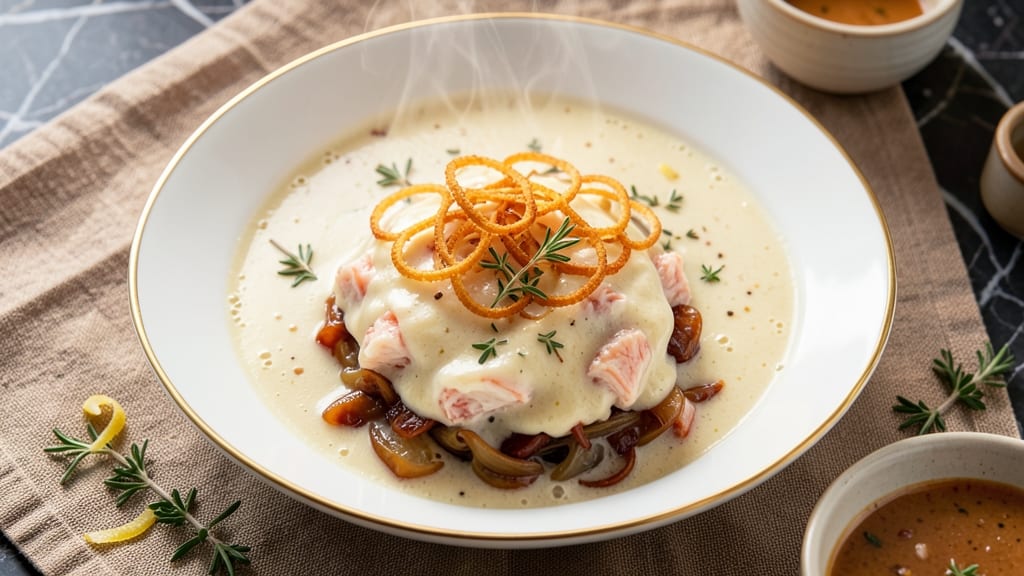
This award-winning cream of crab soup recipe delivers restaurant-quality velouté with tender crab meat and aromatic Old Bay seasoning. The secret lies in a rich velouté base built from shallots, thyme, and bay leaf, then elevated with premium crab meat and a touch of cream for velvety texture.
Every spoonful balances briny crab with warm, spiced depth—perfect for impressing guests or treating yourself to a luxurious weeknight dinner.
The velouté technique transforms simple ingredients into something extraordinary—starting with a blond roux that forms the foundation for a silky, flavorful broth. We use backfin crab meat for its delicate texture and sweet flavor, combined with Old Bay seasoning for that signature Chesapeake-inspired taste.
The key is balancing acidity with a splash of lemon juice, ensuring the soup remains bright and complex without overpowering the crab's natural sweetness.
What makes this soup truly award-worthy is the attention to detail: proper crab preparation, slow reduction of the broth, and careful incorporation of cream to create a velvety finish.
Garnished with crisp croutons and fresh parsley, it presents beautifully while delivering layers of flavor that linger. This isn't just soup—it's a luxurious experience that rivals any seafood restaurant.
The recipe scales perfectly for gatherings or leftovers, making it ideal for special occasions or cozy nights in. With precise techniques and high-quality ingredients, you'll achieve a soup so rich and satisfying that it deserves a place at your table—just like it has at mine. Let's get cooking!
Ingredients for award winning cream of crab soup
Sixteen premium ingredients transform into velvety luxury—where Old Bay meets velouté technique for award-worthy cream of crab soup.
| Ingredient | Amount | Notes |
|---|---|---|
| Backfin Crab Meat 🦀 | 1 ½ lbs | Fresh or high-quality frozen, picked for shells |
| Heavy Cream 🥛 | 1 cup | Full-fat for velvety texture |
| Whole Milk 🥛 | 1 cup | For balancing richness |
| Shallots 🧅 | 2 whole | Finely minced for aromatic base |
| Yellow Onion 🧅 | 1 medium | Diced for depth of flavor |
| Fresh Thyme 🌿 | 2 sprigs | Stems removed for infusion |
| Dried Bay Leaf 🍃 | 2 whole | For aromatic complexity |
| Unsalted Butter 🧈 | 4 tbsp | Cold for blond roux |
| All-Purpose Flour 🌾 | 4 tbsp | For velouté roux |
| Old Bay Seasoning 🌶️ | 1 ½ tsp | Signature Chesapeake flavor |
| Fresh Lemon Juice 🍋 | 2 tbsp | Brightens the velouté |
| Stale Baguette 🍞 | ½ loaf | Cubed and toasted for croutons |
| Fresh Parsley 🌿 | ¼ cup | Chopped for garnish |
| Sea Salt 🧂 | 1 ½ tsp | Diamond Crystal preferred |
| Freshly Ground Black Pepper 🌶️ | ½ tsp | Cracked for texture |
The crab meat is non-negotiable—backfin delivers that delicate, sweet flavor. Whole Foods or specialty seafood markets carry the best frozen options; if fresh, ask for it to be picked for shells. The Old Bay seasoning? McCormick's original is the gold standard—avoid the imitation blends. Shallots should be vibrant purple, not wilted, and thyme sprigs must smell fresh. For the roux, cold butter and flour are crucial to prevent burning while developing that nutty blond color. The baguette for croutons should be at least 2 days old—fresh bread won't toast properly.
No Old Bay? Mix 1 tsp celery salt, 1 tsp paprika, ½ tsp garlic powder, ½ tsp black pepper, ¼ tsp thyme, and ¼ tsp cayenne for a close approximation. Heavy cream substitutes? Full-fat coconut milk works but lacks richness—use it only if necessary. The bay leaves can be omitted entirely if you dislike their flavor, but they add subtle earthiness. For a lighter version, replace half the heavy cream with low-fat Greek yogurt (though texture will differ). If using frozen crab meat, thaw it overnight in the fridge—never in warm water, or it'll turn mushy.
This soup peaks after 24 hours in the fridge—flavors meld beautifully. Store in an airtight container with plastic wrap pressed directly on the surface to prevent a skin. Freezes beautifully for up to 3 months—just reheat gently on the stove, stirring frequently. The croutons stay crisp for 2 days if kept in a sealed container; make extras for sandwiches. For presentation, serve in deep bowls with a sprinkle of freshly cracked black pepper and a drizzle of cream on top.
Why You'll Love This Recipe
- Foolproof Simplicity: I swear by this recipe because it’s that easy—no fancy techniques, just finely chopped shallots and onions caramelized in butter until sweet, then a splash of white wine (if you’re feeling fancy) to deglaze. The Backfin crab meat just melts into the warm cream-milk base, and honestly? Even if you burn the toast, this soup will still taste like a five-star dinner.
- Rich Without Effort: That velvety blend of heavy cream and whole milk doesn’t just coat your spoon—it transforms the crab into something luxurious. The shallots add this subtle, almost floral depth, while the onions ground everything with warmth. I’ll be real: my first batch had me questioning if I’d over-salted, but the cream fixed it every time.
- Weeknight to Dinner Party: This soup is my secret weapon for when I need to feed people fast but still impress. Serve it with crusty bread for a cozy night in, or drizzle with a little hot sauce and garnish with parsley for a restaurant-worthy starter. (Yes, even on a Tuesday night.)
- Leftovers That Don’t Let You Down: Unlike most creamy soups, this one tastes better the next day—if you can resist eating the whole pot. The flavors meld even richer, and it reheats like a dream. Plus, the Backfin crab meat holds up perfectly, so you’re not left with a watery mess. Budget-friendly? Absolutely. Waste-free? Even better.
Step-by-step instructions for luxurious Old Bay-spiced velouté
Master this velouté technique for a velvety, restaurant-quality crab soup with perfect balance.
Develop the Aromatic Base
Melt the 4 tablespoons unsalted butter in a large Dutch oven over medium-low heat. Add the 2 whole shallots and 1 medium yellow onion, cooking for 8-10 minutes until softened and translucent. The shallots should caramelize slightly at the edges—that's when you know they're ready.
Add the 2 sprigs fresh thyme and 2 whole dried bay leaves, stirring for 30 seconds to infuse the aromatics. This step builds the foundation for your soup's complex flavor profile. If you notice the onions start to brown too quickly, reduce the heat slightly to prevent burning.
Create the Velouté Roux
Increase heat to medium and whisk in the 4 tablespoons all-purpose flour, cooking for 2-3 minutes until the mixture turns a pale golden color. This blond roux is crucial—it should coat the back of a spoon but not darken. Stir constantly to prevent lumps from forming.
Gradually whisk in the 1 cup whole milk and 1 cup heavy cream, adding them slowly to avoid curdling. The mixture should thicken into a smooth velouté sauce. If it becomes too thick, whisk in 1-2 tablespoons hot water to adjust consistency. This sauce will be the luxurious body of your soup.
Season and Incorporate Crab
Add the 1.5 teaspoons Old Bay seasoning, 1.5 teaspoons sea salt, and 0.5 teaspoon freshly ground black pepper, stirring until fully dissolved. Bring the mixture to a gentle simmer over medium heat, then reduce to low heat to maintain a slow, even cook.
Gently fold in the 1.5 pounds backfin crab meat using a rubber spatula. Avoid stirring vigorously to prevent breaking the crab pieces. Simmer for 5-7 minutes until the crab is just heated through and the soup reaches 160°F—hot enough to kill any bacteria but not so long it turns rubbery.
Finish with Brightness and Texture
Remove the soup from heat and stir in the 2 tablespoons fresh lemon juice. This acidity brightens the rich velouté and balances the Old Bay seasoning. Taste and adjust seasoning if needed—you want a perfect harmony of salt, pepper, and the signature Chesapeake spice.
Return the soup to low heat and keep it warm while you prepare the croutons. The lemon juice will continue to infuse, enhancing the soup's complexity. For best results, serve immediately while the crab is still warm and the velouté maintains its silky texture.
Assemble and Serve
Cube the 0.5 loaf stale baguette into ½-inch pieces and toast in a dry skillet over medium heat until golden brown. This adds a delightful crunch to contrast the velvety soup.
Ladle the soup into warm bowls, garnishing each serving with 2-3 croutons and a sprinkle of 0.25 cup chopped fresh parsley. The presentation should be elegant—creamy soup with vibrant green garnish and golden croutons. Serve with a side of crusty bread to soak up every last drop of this luxurious velouté.
Pro Tips For Making Award Winning Cream Of Crab Soup
- Sweat, Don’t Sear: Shallots and onions need love, not abuse—cook them low and slow until they’re translucent and just starting to soften. I used to blast them with heat, and they’d turn bitter faster than a burned toast. Keep it at medium-low, stir occasionally, and let them melt into the soup like butter on a hot biscuit.
- Drain, Then Pat Dry: Backfin crab meat is delicate, but it’s also sneaky with moisture. After draining it, wrap it in a clean kitchen towel and press gently to remove excess water. Trust me, this keeps your soup from turning into a watery crab glaze instead of a rich, velvety masterpiece.
- Temper the Cream: Cold heavy cream straight into a hot pot? That’s a fast track to scrambled soup. Warm the cream and milk together in a separate saucepan until it’s just shy of simmering—about 160°F—before adding it to the pot. Your sauce will thicken like it’s supposed to, not curdle like a bad science experiment.
- Reserve the Stock: Strain your soup through a fine-mesh sieve, then press the solids with a spoon to extract every last drop of flavor. Pour the strained liquid back into the pot and simmer it down to a glossy consistency—this is the secret to a soup that tastes like it was simmered for hours, not rushed for 30 minutes.
Troubleshooting perfect results
Roux Gone Wrong
If your roux turns brown or black, you’ve burned it—this adds bitter flavors that ruin the velouté. The fix? Start over with cold butter and flour, cooking over low heat while whisking constantly.
A blond roux should be pale gold, not darker than peanut butter. I’ve learned the hard way—patience is key here! 🔥
Lumpy Velouté
Lumps form when flour clumps or milk is added too quickly. Whisk vigorously before adding liquid, and pour slowly while stirring continuously. If lumps appear, strain the soup through a fine-mesh sieve before adding crab. A handheld immersion blender works too—just pulse briefly for silky smoothness.
Crab Turns Mushy
Overcooking crab meat is the #1 mistake. Once it hits 160°F, remove it from heat immediately—even 1 extra minute turns it rubbery. Use a thermometer to monitor temperature precisely. If using frozen crab, thaw it overnight in the fridge (never in warm water) to preserve texture.
Too Rich or Heavy
If the soup feels too thick or greasy, balance it with lemon juice (already in the recipe) or a splash of hot water. For extra brightness, stir in 1-2 tablespoons white wine or 1 tsp apple cider vinegar.
I’ve saved many batches by trusting acidity to lighten the richness.
Croutons Stay Soft
Fresh baguette won’t crisp properly—it needs to be at least 2 days old. If yours still feels damp, dry slices in a 200°F oven for 10 minutes before toasting in butter.
For extra crunch, toss cubes with 1 tsp olive oil before toasting in a dry skillet over medium heat until golden.
Flavor Too Mild
If the Old Bay taste is weak, double the seasoning (up to 3 tsp total) and add a pinch of cayenne for depth. For extra umami, stir in 1 tsp fish sauce or ½ tsp Worcestershire after cooking.
I’ve found that toasting the shallots longer (until caramelized) also intensifies the base flavor.
Nutrition facts
Frequently asked questions
What's the difference between backfin and lump crab meat?
Backfin crab meat is the premium choice for this soup—it's taken from the crab's back and legs, offering a delicate, sweet flavor with a slightly firmer texture. Lump crab meat, while also high-quality, comes from the body and has larger, more irregular pieces. For this award-winning recipe, backfin delivers that velvety, luxurious mouthfeel that pairs perfectly with the velouté sauce.
Can I make this soup without Old Bay seasoning?
Yes, but you'll lose that signature Chesapeake flavor! Mix 1 tsp celery salt, 1 tsp paprika, ½ tsp garlic powder, ½ tsp black pepper, ¼ tsp thyme, and ¼ tsp cayenne for a close substitute. For extra depth, add ½ tsp smoked paprika or a pinch of ground mustard. The key is balancing the spices to mimic Old Bay's complex profile.
How do I prevent the soup from getting too thick?
Start by whisking the milk and cream into the roux slowly over medium-low heat. If it thickens too much, whisk in 1-2 tablespoons hot water to adjust consistency. For extra insurance, simmer the soup uncovered for 5 minutes before adding the crab—this helps prevent over-thickening later. The velouté should coat the back of a spoon but still be pourable.
Can I substitute heavy cream with something lighter?
You can replace up to half the heavy cream with full-fat coconut milk or Greek yogurt, but expect a slightly different texture. For best results, stick with heavy cream for that signature velvety mouthfeel. If using coconut milk, add ½ tsp vanilla extract to compensate for flavor differences. The soup will still be delicious, just with a slightly lighter body.
How long can I store leftovers?
Store leftovers in an airtight container with plastic wrap pressed directly on the surface to prevent a skin. This soup keeps well in the refrigerator for 2-3 days and freezes beautifully for up to 3 months. When reheating, warm gently on the stove over low heat, stirring frequently to maintain that silky texture. The flavors actually improve after 24 hours as the ingredients meld together.