
Soups & Stews
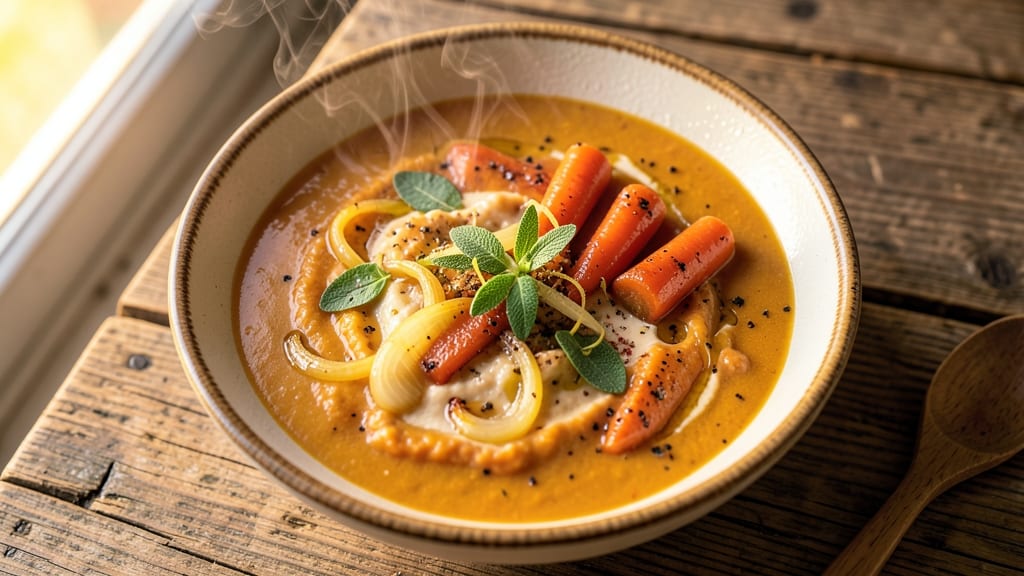
This autumnal harvest soup recipe transforms seasonal squash, pumpkin, and root vegetables into a velvety, aromatic masterpiece that defines fall. 🍂 The secret lies in roasting the vegetables first—caramelizing their natural sweetness while developing deep, earthy flavors that infuse the broth.
Sage and thyme add layers of herbal warmth, creating a soup that's rich yet balanced, hearty enough to stand alone but versatile enough to complement any meal.
What sets this soup apart is its textural contrast: creamy blended sections from the roasted vegetables contrast beautifully with tender chunks of caramelized squash and pumpkin.
The process is straightforward—sauté aromatic vegetables, roast until tender, blend for velvety richness, then simmer with broth and herbs—but the result feels like a restaurant-quality dish. The long simmering time (about 30 minutes) allows flavors to meld perfectly, while the optional garnish of toasted pumpkin seeds adds a satisfying crunch.
Perfect for chilly evenings, this soup delivers cozy comfort without being overly heavy. The natural sweetness of the vegetables pairs beautifully with the savory depth of the broth, creating a harmonious balance that appeals to both casual weeknight dinners and special gatherings.
Each bowl is packed with seasonal goodness, making it a nutritious yet indulgent choice that feels like a warm hug in a bowl.
The best part? This recipe scales effortlessly—double the batch for a crowd or halve it for a single serving. Serve with crusty bread to soak up every last drop of that velvety broth, or pair it with a simple green salad for a well-rounded meal.
The versatility ensures it works as both a main course and a side dish, making it a staple for autumn menus.
Ingredients for autumnal harvest soup
Seasonal vegetables and aromatic herbs create this velvety autumnal masterpiece—rich yet balanced, perfect for fall evenings.
| Ingredient | Amount | Notes |
|---|---|---|
| Butternut Squash 🎃 | 2 lb | Peeled, cubed, 1-inch pieces |
| Sugar Pumpkin 🎃 | 1 lb | Peeled, cubed, 1-inch pieces |
| Sweet Potatoes 🍠 | 1 ½ lb | Peeled, cubed, 1-inch pieces |
| Yellow Onion 🧅 | 1 whole | Diced, medium size |
| Carrots 🥕 | 1 lb | Peeled, chopped into chunks |
| Fresh Sage 🌿 | ¼ cup | Chopped leaves, stems removed |
| Fresh Thyme 🌿 | 1 tbsp | Chopped leaves, stems removed |
| Garlic Cloves 🧄 | 4 cloves | Peeled, roughly chopped |
| Vegetable Broth 💧 | 6 cups | Low-sodium preferred |
| Extra-Virgin Olive Oil 🫒 | ¼ cup | For roasting and sautéing |
| Pumpkin Seeds 🥜 | ¼ cup | Toasted, for garnish |
| Sea Salt 🧂 | 1 ½ tsp | Diamond Crystal preferred |
| Black Pepper 🌶️ | ½ tsp | Freshly ground |
The vegetables are the heart of this soup, so prioritize quality. Local farmers markets offer the freshest butternut squash and pumpkin—look for firm, unblemished skins with vibrant color. Sweet potatoes should be firm and free of soft spots. For the herbs, Whole Foods or specialty grocers carry the best fresh sage and thyme; avoid dried if possible, as fresh delivers superior depth. Prep all vegetables uniformly (1-inch cubes) for even roasting. The roasting step transforms their natural sweetness into caramelized richness, so don't skip it—it's what makes this soup restaurant-quality.
No butternut squash? Acorn squash or kabocha works beautifully, though flavor will differ slightly. Short on pumpkin seeds? Toasted pecans or walnuts add a similar crunch and richness. Vegetable broth can be homemade (simmer veggie scraps with herbs) or store-bought—Imagine or Pacific Foods brands are excellent. For extra depth, add a pinch of nutmeg or cinnamon to the broth while simmering. The herbs are non-negotiable though; dried thyme can substitute at half the amount, but fresh sage's aroma is unmatched. If you're making this ahead, roast the veggies and store them in the fridge for up to 3 days before blending.
This soup tastes even better the next day as flavors meld further. Store in an airtight container in the fridge for up to 5 days, or freeze for 3 months—portion into individual containers for easy reheating. For serving, toast the pumpkin seeds in a dry skillet over medium heat for 3-4 minutes until golden, stirring frequently. Keep them nearby so you can add a sprinkle just before serving. The soup reheats beautifully; simmer gently on the stove or microwave in 1-minute intervals until steaming. Garnish with extra herbs and a drizzle of olive oil for a restaurant-worthy finish.
Why You'll Love This Recipe
- One-Pot Magic: I swear by this recipe when I’m too tired to wash a million dishes. Toss everything—squash, pumpkin, sweet potatoes—into one pot with onions and broth, and let it simmer. No chopping boards to clean, no pots left to soak. Just flavor in a bowl.
- Sweet & Savory Balance: That caramelized onion base? Chef’s kiss. It’s got the natural sweetness of roasted squash and pumpkin, but the depth of savory spices (think cinnamon, nutmeg, and a pinch of smoked paprika) that makes it feel cozy, not cloying. Honestly, my picky-eater husband asks for seconds.
- Meal Prep MVP: Between us, this is my go-to for busy weeks. Make a big batch on Sunday, and you’ve got lunch or dinner covered for days. The flavors only get better as it sits—like a slow-cooked hug in a jar. Freezes like a dream too, so you’re set for winter.
- Budget-Friendly Feast: I use whatever’s on sale—sugar pumpkins are cheaper than butternut squash some weeks, and sweet potatoes stretch the recipe further. A few carrots and onions bulk it up, but the taste? Ridiculously rich. My college-student daughter calls it “fancy cheap food,” and she’s not wrong.
Step-by-step instructions for roasted squash and sage velvety richness
Transform seasonal produce into velvety perfection with this method.
🔥 Step 1: Roast the Vegetables for Deep Flavor
Preheat your oven to 400°F and line two large baking sheets with parchment paper. Arrange the 2 lb butternut squash, 1 lb sugar pumpkin, and 1.5 lb sweet potatoes (all prepped as 1-inch cubes) in a single layer on the sheets. Drizzle evenly with ¼ cup extra-virgin olive oil and sprinkle with ½ tsp sea salt and ¼ tsp black pepper.
Roast for 25-30 minutes, stirring once halfway, until the edges are golden brown and the cubes begin to soften slightly. Remove from oven and set aside. In the same oven, roast the 1 lb carrots (chopped into chunks) and 1 whole yellow onion (diced) with 1 tbsp olive oil, ½ tsp sea salt, and ¼ tsp black pepper for 15-20 minutes until caramelized.
🍳 Step 2: Build the Aromatic Base
Heat a large Dutch oven over medium heat with 1 tbsp olive oil. Add the 4 cloves garlic cloves (roughly chopped) and sauté for 30 seconds until fragrant. Immediately add the 0.25 cup fresh sage and 1 tbsp fresh thyme (chopped leaves), stirring for 1 minute until the herbs release their aromatic oils.
Add the roasted vegetables (squash, pumpkin, sweet potatoes, carrots, and onion) to the pot. Stir to combine with the herbs, letting them toast for another 2 minutes to deepen their flavors. This step develops the complex, earthy notes that define autumnal dishes.
🥘 Step 3: Simmer into Velvety Perfection
Pour in the 6 cups vegetable broth and bring to a gentle simmer. Partially cover the pot and cook for 15-20 minutes until the vegetables are fork-tender but still hold their shape. The broth should reduce slightly, creating a thick, luscious base.
Use an immersion blender to puree the soup directly in the pot until smooth. If you prefer texture, blend only half the soup and leave the rest chunky. Season with additional sea salt and black pepper to taste—this soup should be rich but not overly salty.
🔪 Step 4: Finish and Garnish
Return the soup to a gentle simmer and stir in the roasted pumpkin seeds (toasted separately in a dry pan for 2-3 minutes until golden). The seeds add a satisfying crunch and nutty depth to each spoonful. Taste and adjust seasoning one final time, ensuring the balance of sweetness from the vegetables and herbal notes from the sage and thyme.
Ladle the soup into bowls and garnish with an additional sprinkle of pumpkin seeds and a few sage leaves. Serve immediately while the soup is steaming hot, as the flavors meld best when enjoyed fresh from the pot.
Pro Tips For Making Autumnal Harvest Soup
- CHAR THE ONIONS FIRST: Don’t just toss chopped onions into the pot—they’ll turn to mush before anything else caramelizes. Sear them in 2 tablespoons of oil over medium-high heat for 8-10 minutes until deep golden brown, stirring occasionally. This builds flavor that cuts through the sweetness of the squash and pumpkin.
- PEEL SWEET POTATOES LAST: I used to peel all the veggies first, but sweet potatoes oxidize fast and turn grayish. Save the peeling for after cooking—just scrub them clean, cut them into chunks, and add them raw to the pot. The skins stay intact, and the texture’s better anyway.
- SIMMER COVERED, THEN UNCOVER: Start with the lid on to soften the squash and pumpkin, but after 20 minutes, lift it and let the soup reduce slightly. This thickens the broth naturally without needing a slurry, and the edges of the veggies get that caramelized edge that makes the dish look (and taste) restaurant-worthy.
- SALT THE POT WATER: The soup’s broth relies on the water these root veggies release—add 1½ teaspoons of salt to the pot before adding the veggies. It seasons the water itself, so the final soup isn’t bland even if you forget to salt at the end. (Yes, I’ve forgotten.)
Essential equipment for this recipe
Dutch Oven
A 6-quart Dutch oven is my go-to for this soup—it's the perfect size for simmering and blending without spills. The heavy cast iron retains heat beautifully, ensuring even cooking and preventing scorching. I recommend a Le Creuset signature or Lodge pre-seasoned for durability and even heat distribution.
If you don’t own one, a stainless steel stockpot works too, but monitor the temperature more closely to avoid sticking. 🔥
Immersion Blender
An immersion blender is non-negotiable for achieving that velvety texture without transferring hot soup to a separate blender (which can be messy and dangerous). The Ninja BN601 or Magic Bullet MB750 are top-tier choices—they handle thick soups effortlessly and clean up easily.
If you don’t own one, a standard blender works, but transfer the soup in batches and return it to the pot carefully to avoid splatters.
Baking Sheets
Use two large rimmed baking sheets (12x17 inches) for roasting the vegetables—this ensures even heat distribution and prevents overcrowding. I prefer All-Clad stainless steel or USA Pan bakeware for their durability and nonstick properties.
Line them with parchment paper for easy cleanup and to prevent sticking. Avoid glass or ceramic sheets, as they can cause hot spots and uneven cooking.
Mixing Bowls
Medium-sized stainless steel mixing bowls (8-10 inches) are essential for prepping ingredients like diced onions, chopped herbs, and roasted vegetables. I use OXO Good Grips for their ergonomic design and nonreactive surfaces.
For chopping garlic or herbs, a small ceramic or glass bowl works best to keep everything contained. Avoid plastic bowls for roasted veggies, as they can warp under high heat.
Measuring Tools
Precision matters in soup-making, so invest in a stainless steel measuring set—I swear by OXO Good Grips for their accuracy and durability. A microplane is a game-changer for zesting garlic or grating fresh ginger if you add it later.
For herbs, a sharp chef’s knife and cutting board (like John Boos or Teakhaus) are a must. A kitchen scale (like Escali Primo) ensures consistency, especially when measuring broth or spices.
Skillet for Seeds
A small 10-inch cast iron skillet is ideal for toasting the pumpkin seeds—it heats evenly and crisps them to perfection. A nonstick skillet works too, but watch closely to avoid burning. I like to use a Lodge cast iron for its natural nonstick properties over time.
Toast seeds in batches to avoid overcrowding, and shake the pan occasionally for even browning. A fine-mesh strainer helps remove any burnt bits before garnishing the soup. 💫
Nutrition facts
Frequently asked questions
Can I make this soup without roasting the vegetables?
Roasting is key for developing that deep, caramelized sweetness that defines autumnal flavors! However, if you're short on time, you can sauté the vegetables in the pot with extra olive oil for 10-12 minutes until tender. The flavor won't be as complex, but it'll still be delicious. For best results, try roasting just the squash and sweet potatoes (the stars of the show) and sauté the onions and carrots instead.
How can I make this soup spicier?
Add a pinch of cayenne pepper or a dash of hot sauce while simmering, or stir in ½ teaspoon smoked paprika with the herbs. For a smoky kick, toast ½ teaspoon ground cumin in the Dutch oven with the garlic. Pro tip: Add a small piece of chipotle pepper in adobo (remove before blending) for subtle heat that blends beautifully with the sweet vegetables.
Can I use this soup as a base for other dishes?
This velvety soup makes an incredible base for creamy risottos (stir in Arborio rice and Parmesan), stuffed shells (use as filling), or even soup dumplings. For a quick upgrade, blend in ½ cup coconut milk for extra richness, or swirl in a beaten egg for a silky texture. The roasted vegetable purée also works as a sauce for roasted chicken or grilled fish.
What if I don't have fresh sage or thyme?
Use ½ teaspoon dried sage and ½ teaspoon dried thyme (reduce amounts by ⅓), or substitute with rosemary (similar earthy notes). For a different autumnal twist, try ½ teaspoon marjoram or 1 bay leaf (remove before serving). If you're out of herbs entirely, a pinch of nutmeg or allspice adds warmth, though it won't replicate the herbal complexity.
How do I prevent the soup from being too thick?
Start with 6 cups broth and adjust as you go—add ½ cup hot water at a time while simmering until you reach your desired consistency. If it's too thick after blending, thin it with extra broth or a splash of cream (heavy cream or coconut milk for a lighter option). Never add cold liquid directly to hot soup, as it can cause the starches to re-gel and make it gluey.