
Soups & Stews
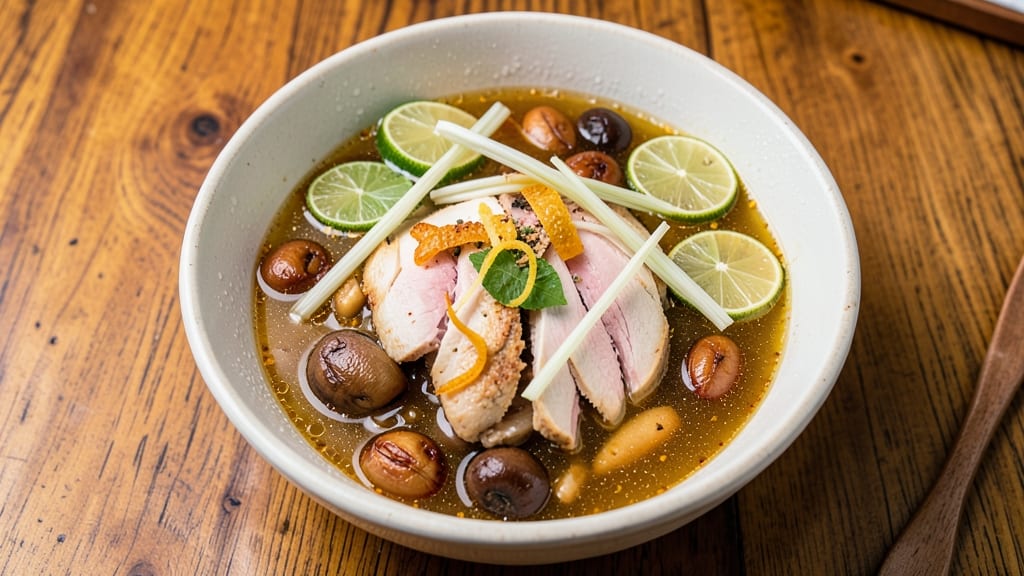
This authentic tom yum gai soup recipe delivers the perfect balance of lemongrass heat, galangal zing, and kaffir lime brightness that defines Thai cuisine. 🌟 The secret lies in fresh aromatics—lemongrass, galangal, and kaffir lime leaves—that infuse the broth with layers of complex flavor.
Unlike many versions, this recipe stays true to tradition by using chicken stock and chicken as the protein, creating a harmonious blend of sour, spicy, and umami notes that dance on your palate.
The broth is where the magic happens, simmered low and slow with fresh herbs and spices to develop deep, aromatic layers. Galangal adds a peppery bite, lemongrass brings citrusy warmth, and kaffir lime leaves infuse a floral, almost citrusy aroma.
The soup finishes with a splash of lime juice and a sprinkle of fresh herbs, ensuring the flavors are bright and balanced—never overpowering. This isn’t just a soup; it’s a bold, flavorful experience that transports you to a bustling Bangkok street stall.
What sets this recipe apart is the authenticity—no shortcuts, no substitutions. Fresh galangal and kaffir lime leaves (not dried or frozen) are non-negotiable, as they deliver the true essence of tom yum gai.
The heat comes from fresh chili, adjusted to your preference, while the sourness is controlled with lime juice. The result? A restaurant-quality bowl that’s creamy from the chicken, spicy from the chilies, and tangy from the lime, all while staying true to the original.
Perfect for a cozy night in or a gathering with friends, this soup is versatile yet precise. Serve it with steamed jasmine rice to soak up every last drop of that fragrant broth.
The instructions are straightforward, but the flavors are anything but—this is Thai comfort food at its finest. Let’s get cooking!
Ingredients for authentic tom yum gai soup
Fresh aromatics and simple ingredients create this bold, authentic tom yum gai experience.
| Ingredient | Amount | Notes |
|---|---|---|
| Chicken Breast 🍗 | 1 ½ lb | Boneless, skinless, cut into bite-sized pieces |
| Chicken Stock 💧 | 4 cups | Homemade or high-quality store-bought |
| Lemongrass 🌿 | 1 whole | Fresh, bruised stems only (about 3 inches each) |
| Galangal 🍃 | 3 inches | Fresh, peeled, sliced into thin rounds |
| Kaffir Lime Leaves 🍋 | 4 whole | Fresh, torn into 2-inch pieces |
| Shallots 🧅 | 4 whole | Peeled, thinly sliced |
| Garlic Cloves 🧄 | 6 cloves | Peeled, smashed |
| Bird's Eye Chilies 🌶️ | 3 whole | Adjust to taste, stems removed |
| Lime Juice 🍋 | ¼ cup | Freshly squeezed |
| Fish Sauce 🍶 | 2 tbsp | Red Boat preferred |
| Palm Sugar 🍯 | 1 ½ tbsp | Or light brown sugar |
| Cilantro Leaves 🌿 | ¼ cup | Fresh, chopped for garnish |
| Jasmine Rice 🍚 | 1 ½ cups | Uncooked, for serving |
| Vegetable Oil 🫒 | 2 tbsp | For high-heat cooking |
| Salt 🧂 | 1 tsp | Kosher or sea salt |
The galangal and kaffir lime leaves are non-negotiable for authentic flavor. Look for fresh galangal at Asian markets—it should smell peppery and citrusy, not musty. Kaffir lime leaves are often sold dried in tubes, but fresh leaves from a specialty grocer make all the difference. Lemongrass should be firm with no brown spots. If you can't find fresh galangal, ginger works in a pinch, but it won't replicate that unique peppery bite. The shallots and garlic should be fresh—yellowing or sprouting means it's time to toss them. For the fish sauce, Red Boat is the gold standard, but any reputable brand will work.
No fresh galangal? Ginger at half the amount adds warmth but lacks that distinct peppery kick. Running out of kaffir lime leaves? Substitute 1 tsp lime zest plus 2 tbsp chopped cilantro, though it won't be identical. The chilies can be swapped for Thai chilies or even serrano peppers if that's what you have. For extra umami, add 1 tbsp oyster sauce—it's a common Thai pantry staple. The palm sugar can be replaced with light brown sugar, but it won't have that caramel-like depth. And if you're avoiding fish sauce entirely, soy sauce at half the amount works in a bind.
This soup tastes even better the next day as the flavors meld. Store leftovers in the fridge for 3-4 days, covered tightly to preserve those bright aromatics. The broth freezes beautifully for up to 3 months, though the texture of the chicken may change slightly. For serving, always include fresh herbs—toss in the cilantro right before eating. The jasmine rice should be steamed just until tender and fluffy, ready to soak up every last drop of that fragrant broth. Make extra—it disappears fast.
Why You'll Love This Recipe
- No-Fuss Freshness: I swear by this recipe because it takes five minutes to prep the aromatics—just bruise the galangal and smash the lemongrass slightly, no peeling or chopping required. The kaffir lime leaves add that signature tang without needing perfect technique.
- Taste That Stops You: That first sip of broth—bright, zesty, with the chicken stock deepening into something rich—is pure satisfaction. The galangal gives it a peppery kick, while the lemongrass lingers like a secret hug in every spoonful.
- Weeknight Workhorse: This soup doubles as a meal starter, a hangover cure, or a light dinner when I’m too tired to fuss. I’ll make a big pot on Sundays, and it’s still delicious reheated for lunch or paired with rice the next day.
- Budget-Friendly Magic: Chicken breast and stock stretch for four servings, and the herbs (especially galangal, which lasts weeks frozen) make this cheaper than takeout. Honestly, I’ve never spent less than $10 for a meal this flavorful.
Step-by-step instructions for authentic tom yum gai soup
Master this Thai classic with precise technique and vibrant flavors.
🍳 Step 1: Prepare the Aromatic Base
Heat the 2 tablespoons vegetable oil in a large pot over medium-high heat until shimmering. Add the 4 whole shallots and cook for 2-3 minutes until softened but not browned. This gentle cooking prevents bitterness and builds flavor.
Add the 6 cloves garlic cloves and 3 inches galangal (sliced rounds), cooking for 1 minute until fragrant. The galangal should release its citrusy aroma—this is your signal to move quickly. Add the 1 whole lemongrass (bruised stems only) and 4 whole kaffir lime leaves (torn pieces). Stir for 30 seconds to infuse the oil with these essential flavors.
Here's the thing—don't rush this step. The aromatic ingredients need time to bloom and release their oils. If they burn, the soup will taste bitter. Watch the color carefully—it should be golden, not dark brown.
🔥 Step 2: Sear the Chicken and Build the Broth
Add the 1.5 lb chicken breast (cut into bite-sized pieces) to the pot and sear for 3-4 minutes until lightly browned on all sides. This creates a flavorful crust that forms the base of your soup.
Pour in the 4 cups chicken stock and bring to a rolling boil. Immediately reduce heat to medium-low and simmer for 10 minutes until the chicken is just cooked through (internal temperature 160°F). The broth should be clear with no cloudiness—this indicates the chicken has released its proteins.
I press down gently on the chicken pieces during the first minute of simmering—this prevents them from floating and ensures even cooking. Remove the chicken with a slotted spoon and set aside temporarily.
🥘 Step 3: Balance the Flavor Profile
Return the pot to medium heat and add the 1.5 tablespoons palm sugar and 2 tablespoons fish sauce. Stir until the sugar dissolves completely—this creates the signature sweet-savory balance of authentic tom yum gai.
Add the 3 whole bird's eye chilies (adjust to taste) and ¼ cup lime juice. Here's where the magic happens: the chilies add heat, the lime juice brightens everything, and the fish sauce brings umami depth. Taste the broth now—it should be tangy, slightly sweet, with a touch of heat. If it's not balanced, adjust with more fish sauce (for saltiness), palm sugar (for sweetness), or lime juice (for acidity).
Real talk: This is the moment that matters. The broth should sing with complex flavors before you add the chicken back. If it's too thin, simmer uncovered for 2-3 minutes to reduce slightly.
⏰ Step 4: Finish and Garnish
Return the chicken to the pot and simmer for 2 minutes to reheat through. The chicken should be tender but still hold its shape—overcooking makes it rubbery. Strain the broth if you prefer a smoother texture (optional), then return it to the pot.
Divide the 1.5 cups jasmine rice among bowls. Ladle the hot soup over the rice, then garnish with ¼ cup chopped cilantro leaves. The cilantro adds freshness that cuts through the rich, spicy broth.
Serve immediately with lime wedges on the side—each bowl should deliver bold lemongrass aroma, galangal's citrusy bite, and kaffir lime's floral note all in perfect harmony. The soup should be hot, aromatic, and balanced—not one flavor dominating the others.
Pro Tips For Making Authentic Tom Yum Gai Soup
- CHAR THE GALANGAL: Don’t just toss in raw slices—lightly crush or bruise the galangal with the side of your knife first. I learned this the hard way after making soup that tasted disappointingly mild; the broken fibers release way more of that peppery, citrusy punch. (Yes, even if it looks like you’re chopping it into submission.)
- SLICE CHICKEN THIN: Cut the chicken breast into paper-thin strips—no thicker than ¼ inch—so it cooks fast and stays tender. Thick slices turn rubbery before the broth even gets hot, and nobody wants that. Use a sharp knife and work parallel to the grain for clean, even pieces.
- STEAM THE LEMONGRASS: Before adding lemongrass to the pot, blanch the stalks in boiling water for 30 seconds to soften them. This keeps the broth from getting woody bits while still delivering all that bright, floral aroma. (Skip this, and you’ll taste the texture of a toothpick.)
- DON’T BOIL THE LIME LEAVES: Tear the kaffir lime leaves in half and add them late—right when the soup is simmering and ready to serve. Boiling them too long turns the broth bitter, and you’ll regret it. They’re meant to perfume, not stew. (Your future self will notice the difference.)
Essential equipment for great authentic tom yum gai soup
Wok or Stockpot
For authentic tom yum gai, a wide, heavy-bottomed wok (like Made In or Lodge) is ideal—it gives you that signature high-heat sear while allowing room for aromatics to bloom. If you don’t own a wok, a 5-6 quart stainless steel stockpot works perfectly.
The key is the width: it prevents overcrowding when searing chicken and lets you stir ingredients freely. I’ve made this soup in a 4-quart Dutch oven (like Le Creuset) too—just reduce the stock to 3 cups to avoid overflow. 🔥
High-Quality Thermometer
A thermometer is non-negotiable for this soup. I use a ThermoWorks Dot to monitor the chicken’s internal temperature—it should reach 160°F before removing it from the broth. For the broth itself, a candy or instant-read thermometer helps gauge when it’s reduced to the right consistency.
Pro tip: The broth should simmer at 195–205°F for optimal balance. Without precise temperature control, you risk overcooking the chicken or burning the delicate aromatics. ⚡
Fresh Ingredient Prep Tools
Invest in a microplane for galangal and ginger—it creates fine, flavorful shavings that dissolve beautifully into the broth. A sharp chef’s knife and cutting board are essential for slicing shallots, garlic, and lemongrass efficiently.
For kaffir lime leaves, I use scissors to tear them into strips—it’s faster and keeps the texture intact. Don’t skimp on freshness: dull tools make prep harder and compromise flavor. 🌿
Strainer and Fine-Mesh Sieve
A fine-mesh strainer (like OXO Good Grips) is your secret weapon for straining the broth if you prefer a smoother texture. It catches lemongrass fibers and galangal pieces while letting the fragrant liquid pass through.
For garnishes, a small colander helps rinse and drain cilantro quickly. Pro move: Strain the broth through a cheesecloth-lined sieve for an ultra-refined finish—it’s worth the extra 30 seconds. ✨
Lime Juicer and Fish Sauce Bottle
Fresh lime juice makes all the difference—use a handheld lime juicer (like OXO Good Grips) for ¼ cup of bright, pulp-free juice. For fish sauce, a small squeeze bottle (like Red Boat’s travel-sized version) ensures precise measurements—2 tbsp is critical for that umami punch.
Avoid shaking the bottle vigorously; it oxidizes the sauce and dulls its flavor. Precision here keeps your soup balanced and authentic. 🍋
Nutrition facts
Frequently asked questions
Why does authentic tom yum gai use galangal instead of ginger?
Galangal delivers that signature peppery-citrusy flavor that ginger can't replicate. While ginger adds warmth, galangal brings a unique aromatic depth with a subtle piney note. For the most authentic result, use fresh galangal—it's non-negotiable for true tom yum gai flavor. If you must substitute, ginger works but will taste different.
How do I adjust the spice level to my preference?
Start with the 3 whole bird's eye chilies as written, then taste and adjust. For milder heat, remove seeds and membranes first. Want more spice? Add 1-2 extra chilies or a pinch of chili flakes. Remember: the broth can be adjusted, but the chicken should stay tender. Always taste before serving!
Can I make this soup vegetarian or vegan?
Replace chicken with 1.5 lbs firm tofu or mushrooms and use vegetable stock. For umami depth, add 1 tbsp soy sauce + 1 tsp miso paste instead of fish sauce. The broth will still be vibrant, though the texture will differ. Garnish with extra herbs to compensate for the missing chicken richness.
What's the best way to store and reheat leftovers?
Store in an airtight container for 3-4 days in the fridge or freeze for 3 months. To reheat, warm gently on the stove over low heat—never microwave, as it dulls the aromatics. Add a splash of water if the broth thickens too much. Fresh cilantro and lime juice should be added after reheating.
Why does my broth taste cloudy or bitter?
Cloudiness usually means the chicken wasn't cooked long enough to release proteins. Simmer 5 more minutes next time. Bitterness comes from burning aromatics—keep heat at medium-low when simmering. Always strain the broth if you prefer a cleaner texture, but leave in some fibers for authentic depth.