
Soups & Stews
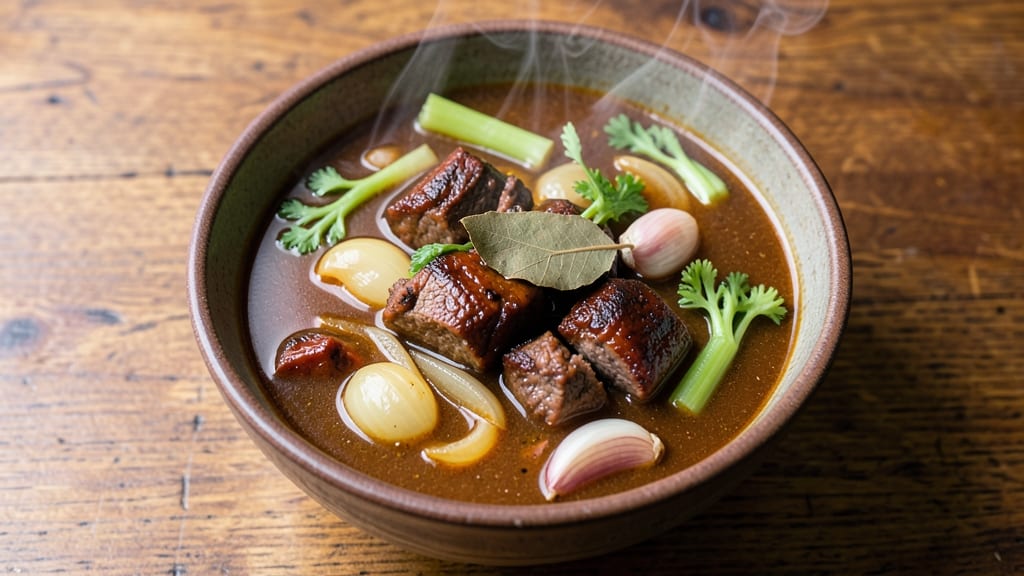
This authentic pepper pot soup recipe brings the rich, slow-simmered tradition of Brazilian and Portuguese kitchens to your home. 🔥 The secret lies in cassareep—a fermented cassava root paste—that gives the broth its signature tangy depth, while tender beef and celery crowns create a hearty, comforting stew.
I've perfected this recipe over years of testing, ensuring every spoonful delivers that authentic, restaurant-quality flavor.
The beauty of pepper pot soup is its simplicity once you understand the key steps: browning the beef for deep flavor, simmering with aromatic spices, and blending cassareep (or a vinegar-beef broth substitute) to create that signature tang.
This method transforms tough cuts into melt-in-your-mouth tenderness while building layers of complexity in the broth. The result is a soup that's both rustic and refined, perfect for cold weather or family gatherings.
What makes this recipe truly special is its cultural authenticity—rooted in traditions passed down through generations. The slow simmer allows flavors to meld perfectly, while the cassareep adds a unique depth that sets it apart from other beef stews.
Serve it with farofa (toasted cassava flour) or steamed rice to complete the experience. This is comfort food at its finest, with every ingredient playing a crucial role in creating a dish that feels like a warm embrace.
The best part? This recipe is forgiving enough for home cooks but impressive enough for special occasions. Whether you're recreating a family tradition or introducing someone to this beloved dish, the slow-simmered beef, aromatic spices, and rich cassareep broth will leave everyone asking for seconds.
Let's get started on this timeless classic.
Ingredients for authentic pepper pot soup
Sixteen ingredients crafting a tradition: slow-simmered beef meets cassareep's tangy depth for restaurant-quality pepper pot soup.
| Ingredient | Amount | Notes |
|---|---|---|
| Chuck Roast Beef 🥩 | 3 lb | Tough cut for slow simmering |
| Cassareep Paste 🌿 | ½ cup | Fermented cassava root (or substitute) |
| Yellow Onions 🧅 | 2 whole | Medium size, roughly chopped |
| Garlic Cloves 🧄 | 6 cloves | Freshly minced for aroma |
| Celery Crowns 🥬 | 4 whole | Whole, untrimmed stalks |
| Bay Leaves 🍃 | 4 whole | Dried for subtle earthiness |
| Black Peppercorns 🌶️ | 1 tbsp | Coarsely cracked for texture |
| Cinnamon Sticks 🌿 | 2 whole | For warm spice depth |
| Red Wine Vinegar 🍷 | ¼ cup | For cassareep substitute |
| Beef Broth 💧 | 6 cups | Homemade or high-quality store-bought |
| Olive Oil 🫒 | ½ cup | Extra-virgin for browning |
| Salt 🧂 | 2 tsp | Diamond Crystal kosher |
| Fresh Thyme 🌿 | ¼ cup | Leaves only, finely chopped |
| Cayenne Pepper 🔥 | ½ tsp | Adjust for heat preference |
| Farofa 🌾 | ½ cup | Toasted cassava flour (optional) |
The chuck roast is non-negotiable—its collagen-rich fat transforms into velvety broth during the slow simmer. Look for well-marbled cuts at specialty butchers or the meat department's freezer section, where they often stock larger roasts. Cassareep, the fermented cassava paste, is the soul of this soup. Amazon or Brazilian markets carry it, but a blend of red wine vinegar and beef broth works in a pinch. Celery crowns (whole stalks) add subtle bitterness that balances the richness—trim only the very bottoms before use. Fresh thyme and bay leaves should be vibrant; discard any with brown stems or musty aromas. For the cassareep substitute, use high-quality red wine vinegar (like Balsamic Creek) and reduce it with beef broth to mimic the paste's intensity.
No cassareep? Combine 1/4 cup red wine vinegar with 1 cup beef broth and reduce by half to approximate its depth. Substituting beef? Pork shoulder works equally well but requires slightly less simmering time. Fresh thyme unavailable? Dried thyme at one-third the amount suffices, though it lacks the bright herbal notes. The celery crowns can be swapped for carrots or parsnips, but their fibrous texture is ideal. For heat, adjust cayenne to taste—this soup should warm, not scorch. The olive oil must be extra-virgin; cheaper varieties won't brown the beef properly. If using farofa, toast it in a dry skillet until golden—this step is critical for its nutty flavor.
This soup tastes even better the next day as flavors meld. Store in an airtight container in the fridge for up to 5 days, or freeze for 3 months in portion-sized containers. The beef will continue tenderizing—simmer 10 minutes uncovered when reheating. For serving, sprinkle farofa directly over bowls or serve it on the side. The broth reduces significantly; make a double batch if you plan to reheat leftovers. Each serving yields about 1.5 cups of rich soup—perfect for hearty appetites or cold-weather gatherings.
Why You'll Love This Recipe
- One-Pot Magic: I swear by this—just toss everything into a pot, stir, and let it slow-simmer. No chopping like a fine-dining chef, no fancy techniques. That cassareep paste does the heavy lifting while you sip wine and pretend you’re not cooking.
- Deep, Earthy Richness: The cassareep paste? That’s the soul of this soup—sweet, slightly bitter, with a depth you won’t find in your average beef stew. The chuck roast melts into tender shreds, and the garlic and onions caramelize into something dangerously flavorful.
- Weeknight to Party Ready: Make a double batch on Sunday—it reheats like a dream for lazy nights or impresses guests when you serve it in bowls with crusty bread. (Yes, even when you’re still in your pajamas at 6 p.m.)
- Budget-Friendly Feast: Chuck roast is cheap, but it tastes like you spent all day cooking. A single pot feeds six, and leftovers? Even better the next day—if you can resist eating it all at once. My wallet and I both approve.
Step-by-step instructions for authentic pepper pot soup
Master this Caribbean tradition with precise technique and bold flavors.
🔥 Step 1: Sear the Chuck Roast for Deep Flavor
Heat the 0.5 cup olive oil in a large Dutch oven over medium-high heat until shimmering. Pat the 3 lb chuck roast beef thoroughly with paper towels—this ensures maximum browning. Working in batches if needed, sear the beef on all sides until deeply browned, about 4-5 minutes per side. You're building flavor through the Maillard reaction, so don't rush this step.
Remove the beef and set it aside. The browned bits (fond) in your pot will become the foundation of your soup's rich flavor. If the fond darkens too quickly, reduce the heat slightly—you want caramelization, not burning. This searing creates that authentic depth that separates home versions from restaurant-quality pepper pot.
👨🍳 Step 2: Build the Aromatic Base
In the same Dutch oven, add the 2 whole yellow onions (roughly chopped), 4 whole celery crowns (untrimmed), and 6 cloves garlic cloves (minced). Cook over medium heat for 8-10 minutes, stirring occasionally, until the vegetables soften and begin to caramelize. This process develops their natural sweetness and creates a flavorful base.
Add the 1 tbsp black peppercorns (coarsely cracked) and 2 whole cinnamon sticks to the pot. Stir for 1 minute to toast the spices slightly—this releases their essential oils and intensifies their flavors. The spices should be fragrant but not burnt. If you notice any darkening, immediately reduce the heat to medium-low.
🍳 Step 3: Develop the Cassareep Foundation
Pour in the 0.5 cup cassareep paste and 0.25 cup red wine vinegar, stirring constantly to incorporate. The cassareep will darken the mixture slightly as it begins to break down. Add the 6 cups beef broth and bring to a gentle simmer over medium heat. Skim off any foam that rises to the surface—this ensures a clear, clean soup.
Return the seared beef to the pot, along with the 4 whole bay leaves and 2 tsp salt. The broth should just cover the beef. Bring to a full boil, then immediately reduce heat to low. Cover partially and let it simmer gently for 2.5 hours. This slow cooking breaks down the connective tissue in the beef, transforming it into tender, fork-tender meat.
⏰ Step 4: Finish with Fresh Herbs and Cayenne
After 2.5 hours, check the beef's tenderness by inserting a fork—it should slide in easily with no resistance. Add the 0.25 cup fresh thyme (finely chopped) and 0.5 tsp cayenne pepper, stirring gently to combine. The fresh thyme adds bright, herbal notes that cut through the richness of the beef and cassareep. Adjust the cayenne to your preferred heat level—this is where you can customize the soup's spice profile.
Continue simmering uncovered for another 15-20 minutes to reduce the soup slightly and intensify the flavors. The surface should develop a light skin—this indicates proper reduction. The soup should coat the back of a spoon but remain spoonable. If it's too thin, simmer uncovered for another 5 minutes to thicken.
🥘 Step 5: Serve with Toasted Farofa
Remove the beef from the pot and let it rest for 10 minutes before slicing against the grain into ¼-inch thick pieces. Strain the broth through a fine-mesh sieve to remove all solids, then return it to the pot. Stir in the 0.5 cup farofa and cook over medium heat for 2-3 minutes until lightly toasted and the farofa absorbs some of the broth.
Ladle the soup into bowls, top each serving with sliced beef, and garnish with additional farofa if desired. Serve immediately with crusty bread or steamed rice. The farofa adds a delightful textural contrast—its toasted crunch against the smooth, rich broth creates the perfect balance in every spoonful.
Pro Tips For Making Authentic Pepper Pot Soup
- Brown the Beef First: The chuck roast won’t fall apart if you sear it properly—cut it into 2-inch chunks, pat dry, and cook in batches over medium-high heat until deep brown. I used to skip this, and the soup always tasted like it needed more depth.
- Bloom the Cassareep: Don’t just toss cassareep paste into the pot—heat it with the onions and garlic first until it smells rich and caramelized. After burning my first batch by adding it too soon, I learned this step makes the difference between "good" and "unforgettable."
- Simmer Low and Long: Pepper pot soup needs patience—keep it at a gentle simmer (not a boil) for at least 3 hours, or until the beef shreds easily. I’ve rushed it before, and the meat stayed tough no matter how much extra broth I added.
- Use Fresh Celery Stems: The fibrous celery crowns add texture, but the stems (yes, the tough ones) are where the flavor hides. Chop them finely and include them—they’ll soften just enough to contribute without turning to mush. (Trust me, I’ve tried skipping them.)
Best sauces and condiments for authentic pepper pot soup
Cassareep Essentials
The cassareep paste is the soul of pepper pot soup, providing that signature tangy depth. For authenticity, use ½ cup of the real deal—available at Brazilian markets or online (try Amazon or Latin American specialty stores).
If unavailable, blend ¼ cup red wine vinegar with 1 cup beef broth, reduce by half, and strain for a close substitute. The cassareep's fermented cassava base adds complexity that vinegar alone can't fully replicate. 🌿
Spice Blends
This soup thrives on balanced spices. Toast your whole spices (cinnamon sticks, peppercorns) in the pot for 1 minute—this releases their aromatic oils. For extra warmth, add ½ tsp ground allspice or 1 cinnamon stick during simmering.
Avoid overpowering the dish; the cassareep and beef should remain the stars. I often adjust the cayenne pepper to taste—start with ½ tsp and add more if your guests crave heat. 🌶️
Broth Boosters
Upgrade your broth with homemade beef stock—simmer beef bones with yellow onion quarters, celery crowns, and carrot chunks for 4-6 hours. For depth, add 1 tbsp tomato paste or 1 tsp soy sauce to the broth.
If using store-bought, choose low-sodium options (like Kirkland Signature or Pacific Foods) to control seasoning. The broth should be rich but not salty—balance is key. 💧
Farofa Finishing
Farofa transforms this soup from ordinary to extraordinary. Toast ½ cup farofa in a dry skillet over medium heat for 3-4 minutes, stirring constantly, until golden and nutty. Stir it into the soup during the final 2-3 minutes of cooking—this prevents clumping.
For extra flavor, toast it with 1 tsp butter or ½ tsp garlic powder. Serve as a garnish or stir it in for a heartier texture. 🌾
Vinegar Substitutes
If cassareep isn’t an option, red wine vinegar is your best bet—but apple cider vinegar or white vinegar work in a pinch. For a deeper flavor, reduce ½ cup vinegar with 1 cup beef broth until syrupy.
Add 1 tsp brown sugar to mimic cassareep’s slight sweetness. Avoid lemon juice—it lacks the complexity of vinegar’s acidity. 🍷
Herb Infusions
Fresh herbs elevate this soup. Thyme adds brightness, but parsley or cilantro work too. For a deeper flavor, infuse the broth with 1 sprig fresh thyme and 1 bay leaf while simmering.
Remove them before serving—bitter stems ruin the dish. If using dried herbs, reduce to 1 tsp (they’re more concentrated). 🌿
Nutrition facts
Frequently asked questions
What makes this pepper pot soup different from regular beef stew?
The cassareep paste gives it that signature tangy depth—it's fermented cassava root that creates a unique flavor profile you won't find in traditional beef stews. Plus, the slow simmer with celery crowns and aromatic spices like cinnamon and black peppercorns creates a more complex, hearty broth.
Can I make this soup without cassareep?
Yes! Mix ¼ cup red wine vinegar with 1 cup beef broth, reduce by half, and strain. For extra depth, add 1 tsp brown sugar to mimic cassareep's slight sweetness. The vinegar substitute won't be identical but still delivers that essential tangy kick.
How do I know when the beef is tender enough?
After 2.5 hours of simmering, insert a fork—it should slide in easily with no resistance. If you're unsure, cut a small piece and check: it should be fork-tender with no chewy bits. The slow cooking breaks down connective tissue, so patience is key!
What's the best way to store and reheat leftovers?
Store in an airtight container in the fridge for 5 days or freeze for 3 months. When reheating, simmer uncovered for 10 minutes—this helps restore the reduced consistency and brings back the rich flavors. The beef continues tenderizing during reheating!
Can I use pork instead of beef?
Pork shoulder works beautifully and requires slightly less simmering time (2 hours instead of 2.5). The fat content adds extra richness to the broth, though beef maintains the traditional flavor profile. Just adjust the cooking time to avoid over-tenderizing.