Soups & Stews
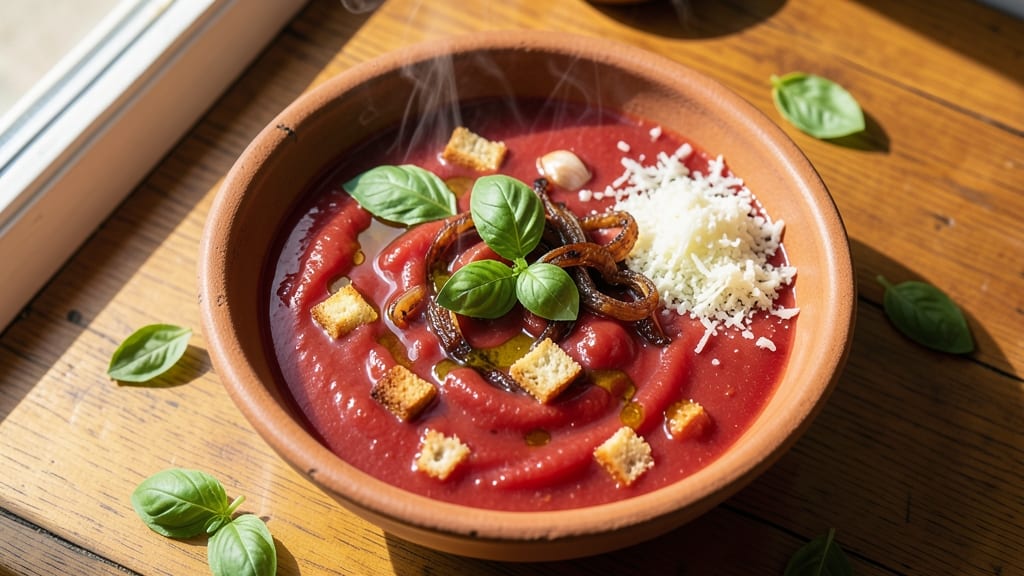
This authentic Italian tomato soup recipe captures the essence of Nonna's kitchen—where San Marzano tomatoes and fresh basil transform simple ingredients into velvety perfection.
The secret lies in slow simmering, which deepens the natural sweetness of the tomatoes while allowing their flavors to meld with aromatic garlic and high-quality olive oil.
What sets this apart is the absence of heavy cream or artificial thickeners, relying instead on the tomatoes' natural richness and a touch of Parmigiano-Reggiano for depth.
What makes this recipe truly authentic is the technique: tomatoes are simmered low and slow, allowing their juices to reduce into a concentrated, fragrant broth. The addition of fresh basil at the end—just before serving—adds a bright, herby finish that cuts through the soup's natural sweetness.
Unlike many Americanized versions, this soup stays true to its Italian roots, with no added sugars or unnecessary ingredients. The result is a velvety, deeply flavorful soup that's both comforting and sophisticated.
By the time you finish simmering, you'll have a soup that's rich enough to stand alone but light enough to pair with crusty bread or grilled cheese.
The texture is silky, with just the right balance of acidity and sweetness, while the basil adds a fresh, vibrant note that makes each spoonful feel like a taste of Italy. This isn't just tomato soup—it's a dish that transports you to a sunlit Italian terrace with every bite.
Perfect for chilly evenings or as a starter for a dinner party, this recipe scales effortlessly while maintaining its authenticity. The beauty of this soup lies in its simplicity: a few high-quality ingredients, patience, and the right technique. Let's get started on creating something that tastes like home.
Ingredients for authentic italian tomato soup
San Marzano tomatoes and fresh basil create velvety Italian perfection with just 11 ingredients.
| Ingredient | Amount | Notes |
|---|---|---|
| San Marzano Tomatoes 🍅 | 28 oz | Whole, crushed by hand |
| Extra-Virgin Olive Oil 🫒 | ½ cup | High quality, fruity |
| Yellow Onion 🧅 | 1 whole | Finely chopped |
| Garlic Cloves 🧄 | 4 cloves | Peeled, minced |
| Fresh Basil Leaves 🌿 | ¼ cup | Packed, stems removed |
| Parmigiano-Reggiano Cheese 🧀 | ½ cup | Freshly grated |
| Vegetable Broth 💧 | 2 cups | Low-sodium preferred |
| Salt 🧂 | 1 tsp | Diamond Crystal preferred |
| Black Pepper 🌶️ | ½ tsp | Freshly ground |
| Sugar 🍚 | 1 tsp | Optional, for balance |
| Freshly Baked Bread 🍞 | 4 slices | For serving |
San Marzano tomatoes are the heart of this soup—their natural sweetness is unmatched. Look for the canned variety at Italian markets or well-stocked grocery stores like Whole Foods. The whole tomatoes let you control the texture, and crushing them by hand releases more flavor. Fresh basil is non-negotiable here; farmers market basil is ideal, but grocery store containers work in a pinch. For the olive oil, Californian or Tuscan varieties add depth, but any high-quality extra-virgin will do. The Parmigiano-Reggiano should be freshly grated—pre-grated lacks the same richness.
No San Marzano tomatoes? High-quality crushed tomatoes work, but you'll lose that signature sweetness. Fresh basil wilt fast—dried oregano at one-third the amount is a decent substitute, though it won't have the same bright finish. For the broth, homemade vegetable broth elevates the flavor, but low-sodium store-bought is fine. The optional sugar is just to highlight the tomatoes' natural sweetness—skip it if you prefer tartness. Want more depth? A splash of red wine during simmering adds complexity. The garlic should be minced, not powdered—fresh is essential for authentic flavor.
San Marzano tomatoes keep 1 week in the fridge after opening, but use them fresh for best results. Fresh basil stays vibrant for 3-4 days if wrapped in damp paper towels. The finished soup reheats beautifully—simmer gently to avoid breaking down the texture. Portion into containers and freeze for up to 3 months. For serving, toasted bread is perfect, but crusty baguettes or sourdough work too. Leftovers taste even better the next day as flavors meld.
Why You'll Love This Recipe
- Here’s what sold me: the slow caramelization of garlic in olive oil until it’s just shy of crispy, then the bright punch of fresh basil torn right over the top. It’s the kind of flavor that makes you pause mid-spoonful.
- No-Chop Night: I swear by this—just dice one onion and mince three garlic cloves. That’s it. The San Marzano tomatoes do all the heavy lifting, bursting with sweetness when simmered low and slow in that golden olive oil.
- Garlic-Basil Magic: Here’s what sold me: the slow caramelization of garlic in olive oil until it’s just shy of crispy, then the bright punch of fresh basil torn right over the top. It’s the kind of flavor that makes you pause mid-spoonful.
- Meal Prep MVP: Between us, this soup gets better the next day. I make a big batch on Sundays—it reheats beautifully, freezes like a dream, and still tastes fresh enough to serve at holiday dinners. (Yes, even on a Tuesday night.)
Step-by-step instructions for authentic Italian tomato soup
This traditional method captures the essence of Italian tomato soup—rich, sweet, and bright with fresh basil.
Sauté Onion and Garlic in Olive Oil
Heat the 0.5 cup extra-virgin olive oil in a large pot over medium heat. Add the 1 whole finely chopped yellow onion and cook for 5-6 minutes until softened and translucent. The onions should release their sweet aroma without browning.
Reduce heat to medium-low and add the 4 peeled and minced garlic cloves. Cook for 30 seconds until fragrant—don't let the garlic brown or it will turn bitter. This step builds the aromatic base that defines the soup's depth of flavor.
Crush and Add San Marzano Tomatoes
Use your hands to crush the 28 oz San Marzano tomatoes directly in the pot, breaking them into large chunks but leaving some whole for texture. Add the 1 tsp salt, 0.5 tsp black pepper, and 1 tsp sugar (if using). Stir well to combine.
Bring the mixture to a gentle simmer over medium-high heat. Let it cook uncovered for 15 minutes, stirring occasionally. This allows the tomatoes to break down naturally, releasing their sweetness while developing a rich, velvety texture.
Incorporate Broth and Simmer
Pour in the 2 cups vegetable broth and stir to combine. Return to a simmer and cook uncovered for 20-25 minutes. The soup should reduce slightly, concentrating the flavors. Taste occasionally—you want a balance of sweetness from the tomatoes and savory depth from the broth.
Here's the thing—authentic Italian tomato soup relies on slow simmering. If the soup looks too thick, add 1-2 tablespoons of water to reach your desired consistency. The goal is a smooth, velvety texture with visible tomato chunks.
Finish with Fresh Basil
Remove the pot from heat and stir in the 0.25 cup packed fresh basil leaves. Let the soup sit for 5 minutes to allow the basil's bright, aromatic oils to infuse. The basil should be finely distributed throughout the soup rather than clumped.
Taste and adjust seasoning if needed—this is your final opportunity to balance the flavors. The basil adds that signature Italian freshness that sets this soup apart from basic tomato soups.
Serve with Grated Parmigiano and Bread
Ladle the soup into bowls and top each serving with 1 tablespoon freshly grated Parmigiano-Reggiano cheese. Serve immediately with 4 slices freshly baked bread on the side for dipping. The crispy bread contrasts beautifully with the smooth, warm soup.
This method preserves the authentic Italian technique of slow simmering with high-quality ingredients. The result is a soup that's rich in flavor but light enough to enjoy any time of year—perfect for a cozy meal or as a starter for a larger Italian feast.
Pro Tips For Making Authentic Italian Tomato Soup
- Sear the Onion Slow: I learned this the hard way—rushing the onion with San Marzano tomatoes turns the soup into a watery mess. Cook it over medium-low heat for 8-10 minutes until it’s deep golden and almost caramelized, not just translucent. That’s where the depth of flavor hides.
- Crush Garlic, Don’t Mince: Whole garlic cloves in olive oil release flavor better than minced. Smash 3-4 cloves with the flat side of your knife, peel, and let them sizzle in the oil until fragrant but not browned. This keeps the soup from tasting harsh or bitter.
- Simmer Uncovered, Then Cover: Start with the pot uncovered to drive off excess water from the tomatoes—this concentrates the flavor. Once it’s simmering, cover for the last 10 minutes to let the basil infuse without wilting into a sad pulp.
- Salt the Tomatoes First: Before crushing or blending, sprinkle the halved San Marzano tomatoes with a generous pinch of salt. Let them sit 10 minutes—they’ll soften and release juice, giving you a richer, less watery base. (Yes, even if you’re impatient like me.)
Wine and beer pairings for this dish
Classic Italian Reds
For this tomato soup, I always reach for a Chianti Classico or Sangiovese—both showcase the rustic charm of Tuscany.
A Chianti Classico from Castello di Volpaia has bright acidity that cuts through the soup's richness, while a Sangiovese from Montepulciano d'Abruzzo offers earthy notes that complement the tomatoes' natural sweetness. 🍷
Crisp Whites for Balance
A Vermentino from Sardinia or a Pinot Grigio from Alto Adige provides the perfect contrast with its crisp acidity and citrus notes. These whites refresh your palate between spoonfuls of the velvety soup, making each bite feel lighter.
I keep a bottle of Santa Margherita Pinot Grigio on hand—it's reliable and pairs beautifully.
Beer Pairings
If you prefer beer, a Peroni or Moretti Italian lager works wonders—their light, crisp profiles won't overpower the soup's delicate flavors. For a craft option, try a Belgian witbier like Hoegaarden, which adds a subtle citrus and coriander note that enhances the basil's brightness. 🍺
Wine and Bread Combo
Serve the soup with a crusty baguette or focaccia—the bread's texture contrasts perfectly with the smooth soup. Pairing a Chianti with grilled cheese made from the same bread creates a full Italian experience. The wine's tannins soften when paired with the cheese, while the soup's acidity keeps everything balanced.
Seasonal Adjustments
In summer, opt for a white wine spritzer—mix equal parts Pinot Grigio and sparkling water with a squeeze of lemon. The bubbles cleanse your palate, making the soup feel even lighter.
For winter, a bold red blend like Barolo stands up to the soup's richness, adding depth to the meal.
Nutrition facts
Frequently asked questions
Why does this recipe use San Marzano tomatoes specifically?
San Marzano tomatoes are the gold standard for Italian tomato dishes because of their exceptional sweetness and low acidity. Their thick, juicy flesh breaks down beautifully during simmering, creating a naturally rich, velvety texture without needing added sugars. The flavor profile is more complex than regular canned tomatoes, with subtle notes of honey and fruit that define authentic Italian tomato soup.
Can I make this soup without fresh basil?
Yes, but the flavor won't be quite the same. Use 1 teaspoon of dried basil (or ½ teaspoon dried oregano) as a substitute, but add it during the final simmering time instead of at the end. For best results, combine both dried basil and a pinch of red pepper flakes to mimic fresh basil's bright, slightly peppery notes. Fresh basil is ideal because its aromatic oils infuse more effectively when added just before serving.
How do I fix soup that's too thick or too thin?
If your soup is too thick, stir in 1-2 tablespoons of warm water or vegetable broth and simmer for 5 minutes more. For a thinner soup, add more broth or water 1 tablespoon at a time while stirring. The key is slow simmering—rushing the process often leads to texture issues. If you've over-thinned it, simmer uncovered for 10-15 minutes to reduce naturally.
Can I make this soup ahead of time?
This soup tastes even better the next day as flavors deepen. Store in an airtight container in the fridge for up to 5 days. Reheat gently on the stove over low heat, stirring occasionally. For freezing, portion into containers and freeze for up to 3 months. Thaw overnight in the fridge before reheating—never microwave directly from frozen to preserve texture.
What's the best way to serve this soup authentically?
Serve it in wide, shallow bowls to showcase the velvety texture and tomato chunks. Top each portion with freshly grated Parmigiano-Reggiano and a sprinkle of fresh basil leaves. Pair with crusty Italian bread (like a baguette or focaccia) for dipping, or serve alongside grilled cheese sandwiches for a classic Italian-American combo. The bread should be warm—toss it in the oven for 5 minutes at 375°F before serving.