
Soups & Stews
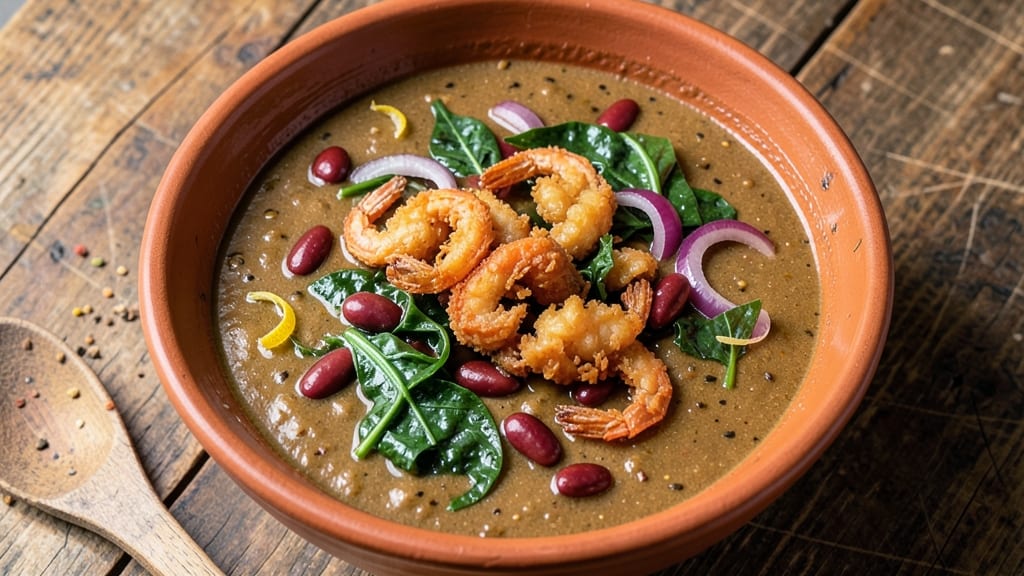
This authentic egusi soup recipe brings the rich, earthy flavors of Nigerian home cooking straight to your kitchen. 💛 After years of perfecting the balance between the nutty egusi seeds, tender leafy greens, and aromatic spices, I've created a version that captures the soul of West African cuisine—deep, complex, and deeply satisfying.
The secret lies in properly soaking and blending the egusi seeds to create a velvety base, then layering in crayfish, locust beans, and utazi leaves for that signature umami depth.
Unlike many Westernized versions, this recipe stays true to traditional methods while using simple ingredients you can find at most grocery stores or African markets.
By the time it's done, you'll have a soup that's rich enough to pair with pounded yam or fufu, yet light enough to stand alone.
The blend of spinach or bitter leaf adds vibrant color and a subtle bitterness that balances the soup's hearty flavors perfectly—just like my grandmother used to make.
This is the kind of dish that transforms ordinary weeknights into celebrations. Serve it with your favorite Nigerian sides for the complete experience, or enjoy it as-is with crusty bread. Let's get cooking!
Ingredients for authentic egusi soup
Pantry staples meet African market finds—this soup brings West African warmth to your kitchen.
| Ingredient | Amount | Notes |
|---|---|---|
| Egusi Seeds 🥜 | 1 cup | Roasted for nutty flavor |
| Dried Crayfish 🦀 | ½ cup | Ground for umami depth |
| Locust Beans (Iruru) 🌱 | ½ cup | Dried, soaked overnight |
| Fresh Spinach or Bitter Leaf 🌿 | 4 cups | Chopped for vibrant color |
| Utazi Leaves (or Pumpkin Leaves) 🍃 | ½ cup | Dried or fresh, chopped |
| Onions 🧅 | 2 whole | Chopped, for aromatic base |
| Garlic Cloves 🧄 | 4 cloves | Minced for aromatic punch |
| Fresh Ginger 🌶️ | 1 tbsp | Grated for zesty kick |
| Red Palm Oil 🫒 | ½ cup | For rich color and flavor |
| Vegetable Oil 🫒 | ¼ cup | For sautéing onions |
| Salt 🧂 | 1 ½ tsp | Adjust to taste |
| Ground Black Pepper 🌶️ | ½ tsp | Freshly ground preferred |
| Smoked Paprika 🌶️ | ½ tsp | For subtle smokiness |
| Stock Cubes (Vegetable or Chicken) 💧 | 2 whole | Dissolved in 4 cups water |
| Dried Fish (Optional) 🐟 | ¼ cup | Crumbled for extra depth |
Egusi seeds are the heart of this soup—roast them lightly first to bring out their nutty flavor. African markets carry them pre-roasted, but if you're at a regular grocery store, grab melon seeds as a backup (though they're not identical). The crayfish should be dried and ground into a powder—look for it in the international aisle or online. Locust beans need soaking overnight, so plan ahead. Fresh utazi leaves are ideal, but pumpkin leaves or even collard greens work in a pinch—just add a pinch of salt to mimic the bitterness.
No utazi leaves? Pumpkin leaves or collard greens are great substitutes, though you might want to add a pinch of salt to mimic utazi's bitterness. Running low on crayfish? Anchovy paste at half the amount gives similar umami depth. The red palm oil is non-negotiable for that signature color—African markets or specialty stores carry it, but if you can't find it, a mix of tomato paste and a bit of paprika works (though it won't be the same). For the stock, vegetable cubes are fine, but if you're feeling ambitious, make your own with chicken or fish bones for extra richness.
This soup tastes even better the next day—make a double batch if you can. Store in the fridge for 4-5 days or freeze for 3 months. I like to portion it into containers with some of the leafy greens on top—looks beautiful and keeps everything fresh. The red palm oil can be stored at room temperature for 6-12 months, but once opened, keep it in the fridge to prevent spoilage. The locust beans and crayfish? Keep them in airtight containers away from moisture.
Why You'll Love This Recipe
- No-Fuss Blend: The egusi seeds ground into a paste do half the work for you—just toast, grind, and simmer. No chopping mountains of herbs or peeling endless onions (thank goodness for that crayfish, which just soaks up flavor while you stir).
- Umami Bomb: Between the crayfish’s briny depth, the irru’s earthy crunch, and utazi’s tangy bite, every spoonful packs layers. Honestly, the first time I tasted how those flavors marry with spinach’s freshness, I nearly dropped my spoon.
- Crowd-Pleaser Base: Serve it with pounded yam for Sunday dinner, rice for weeknight leftovers, or even as a hearty stew with plantains. My in-laws swear it’s the only soup that gets their picky teen to finish his plate—(yes, even on a Tuesday night).
- Soup That Pays: A single batch stretches for three meals: the first night with fresh leaves, the second reheated with extra crayfish, and the third as a quick lunch with leftover rice. Between us, that $5 bag of egusi seeds turns into a week’s worth of meals without breaking the bank.
Step-by-step instructions for authentic egusi soup
Here's how to make this rich, traditional soup with perfect texture and depth.
🔥 Step 1: Prepare the Base Ingredients
Start by soaking the ½ cup locust beans (Iruru) in hot water for 1 hour to soften. This step is crucial—they'll shrink dramatically when cooked. While they soak, rinse the ½ cup dried crayfish thoroughly to remove any grit, then pound them lightly with a mortar and pestle until they break into smaller pieces.
If using dried fish, rinse and crumble the ¼ cup dried fish with your hands or a clean cloth to remove any impurities. Soak it in warm water for 30 minutes to rehydrate slightly. The crayfish and fish will add that signature umami depth that makes this soup truly authentic.
🍳 Step 2: Build the Aromatic Base
Heat ¼ cup vegetable oil in a large pot over medium heat. Add the chopped 2 whole onions and cook for 5-7 minutes until they turn golden brown and sweet. This is where the soup develops its rich foundation—don't rush this step.
Add the 4 minced garlic cloves and 1 tablespoon grated ginger, stirring constantly for 1 minute until fragrant. The aroma should fill your kitchen—this is your signal that the aromatics are properly developed. Immediately add the ½ teaspoon smoked paprika and stir for 30 seconds to toast the spices gently.
🍳 Step 3: Cook the Locust Beans and Fish
Drain the soaked locust beans and add them to the pot along with the drained fish (if using). Pour in 4 cups water and add the dissolved 2 stock cubes. Bring to a boil, then reduce heat to medium-low and simmer for 20-25 minutes until the locust beans are tender but not mushy.
Here's the thing—you want them to hold their shape but be easily mashable with a spoon. If they're still too firm after 25 minutes, add ½ cup more water and cook another 5 minutes. The beans should be soft enough to break down slightly when stirred but not dissolve completely.
🥘 Step 4: Add the Egusi and Simmer
While the beans cook, heat the ½ cup red palm oil in a small saucepan over low heat until it just begins to shimmer. This gentle heating enhances the oil's flavor without burning it. Remove from heat and stir in the 1 cup egusi seeds—they'll begin to toast immediately.
After 2-3 minutes of toasting, the egusi will turn a richer brown color and release a nutty aroma. Quickly pour this mixture into your soup pot and stir vigorously to distribute evenly. The soup will thicken noticeably—this is exactly what you want. Add the 1½ teaspoons salt and ½ teaspoon black pepper now while everything is hot.
🥘 Step 5: Incorporate the Leafy Greens
Add the chopped 4 cups spinach or bitter leaf and ½ cup utazi leaves to the pot. Stir gently to wilt the greens—this should take about 3-5 minutes. The soup should be thick enough to coat the back of a spoon but still have a slightly loose consistency.
Taste and adjust seasoning if needed. If the soup tastes flat, add a pinch more salt or a splash of the stock water. If it's too thick, thin with ¼ cup warm water. The final texture should be rich and velvety, with just enough body to coat the leafy greens perfectly. Serve immediately with pounded yam or garri for the full experience!
Pro Tips For Making Authentic Egusi Soup
- ROAST EGUSI SEEDS LOW: After burning three batches, I finally figured out that medium-low heat is key—high heat turns them bitter fast. Spread them on a dry tray in a single layer and stir every 3-4 minutes until fragrant, not browned.
- CRUSH LOCUST BEANS WET: Soak the iruru briefly in warm water first, then crush them with a mortar or rolling pin while still damp. Dry beans turn to dust; wet ones release their nutty flavor without grittiness.
- SIMMER UTAZI LEAVES FIRST: Add the utazi (or pumpkin leaves) to the broth before the spinach or bitter leaf—this softens them faster and prevents a slimy texture. Five minutes of simmering is enough; overcooking kills their bright flavor.
- USE CRUSHED CRAYFISH LAST: Save the crayfish for the final 10 minutes of cooking. If you add them too early, they’ll turn rubbery and lose their briny punch—this is the thing that matters most for that authentic umami kick.
Pro cooking tips for authentic egusi soup
Toast the Egusi
Never skip toasting your egusi seeds—this step unlocks their nutty depth. Heat the ½ cup red palm oil in a small saucepan over low heat until it just begins to shimmer (about 2-3 minutes).
Remove from heat and immediately stir in the 1 cup egusi seeds, toasting for exactly 2-3 minutes until they turn a rich brown color and release an intoxicating aroma. I use a 10-inch cast iron skillet for even toasting—it's my secret weapon for perfect texture. 🌰
Layer Flavors Properly
The secret to authentic flavor lies in the order: onions first, then garlic and ginger, followed by locust beans and fish. Cook the onions until deeply golden (5-7 minutes) before adding garlic and ginger—this builds a rich, sweet foundation.
The locust beans and fish should simmer together for 20-25 minutes until tender but still holding shape. I learned this from my grandmother who always said, "Patience in the beginning means flavor at the end."
Control the Thickness
Egusi soup should coat the back of a spoon but still be spoonable. If your soup gets too thick after adding the greens, thin it with ¼ cup warm water or stock.
I've made this mistake too many times—once I ended up with soup so thick it was more like paste! The key is adding the greens last and stirring gently to wilt them without breaking down the soup's body. 🥄
Don't Overcook Greens
Leafy greens like spinach or bitter leaf cook in just 3-5 minutes—any longer and they'll turn mushy. Add them when the soup is at its thickest point (right after adding the toasted egusi).
Stir gently with a wooden spoon to preserve their vibrant color. I like to keep a few whole leaves on the surface for garnish—they add freshness and visual appeal.
Use Fresh Ingredients
Fresh crayfish, utazi leaves, and leafy greens make all the difference. If using dried crayfish, pound them lightly before adding to the soup for better texture. For utazi leaves, fresh is ideal, but dried leaves work too—just soak them first.
I source my crayfish from African markets where they're always fresh, but grocery stores often carry them in the international aisle. The fresher your ingredients, the more vibrant your soup will taste. 🦀
Season at the End
Add salt and pepper only after all ingredients are combined and the soup has thickened. This ensures even distribution of flavors. Taste as you go—sometimes the crayfish and locust beans add enough saltiness that you might not need extra.
I keep a small bowl of flaky sea salt nearby to adjust right before serving. The last thing you want is a bland soup that needs constant seasoning adjustments. 🧂
Nutrition facts
Frequently asked questions
Can I make this egusi soup without red palm oil?
You can substitute with a mix of 2 tablespoons tomato paste and ½ teaspoon paprika for color, but it won't capture the same rich, earthy flavor. For best results, look for red palm oil in African markets or specialty stores—it's essential for that authentic taste. If you can't find it, a small amount of annatto powder might help, though the flavor will differ.
What's the best way to substitute utazi leaves?
Fresh utazi leaves are ideal, but you can use pumpkin leaves, collard greens, or even spinach in a pinch. For a closer flavor, add a pinch of salt or smoked paprika since utazi has a slightly bitter, smoky taste. Bitter leaf (ewedu) is another great alternative if you can find it—it's commonly used in Nigerian cooking.
How do I know when the locust beans are cooked properly?
The locust beans should be tender but still hold their shape—they should mash slightly with a spoon but not dissolve completely. Undercooked beans will taste hard and chewy, while overcooked ones turn mushy. Simmer for 20-25 minutes and check after 20 minutes—if they're still firm, add ½ cup water and cook another 5 minutes.
Can I make this soup vegetarian?
Skip the fish and crayfish, and use vegetable stock cubes instead of chicken. Boost umami with ½ cup mushrooms or 1 tablespoon soy sauce. The locust beans and toasted egusi will still provide rich, satisfying flavor. For extra protein, add tofu or chickpeas at the end of cooking.
Why did my egusi soup turn out too thick?
This usually happens when the egusi seeds aren't toasted properly or the greens are added too early. Stir in ¼ cup warm water or stock to thin it out. For next time, add the greens last and stir gently to wilt them without breaking down the soup's body. The key is patience—don't rush the toasting step!