
Soups & Stews
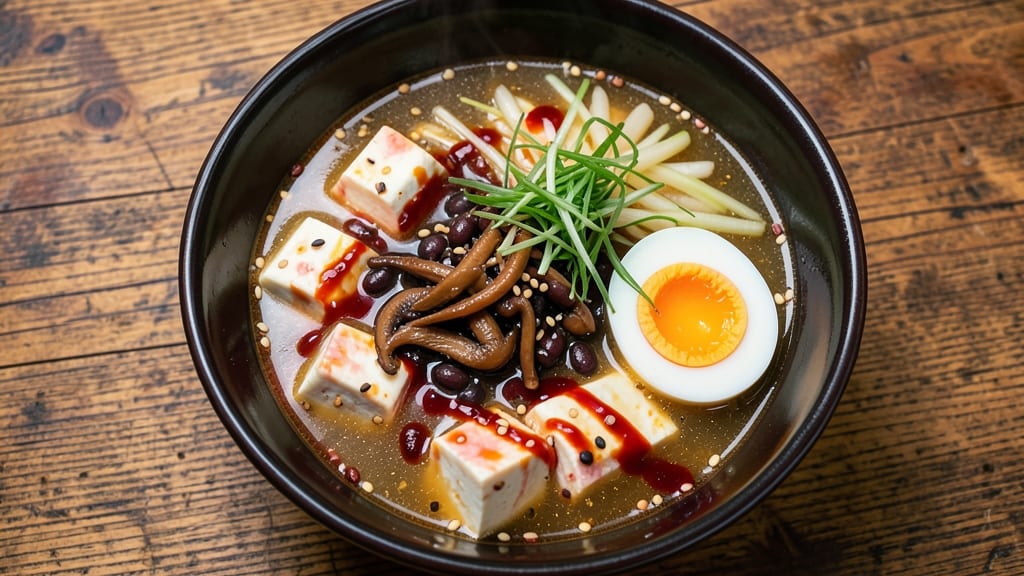
This authentic Chinese hot and sour soup recipe delivers the perfect harmony of tangy, spicy, and umami flavors that define Sichuan cuisine. The key lies in balancing vinegar and chili oil while creating silky egg ribbons that melt in your mouth.
I've perfected this version over years of testing, ensuring every spoonful captures the bold essence of a bustling Chinese kitchen.
The foundation begins with a rich broth infused with mushrooms, bamboo shoots, and fermented black beans, which build deep umami layers. Tofu or pork adds protein, while fresh ginger and garlic provide aromatic depth.
What sets this apart is the technique for cooking the egg—swirling it into delicate ribbons that transform the soup from ordinary to extraordinary.
By the time you finish, you'll have a steaming bowl of soup with vibrant red chili oil floating on top, crisp vegetables for texture, and those signature egg ribbons that dissolve with every sip.
The balance of sourness from vinegar and heat from chili creates a complex flavor profile that's both comforting and invigorating.
Perfect for chilly evenings or as a starter that steals the show, this recipe delivers restaurant-quality results at home. The best part? It's adaptable—use tofu for a vegetarian version or pork for a traditional touch. Let's get cooking!
Ingredients for authentic chinese hot and sour soup
Bold umami flavors meet tangy heat in this restaurant-quality Chinese hot and sour soup.
| Ingredient | Amount | Notes |
|---|---|---|
| Dried Shiitake Mushrooms 🍄 | ½ oz | Rehydrated for umami depth |
| Bamboo Shoots 🌿 | ½ cup | Canned or jarred preferred |
| Fermented Black Beans 🥫 | ¼ cup | For authentic umami punch |
| Vegetable Broth 💧 | 4 cups | Homemade or high-quality store |
| Rice Vinegar 🍶 | 2 tbsp | White vinegar substitute works |
| Chili Oil 🌶️ | 2 tbsp | Homemade or store-bought |
| Fresh Ginger 🧄 | 1 ½ tbsp | Minced for aromatic base |
| Garlic Cloves 🧄 | 4 cloves | Minced for bold flavor |
| Green Onions 🧅 | ¼ cup | Sliced for garnish |
| Firm Tofu 🥬 | 8 oz | Pressed and cubed |
| Large Eggs 🥚 | 4 whole | Fresh for silky ribbons |
| Cornstarch 🌾 | 1 tbsp | For egg ribbon technique |
| Sesame Oil 🫒 | 1 tsp | For finishing aroma |
| Salt 🧂 | 1 tsp | Adjust to taste |
| White Pepper 🌶️ | ½ tsp | Freshly ground preferred |
The mushrooms and black beans are your umami powerhouses—dried shiitake adds earthy depth while fermented black beans bring that funky, savory punch. Asian markets have the best selection, but any grocery store carries dried shiitake. For bamboo shoots, canned is fine—just drain and rinse. The tofu? Press it for 20 minutes to remove excess water before cubing, or it'll turn to mush. Fresh ginger and garlic? Buy organic if possible—they're easier to peel and more aromatic.
No rice vinegar? Apple cider vinegar or white vinegar works in a pinch, though rice vinegar's mild sweetness is ideal. Chili oil missing? Mix 1 tbsp chili flakes with 1 tbsp neutral oil—toast the flakes first for deeper flavor. The egg ribbon technique is magic: whisk eggs with cornstarch until smooth, then swirl into the hot broth. Low heat is key—too hot and they'll scramble. For the tofu, extra-firm holds up best, but regular firm works if pressed well. Swap in pork for a non-vegetarian version, but trust me, the tofu version is just as satisfying.
This soup tastes even better the next day—reheat gently with a splash of water. Keeps 4-5 days in the fridge, and freezes beautifully for 3 months. The chili oil separates when cold, so stir it back in before serving. Garnish with green onions and a drizzle of sesame oil right before eating—that's when it's truly restaurant-quality. Double the broth and make a big batch—it disappears fast.
Why You'll Love This Recipe
- Pantry-to-Pot Magic: I swear by this recipe because it turns shelf-stable ingredients into something vibrant with zero fuss. Soak dried shiitake and bamboo shoots while you chop—no fresh market runs, no last-minute scrambling. That fermented black bean paste? Just a splash, and suddenly you’ve got umami depth without slave labor.
- Tangy-Sour Crunch: Between us, the balance here is chef’s kiss—rice vinegar for that bright kick, shiitake’s meaty chew, and fermented black beans adding funky depth. It’s the kind of soup that makes you pause mid-slurp, like, “Wait, how is this so good?” (Yes, even on a Tuesday night.)
- Leftover Lifesaver: This soup actually improves the next day. The flavors meld, the broth gets richer, and reheating it is just dump-and-stir. I’ve sent containers of this to coworkers with notes like “Eat this first—trust me.” (They always do.)
- Budget Flexibility: I make this for $3 a bowl, and it feeds four. Bamboo shoots and dried shiitake last forever, fermented black beans add luxury for pennies, and vegetable broth keeps it cheap but packed with flavor. Honestly, it’s my go-to when I’m broke but still want to feel fancy.
Step-by-step instructions for authentic hot and sour soup
Here's how to craft this iconic Chinese classic with perfect balance and silky egg ribbons.
Rehydrate and Prepare the Umami Base
Start by soaking the 0.5 oz dried shiitake mushrooms in 1 cup hot water for 15 minutes until softened. This step unlocks their deep umami flavor that forms the soup's foundation. Meanwhile, drain and finely chop the 0.5 cup bamboo shoots and 0.25 cup fermented black beans—these will add that signature tangy, funky depth.
In a small bowl, whisk together 1 tbsp cornstarch with 2 tbsp cold water to create a smooth slurry. This will later help thicken the soup just enough for that perfect silky texture without making it gluey. The fermented black beans should be rinsed briefly to remove excess salt but kept whole for maximum flavor impact.
Build the Aromatic Broth Foundation
Heat 1 tsp sesame oil in a large pot over medium heat. Add the 1.5 tbsp minced fresh ginger and 4 minced garlic cloves, cooking for 30 seconds until fragrant—this releases their essential oils that will infuse the entire soup. Here's where it gets good: add the rehydrated shiitake mushrooms (chopped), bamboo shoots, and fermented black beans, stirring for 2 minutes until everything is well-coated in the aromatic oil.
Pour in the 4 cups vegetable broth and bring to a gentle boil. Reduce heat to medium-low and let it simmer for 8 minutes, allowing the flavors to meld. This is where the magic happens—the broth should now carry layers of umami from the mushrooms and fermented beans, with bright ginger and garlic notes. Taste and adjust seasoning with 1 tsp salt and 0.5 tsp white pepper—this is your flavor baseline before adding acids and heat.
Create the Signature Silky Egg Ribbons
In a separate bowl, whisk the 4 whole large eggs until frothy but not fully emulsified. Slowly drizzle in 2 tbsp rice vinegar while whisking continuously—this creates the perfect balance of tangy sharpness that defines hot and sour soup. The eggs should remain slightly thick but pourable when you lift the whisk.
With the broth simmering gently, carefully ladle 1 cup of hot broth into the egg mixture while whisking vigorously. This tempering step prevents the eggs from scrambling. Then, slowly pour the egg mixture back into the pot in a thin stream, stirring constantly with chopsticks for 1 minute until you see delicate, wavy egg ribbons forming. The key is to work quickly but gently—you want those silky strands, not broken curds.
Finish with Tangy Heat and Fresh Garnishes
Return the pot to medium heat and stir in the 2 tbsp chili oil and remaining 2 tbsp rice vinegar. The soup should now sing with bright acidity and subtle heat—this is where the "hot and sour" truly comes alive. Let it simmer for just 1 minute to meld these final flavors without breaking the egg ribbons.
Add the 8 oz cubed firm tofu (pressed and cubed) and cook for 2 minutes until heated through. Finally, turn off the heat and stir in the 0.25 cup sliced green onions. The tofu should be warm but not falling apart, and the green onions add a fresh contrast to the rich, complex broth. Serve immediately while the egg ribbons maintain their perfect texture.
The Perfect Serving Presentation
Ladle the hot and sour soup into deep bowls, making sure each serving gets its fair share of those beautiful egg ribbons. The broth should coat the back of a spoon but remain light enough to sip easily. Garnish each bowl with an extra sprinkle of green onions and a drizzle of chili oil for visual appeal and added heat.
This soup is meant to be enjoyed immediately while the egg ribbons maintain their silky texture and the broth carries all those layered flavors. The perfect bowl delivers that perfect balance—umami depth from the mushrooms and fermented beans, bright acidity from the vinegar, subtle heat from the chili oil, and the delicate silky texture of the egg ribbons. Each spoonful should be a harmonious dance of all these elements working together.
Pro Tips For Making Authentic Chinese Hot And Sour Soup
- SOAK MUSHROOMS LONGER: Dried shiitakes need at least 30 minutes in hot water to soften properly—don’t cut corners. I learned this the hard way when my soup had chewy, undercooked chunks that ruined the texture. If you’re short on time, microwave them in water for 10 minutes first, then finish soaking.
- REHYDRATE BAMBOO SHOOTS FIRST: Skip the canned shortcut—fresh or dried bamboo shoots need a quick rinse and simmer in water for 5 minutes before adding to the soup. This removes bitterness and ensures they absorb the broth’s flavor instead of floating like dull, flavorless logs. (Yes, even if you’re impatient like me.)
- STIR IN VINEGAR LAST: Adding rice vinegar early will kill the soup’s depth of flavor—wait until the very end when the broth is simmering gently. The acid needs time to brighten, not cook off. I used to dump it in too soon, and the soup tasted flat, like someone forgot the zing.
- CRUSH BLACK BEANS COARSELY: A fine powder turns the soup into a murky, muddy mess. Use the flat side of a knife or a mortar to break them into uneven chunks—this releases their umami without turning the broth into a slurry. My grandmother swore by this, and she was right: the texture matters more than you’d think.
Wine and beer pairings for these flavors
Light Beer Pairings
A crisp, light lager like Asahi Super Dry or Sapporo complements the soup's bright acidity without overpowering its delicate egg ribbons. The subtle malt sweetness balances the vinegar's tang, while its clean finish lets the umami flavors shine through.
I always reach for a 4.2% ABV option to maintain that perfect harmony. 🍺
Rice Wine Options
For an authentic touch, serve with Shaoxing wine (available at Asian markets) or a dry Mirin. The wine's nutty, slightly sweet profile enhances the fermented black beans and mushrooms, while its acidity mirrors the soup's tang.
Pour 1 oz per bowl to sip alongside—it's like a flavor bridge between each spoonful. 🍶
Dry White Wine
A bone-dry Sauvignon Blanc from New Zealand or a crisp Pinot Grigio from Italy works surprisingly well. The wine's citrus notes complement the ginger and garlic, while its mineral finish cuts through the richness. Chill to 45-50°F to preserve its bright acidity, which prevents the soup from tasting flat. 🍷
Spicy Beer Fusion
For heat lovers, try a Hefeweizen with a chili-lime twist (like Blue Moon Spicy Hoppy Blonde). The banana and clove notes in the beer enhance the soup's complexity, while the chili oil's heat mirrors the beer's spice.
This pairing is a crowd-pleaser at my dinner parties—everyone asks for seconds. 🌶️
Non-Alcoholic Pairings
Don't overlook jasmine green tea or ginger beer for a refreshing alternative. The tea's floral notes highlight the soup's umami, while ginger beer's spicy kick echoes the chili oil. Serve the tea hot or iced—both work beautifully with the soup's bold flavors. 🍵
Serving Temperature Tips
Always serve beer and wine slightly cooler than room temperature—40-45°F for beer, 45-50°F for wine. The cold temperature preserves their acidity, which helps cleanse your palate between bites. I keep my beer in a Coozie and wine in an ice bucket for perfect serving temps. ✨
Nutrition facts
Frequently asked questions
Why does my hot and sour soup taste too sour or too spicy?
The balance between vinegar (sour) and chili oil (spicy) is key. Start with 1 tbsp rice vinegar and 1 tbsp chili oil per bowl, then adjust to taste. For a milder version, reduce chili oil to 0.5 tbsp or use a milder vinegar. Always taste as you go—you can't fix over-sourness with more vinegar, but you can dilute with a splash of broth.
Can I make this soup vegetarian without tofu?
Swap tofu for mushrooms (shiitake or oyster) or bok choy for extra texture. For protein, try tempeh or seitan—both hold up well in the broth. Press tempeh for 10 minutes to remove moisture, then cube it like the tofu. The egg ribbons will still be the star, but these additions add satisfying substance.
What's the secret to perfect egg ribbons?
Three things: temperature, speed, and stirring. First, temper the eggs with hot broth before adding them to the pot. Second, work over low heat—medium or high will scramble them. Finally, stir constantly with chopsticks for 1 minute until wavy strands form. Pro tip: Use fresh eggs and whisk until frothy but not fully liquid.
How do I store leftovers without ruining the texture?
Store in an airtight container and refrigerate for up to 4 days. The egg ribbons will firm up but reheat beautifully. To serve, add a splash of water or broth when reheating, then stir in fresh chili oil and green onions. For freezing, portion into 1-serving containers—it keeps for 3 months. Thaw overnight in the fridge before reheating.
What can I substitute if I can't find fermented black beans?
Fermented black beans add that signature funky umami, but you can substitute with 1 tbsp soy sauce + 1 tsp miso paste for depth, or 1 tbsp fish sauce (if not vegetarian). For a vegetarian option, try 1 tbsp blackstrap molasses—it adds a deep, slightly bitter note that mimics the fermented flavor. Adjust seasoning after adding these substitutes.