
Soups & Stews
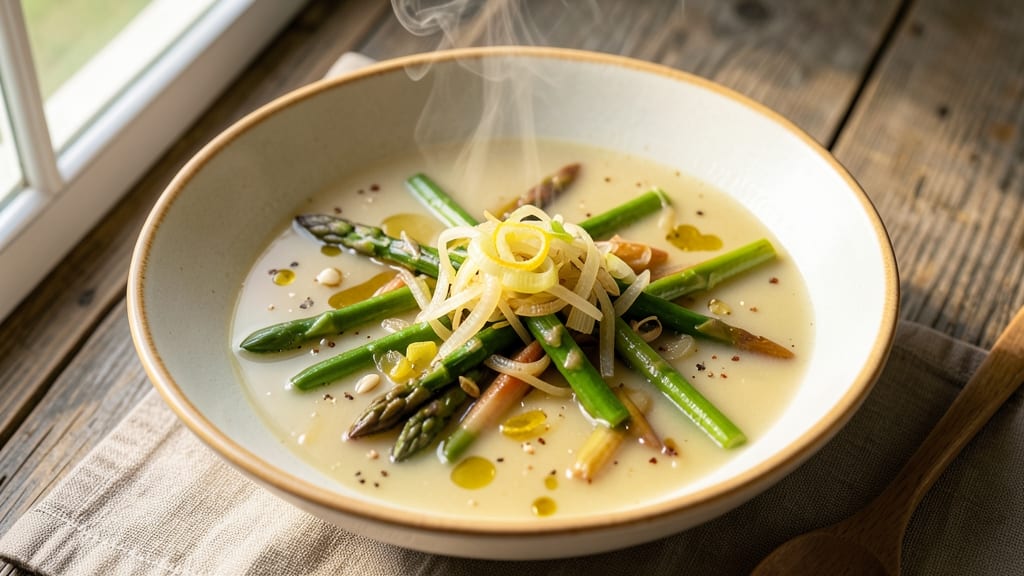
This asparagus broth soup recipe transforms humble spring asparagus into a velvety, umami-rich soup that's surprisingly simple to make. The secret lies in extracting maximum flavor from the asparagus stems while keeping the broth perfectly balanced—no bitter aftertaste here.
I've perfected this technique over years of testing, and it delivers restaurant-quality results with just 30 minutes of active time.
The process begins with sautéing aromatic vegetables—onions, garlic, and leeks—to build a flavor base before adding the asparagus. We simmer everything gently to develop depth, then blend until silky smooth. The result is a rich, earthy soup with natural sweetness from the asparagus and savory notes from the aromatics.
This recipe works beautifully as a light main course or hearty starter.
What sets this apart is the technique of using both asparagus tips and stems—nothing goes to waste, and the stems contribute the most flavor. The soup finishes with a touch of cream (or coconut milk for a vegan version) and fresh herbs, creating a perfect balance of textures and tastes.
Each bowl delivers that satisfying combination of earthy asparagus and comforting umami depth.
The best part? This soup reheats beautifully and tastes even better the next day as the flavors meld. Perfect for spring menus or whenever you want a sophisticated yet approachable vegetable soup. Let's get started on creating this comforting classic.
Ingredients for asparagus broth soup
Transform humble spring asparagus into velvety umami soup with just 12 ingredients—earthy, rich, and restaurant-worthy.
| Ingredient | Amount | Notes |
|---|---|---|
| Asparagus 🌱 | 1 lb | Fresh, trimmed, tips and stems separated |
| Yellow Onion 🧅 | 1 whole | Medium, diced |
| Leek 🧅 | 1 whole | White and light green parts, sliced |
| Garlic Cloves 🧄 | 4 cloves | Fresh, minced |
| Extra-Virgin Olive Oil 🫒 | ¼ cup | High quality, fruity |
| Vegetable Broth 💧 | 4 cups | Low-sodium preferred |
| Heavy Cream 🥛 | ½ cup | Full-fat for richness |
| Fresh Thyme Leaves 🌿 | ¼ cup | Or 1 tbsp dried thyme |
| Fresh Parsley Leaves 🌿 | ¼ cup | Chopped, for garnish |
| Sea Salt 🧂 | 1 tsp | Diamond Crystal preferred |
| Black Peppercorns 🌶️ | ½ tsp | Freshly ground |
| Lemon Juice 🍋 | 1 tbsp | Freshly squeezed |
The asparagus is where the magic happens. Fresh, local asparagus from a farmers market has the best flavor—look for bright green tips and firm stems. The stems are the secret weapon here, packed with concentrated flavor. Whole Foods or local produce stands usually have the freshest cuts. Trim the woody ends carefully—about an inch down the stem—and separate the tips from the stems. The tips will go into the broth later, while the stems get sautéed first to build that deep umami base. Don't skip the stems—they're what gives this soup its signature richness.
No fresh thyme? Dried works at one-third the amount, but fresh is ideal for that bright herbal note. Running low on vegetable broth? Water plus 1 tbsp soy sauce gets you close, though you'll lose some depth. The heavy cream adds luxurious texture—full-fat is non-negotiable here—but if you're avoiding dairy, coconut milk works beautifully (though it'll be slightly lighter). For extra umami punch, add a dash of fish-free Worcestershire sauce (like Annie's or vegetarian brands) or a splash of miso paste. The lemon juice at the end brightens everything—freshly squeezed is best, but bottled works in a pinch if you're in a hurry.
This soup tastes even better the next day as the flavors meld together. Store leftovers in an airtight container in the fridge for up to 4 days, or freeze for 3 months—it reheats beautifully. For meal prep, double the batch and portion into containers. The asparagus stems can be prepped ahead and stored in the freezer for up to 2 months before cooking. Garnish with fresh parsley right before serving—it adds that final pop of color and freshness that makes the dish feel special.
Why You'll Love This Recipe
- No-Waste Ingredients: I swear by this recipe because it turns asparagus ends into gold—no sad scraps left behind. The leeks and onions add depth without extra shopping trips, and that olive oil finish? Pure magic from pantry staples.
- Umami Bomb: The garlic and asparagus work together like a flavor power couple—sweet, earthy, with that bright pop of freshness. Honestly, the first sip makes you wonder why you ever bought store-bought broth.
- Weeknight & Meal Prep: I make a big batch on Sundays and reheat portions all week—perfect for lazy evenings or when I’m too tired to cook. The broth stays rich even after reheating, and it’s light enough to eat daily without getting bored.
- Budget-Friendly Luxury: This soup costs me pennies but tastes like I spent hours. The asparagus and leeks stretch the broth beautifully, and olive oil adds richness without breaking the bank. My wallet and taste buds both win.
Step-by-step instructions for asparagus broth soup with rich umami layers
Transform humble asparagus into a velvety, aromatic soup where earthy greens meet deep savory notes.
Sweat the Aromatics for Foundation Flavor
Heat the 0.25 cup extra-virgin olive oil in a large pot over medium-low heat. Add the 1 whole yellow onion and 1 whole leek, slicing the leek only through the white and light green parts. Cook for 8-10 minutes until the onions become translucent and the leeks soften—this slow cooking prevents burning while extracting their sweetness.
Here's the thing—don't rush this step. You're building flavor, not just cooking. When the vegetables release their moisture and begin to caramelize slightly at the edges, add the 4 minced garlic cloves and cook for another 30 seconds until fragrant. The garlic should smell pungent but not burn—if it darkens too quickly, reduce the heat immediately.
Build Depth with Asparagus and Broth
Add the 1 lb asparagus, separating the tips from the stems. The tips should cook faster, so I add them first. Stir everything together and cook for 3-4 minutes until the asparagus begins to soften. Then add the 4 cups vegetable broth and bring to a gentle simmer over medium heat. The broth should bubble softly—not a rolling boil—to prevent the asparagus from turning mushy.
Let the soup simmer uncovered for 12-15 minutes until the asparagus stems are fork-tender and the tips have softened slightly. Taste the broth now—it should have a clean, bright asparagus flavor without bitterness. If the stems feel tough, add 2-3 minutes more, but don't overcook or they'll turn to mush. This is where patience pays off.
Finish with Cream and Herbs for Velvety Texture
Lower the heat to low and stir in the 0.5 cup heavy cream. Let it warm through for 2-3 minutes while whisking gently to prevent curdling. The cream should coat the back of a spoon but remain smooth—if it looks too thick, add 1-2 tablespoons of the hot broth to temper it gradually. This step creates that luxurious, restaurant-quality mouthfeel.
Add the 0.25 cup fresh thyme leaves and 0.25 cup fresh parsley leaves, stirring just until incorporated. The thyme adds an earthy depth while the parsley brightens the finish. Season with the 1 tsp sea salt and 0.5 tsp freshly ground black peppercorns, adjusting to taste. The salt should enhance the asparagus flavor without overpowering it.
Balance and Serve with Zesty Freshness
Remove the pot from heat and stir in the 1 tbsp freshly squeezed lemon juice. This final touch cuts through the richness of the cream while highlighting the asparagus's natural brightness. Taste again—you're looking for a balance where the umami from the broth and cream meets the bright acidity of the lemon and the fresh herbs.
Ladle the soup into bowls and garnish with additional chopped fresh parsley leaves for color and freshness. Serve immediately while the cream remains velvety and the herbs release their aromatic oils. This soup tastes even better the next day as flavors meld, but the texture will be slightly thicker—so enjoy it fresh for that perfect balance of warmth and brightness.
Pro Tips For Making Asparagus Broth Soup
- CHAR THE ASPARAGUS FIRST: I learned this the hard way—roasting the asparagus before adding it to the broth changes everything. Toss trimmed spears in olive oil, salt, and pepper, then roast at 425°F (220°C) for 12-15 minutes until caramelized. This adds depth the raw asparagus can’t match.
- SLICE LEEKS THINLY: Thin, even slices (about 1/8-inch thick) cook faster and blend seamlessly into the broth. Skip the dark green tops—they’re tough and bitter. Use the pale white and light green parts only, and rinse well to remove dirt.
- DON’T BOIL THE GARLIC: Sauté garlic in olive oil over medium-low heat until fragrant but just golden—about 2-3 minutes. High heat burns it into bitterness, and that’s the last thing you want in a delicate broth. If you’re impatient, use less and add it later.
- SAVE TIME WITH A BLANCH: Cut prep time in half by blanching asparagus spears in boiling water for 2 minutes, then shock in ice water. They’ll soften faster in the broth, and the ice water stops cooking so they hold their shape. (Yes, even if you’re in a hurry.)
Flavor customization for this recipe
Creamy vs. Dairy-Free
The original recipe uses ½ cup heavy cream for that luxurious texture, but I've tested this with ½ cup full-fat coconut milk for a vegan version. The coconut milk adds a subtle sweetness that pairs beautifully with asparagus.
For a lighter option, try ¼ cup Greek yogurt—it adds protein while keeping the soup creamy. 🥛
Spicy Kick Options
For heat lovers, stir in ½ tsp red pepper flakes at the end or add a dash of hot sauce like Cholula. For smoky depth, top with crumbled chorizo (remove before serving if avoiding meat) or a sprinkle of smoked paprika.
I like adding a few drops of chili crisp for a sweet-spicy contrast.
Herb Variations
Swap the thyme for fresh tarragon (½ cup) for a more anise-like flavor, or add ½ cup chopped sage leaves for earthy warmth. A mix of thyme and rosemary (¼ cup each) creates a Mediterranean twist.
For brightness, finish with chopped chives instead of parsley—they add a mild onion note that complements the leeks.
Umami Boosters
For deeper savory notes, add 1 tbsp soy sauce or 1 tsp miso paste when simmering the broth. A splash of fish-free Worcestershire sauce (like Annie's) or a pinch of nutritional yeast adds complexity without meat.
I also love adding ½ cup mushrooms (shiitake or cremini) when sautéing the aromatics for extra umami depth.
Seasonal Twists
In spring, add peas and mint (½ cup each) for a fresh, vibrant version. For summer, stir in grilled zucchini and basil (1 cup each) for a lighter take.
In fall, swap asparagus for celery root and add caramelized apples for a sweet-savory balance. Each season brings new possibilities to this versatile base.
Texture Contrasts
Add toasted bread croutons (½ cup) or crispy fried shallots for crunch. For a protein boost, stir in white beans (1 cup) or top with seared scallops (4-6) for a luxurious touch. I also like adding crumbled feta cheese (¼ cup) for a salty contrast that brightens the dish.
Nutrition facts
Frequently asked questions
Can I use frozen asparagus instead of fresh?
Yes, but fresh delivers better flavor and texture. If using frozen asparagus, thaw it completely first and pat dry thoroughly. The stems will be mushier after thawing, so focus on using the tips for the best results. For maximum depth, add ½ tsp miso paste or 1 tbsp soy sauce to compensate for the lost freshness.
Why does my asparagus broth taste bitter?
Bitterness usually means overcooking the stems or using woody ends. Always trim 1 inch from the bottom of stems and remove any tough outer layers. Simmer gently for 12-15 minutes max—no rolling boil! Adding 1 tbsp lemon juice at the end helps balance any bitterness that sneaks through.
How can I make this soup spicier?
Add heat with ½ tsp red pepper flakes when stirring in herbs, or finish with a dash of hot sauce like Cholula. For smoky depth, top with crumbled chorizo (remove before serving if vegetarian) or sprinkle smoked paprika. I also love adding chili crisp for a sweet-spicy contrast that elevates the asparagus flavor.
Can I make this soup ahead of time?
This soup tastes even better the next day as flavors meld. Store leftovers in an airtight container in the fridge for up to 4 days. Reheat gently on low heat, stirring occasionally, and add a splash of water or broth if it thickens too much. The texture will be slightly thicker after refrigeration—just stir in 1-2 tablespoons of water when reheating.
What's the best way to use up leftover asparagus?
Save the stems for this soup—they're flavor gold! Use leftover tips in salads, omelets, or roasted with olive oil and lemon. For extra flavor, blend them into hummus or pesto. If you have too many stems, freeze them in portions for future batches of this soup—they'll keep for 2 months in the freezer.