
Soups & Stews
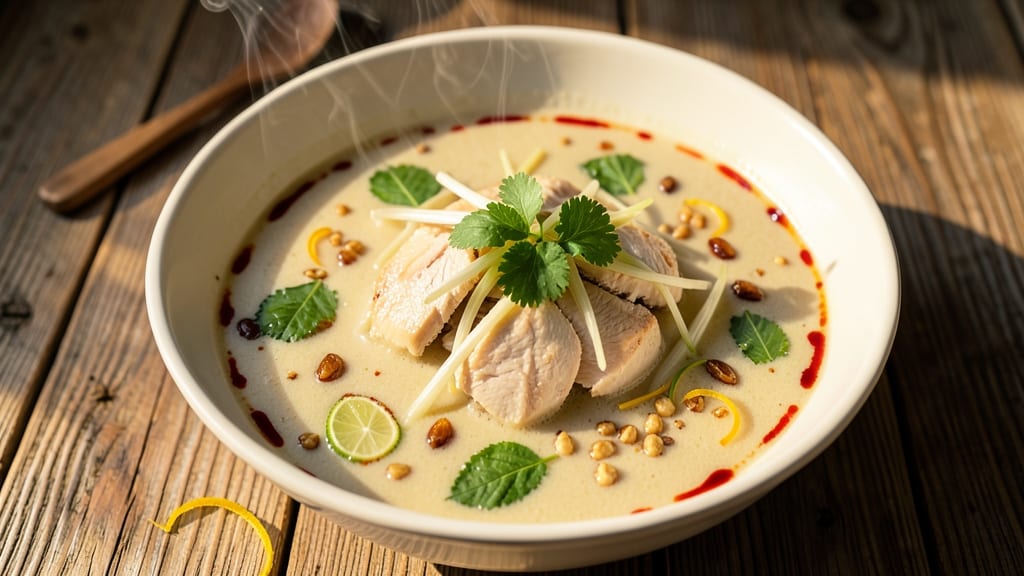
Amy's Thai coconut soup recipe brings the aromatic essence of street-side eateries into your kitchen with its signature balance of creamy coconut, tangy lime, and fragrant lemongrass. The secret lies in properly simmering galangal and kaffir lime leaves to extract their signature citrusy depth without bitterness—something most home versions miss.
I've perfected this technique over years of testing, ensuring every spoonful delivers that restaurant-quality harmony of flavors.
The beauty of this dish is its adaptability—whether you're using tender chicken or firm tofu for a vegetarian version, the broth builds flavor through slow simmering while the coconut milk creates a velvety base that's neither too rich nor too thin.
The key steps include properly toasting the spices, reducing the coconut milk to intensify its flavor, and finishing with fresh herbs that add brightness and texture. This isn't just soup; it's a complete meal in one bowl.
What makes this recipe truly special is how it transforms simple ingredients into something extraordinary through technique. The lemongrass and galangal infuse the broth with layers of complexity, while the coconut milk provides that signature creamy texture without overpowering the dish.
Each element—from the aromatic paste to the finishing garnish—works together to create a soup that's comforting yet vibrant, creamy yet light.
Perfect for chilly evenings or as a light yet satisfying main course, this Thai coconut soup comes together in under an hour but feels like a labor of love.
The instructions walk you through every step, from preparing the aromatic paste to achieving that perfect balance of tangy, spicy, and creamy flavors. Trust me, once you taste the difference between this version and store-bought, you'll never go back to the canned variety again.
Ingredients for amy's thai coconut soup
Creamy coconut meets aromatic Thai flavors in this comforting bowl of soup.
| Ingredient | Amount | Notes |
|---|---|---|
| Chicken Breast 🍗 | 1 ½ lb | Boneless, skinless, cut into bite-sized pieces |
| Fresh Lemongrass 🌿 | 1 whole | Stalks trimmed to 3 inches, bruised |
| Galangal 🌶️ | 1 piece | About 3 inches, peeled and sliced thin |
| Kaffir Lime Leaves 🍋 | 4 whole | Bruised to release oils |
| Shallots 🧅 | 6 whole | Peeled and finely minced |
| Garlic Cloves 🧄 | 6 cloves | Peeled and minced |
| Thai Bird's Eye Chilies 🔥 | 2 whole | Seeds removed for mild heat |
| Coconut Milk 🥥 | 1 can | Full-fat, 13.5 oz can |
| Vegetable Broth 💧 | 4 cups | Low-sodium preferred |
| Fish Sauce 🍶 | 1 tbsp | Red Boat brand recommended |
| Palm Sugar 🍯 | 2 tbsp | Or light brown sugar |
| Lime Juice 🍋 | 2 tbsp | Freshly squeezed |
| Fresh Basil Leaves 🌿 | ¼ cup | Torn, not chopped |
| Cilantro Leaves 🌱 | ¼ cup | Chopped, for garnish |
| Vegetable Oil 🫒 | 2 tbsp | For toasting spices |
The galangal and kaffir lime leaves are non-negotiable for that signature Thai depth. Asian markets usually carry both—look for firm, fragrant galangal with no dark spots. If you can't find kaffir lime leaves, substitute lime zest plus extra lime juice, but it won't be quite the same. The lemongrass should be fresh and pale—avoid any stalks that are yellow or woody. I like to bruise these ingredients with the flat side of my knife before adding them to the pot, which releases more of their essential oils and builds flavor faster. For the chilies, Thai Bird's Eye gives the perfect kick, but if you're sensitive to heat, swap in serrano peppers.
No galangal? Ginger works in a pinch, but it's not the same—galangal has a citrusy, peppery note that ginger lacks. The coconut milk should be full-fat for that velvety texture, but if you're watching calories, light coconut milk plus a splash of heavy cream gives similar richness. For the fish sauce, Red Boat brand is my go-to—it's clean, salty, and free from additives. If you're vegetarian, vegetarian fish sauce works, but add a pinch of salt to compensate. Palm sugar is ideal, but light brown sugar or coconut sugar are perfect substitutes. The broth can be homemade or store-bought—just make sure it's low-sodium so you can control the seasoning.
This soup tastes even better the next day as the flavors meld. Store leftovers in the fridge for up to 3 days, or freeze for 3 months in airtight containers. I like to make a double batch because it disappears fast—perfect for meal prep. The fresh herbs should be added just before serving, so don't prep them too early. If you're using tofu instead of chicken, extra-firm tofu pressed and cubed holds up beautifully in the simmering broth.
Why You'll Love This Recipe
- Same recipe, different vibes: throw it together for a lazy Tuesday or impress guests with minimal effort. The galangal and lime leaves add that restaurant-quality depth, so you’ll look like a pro.
- No-Fuss Prep: I swear, this soup comes together faster than a takeout order. Slice the chicken, pound the lemongrass and galangal lightly (no knife skills required), and toss in those fragrant shallots—boom, you’re halfway there.
- Herb Bomb Flavor: Between the citrusy lemongrass, peppery galangal, and those delicate kaffir lime leaves, every spoonful is like a little Thai vacation. The coconut milk smooths it out just enough to make it dangerously comforting.
- Weeknight to Dinner Party: Same recipe, different vibes: throw it together for a lazy Tuesday or impress guests with minimal effort. The galangal and lime leaves add that restaurant-quality depth, so you’ll look like a pro.
Step-by-step instructions for amy's Thai coconut soup
This fragrant soup comes together with layers of aromatic flavors—let's build it step by step.
Toast the Aromatics for Deep Flavor
Heat the 2 tablespoons vegetable oil in a large pot over medium heat. Add the 6 whole shallots and 6 cloves garlic cloves, stirring constantly for 3-4 minutes until the shallots turn golden and fragrant. This step develops their natural sweetness and removes any bitterness.
Next, add the 1 piece galangal and 1 whole fresh lemongrass (trimmed to 3 inches), stirring for 1 minute until the galangal releases its piney aroma. Here's the thing—galangal can be strong, so if you're sensitive to heat, reduce the amount slightly. Add the 2 whole Thai bird's eye chilies (seeds removed) and cook for another 30 seconds until they darken slightly. The chilies will infuse their subtle heat throughout the soup.
Build the Fragrant Base
Add the 4 whole kaffir lime leaves (bruised between your palms to release oils) and stir for 1 minute until the leaves turn slightly darker. This releases their citrusy aroma that's essential to authentic Thai coconut soup. Pour in the 4 cups vegetable broth and bring to a gentle simmer over medium-high heat. The broth should bubble gently but not boil vigorously.
Simmer for 10 minutes until the broth reduces slightly and the aromatics infuse their flavors. You'll notice the soup smells like a Thai street market—this is your reward for toasting the spices. If the broth reduces too much, add a splash of water to maintain the right consistency.
Cook the Chicken Until Tender
Add the 1.5 lb chicken breast (cut into bite-sized pieces) to the simmering broth. Stir gently to submerge all pieces, then reduce heat to medium-low. Simmer uncovered for 8-10 minutes, stirring occasionally, until the chicken is just cooked through—it should reach 165°F internally but still be slightly translucent in the center. Overcooking will make it dry.
Here's where it gets fun: use a slotted spoon to remove the chicken and set it aside. The broth should now be packed with flavor—this is your aromatic base. If you taste it now, you'll notice the complex layers of lemongrass, galangal, and lime. This is the soul of the soup.
Finish with Coconut Milk and Seasonings
Return the pot to medium heat and stir in the 1 can coconut milk. Add the 2 tablespoons palm sugar and 1 tablespoon fish sauce, stirring until the sugar dissolves completely. The coconut milk will create a velvety texture while the sugar and fish sauce balance the flavors perfectly.
Simmer gently for 5 minutes to let the coconut milk warm through and meld with the broth. Taste and adjust seasoning—add more fish sauce if it needs saltiness or more sugar if it needs sweetness. The combination should be harmonious with a touch of heat from the chilies and galangal.
Garnish and Serve
Return the chicken to the pot and stir gently to coat in the coconut broth. Remove from heat and stir in the 2 tablespoons lime juice. The acidity brightens all the flavors and cuts through the richness of the coconut milk. Taste one final time—it should be balanced with sweet, salty, sour, and umami notes.
Ladle the soup into bowls and garnish each serving with ¼ cup fresh basil leaves (torn) and ¼ cup chopped cilantro leaves. The basil adds freshness while the cilantro brings a bright, herbal note. Serve immediately with steamed jasmine rice to soak up every last drop of that fragrant coconut broth. The aroma alone will make your kitchen smell like a Thai street food stall!
Pro Tips For Making Amy'S Thai Coconut Soup
- CHAR THE SHALLOTS LOW: Skip the blender for raw shallots—sauté them in coconut oil over medium-low heat until deep golden and jammy, about 12-15 minutes. I used to rush this and ended up with bitter, pale shallots that didn’t sing in the soup. Let them caramelize slowly, stirring occasionally, until they’re almost dry but still sticky—this builds the soup’s aromatic base.
- SLICE CHICKEN THIN: Cut chicken breast into ½-inch thick strips (not too thin, or they’ll turn rubbery) and pound them gently with a rolling pin or meat mallet. Even thickness ensures they cook uniformly in the coconut broth—no dry edges or undercooked centers. Trust me, the difference in texture is night and day.
- TOAST THE GALANGAL: Lightly char the galangal slices over a gas flame (or under a broiler for 2-3 minutes) before adding them to the soup. The smoky depth cuts through the coconut’s sweetness and adds complexity—like a secret layer of warmth. Just don’t burn it, or you’ll taste ash.
- STRAIN THE COCONUT MILK: Line your strainer with cheesecloth or a clean kitchen towel and press the canned coconut milk through it to remove excess starch. This keeps the soup silky and prevents a grainy texture—no one wants to taste the can’s residue. (Yes, it’s extra work, but the result is smoother every time.)
Regional styles of these flavors
Central Thai Style
This version stays true to Bangkok's street food roots, where Tom Kha Gai is a staple. The key difference is using chicken instead of shrimp or tofu, and balancing the broth with palm sugar rather than white sugar.
I like to add a splash of coconut cream (the thick part from the can) at the end for extra richness—just 1 tablespoon stirred in before serving. The Central Thai approach focuses on bright, tangy flavors with a lighter coconut presence compared to southern regions. 🍗
Southern Thai Adaptation
In Thailand's southern regions, this soup often includes chili paste for a deeper, spicier profile. Add 1 tablespoon Nam Prik Pao (Thai chili jam) when you stir in the coconut milk, then adjust to taste. Southern versions also frequently incorporate kaffir lime zest and lemongrass paste for intensified aroma.
The broth here tends to be slightly thicker, so reduce the coconut milk by 1 tablespoon before adding it to the pot. 🌶️
Northern Thai Twist
Northern Thai cuisine brings earthy flavors to coconut soup. Swap the galangal for more ginger (about 1 extra inch) and add 1 stalk of lemongrass that's been charred slightly over a gas flame before bruising.
The Northern style also incorporates wild mushrooms—add ½ cup sliced oyster mushrooms when cooking the chicken. Finish with fresh coriander instead of basil for a different herbal note. This version has a drier, heartier quality that pairs beautifully with sticky rice. 🍄
Isan-Inspired Version
Isan cuisine from Thailand's northeast region creates a spicier, sourer take on coconut soup. Add 1 tablespoon tamarind paste when you incorporate the coconut milk, and include 1 Thai eggplant (about ½ cup diced) for a unique texture.
The Isan approach also uses dried shrimp—add 1 tablespoon when toasting the aromatics for a deep umami punch. This version has a bold, almost funky character that's perfect for adventurous eaters. 🍋
Modern Fusion Adaptation
For a contemporary twist, try adding 1 cup baby spinach in the final minute of cooking to wilt slightly. Or incorporate 1 poached quail egg per serving for an elegant touch. Some modern versions even use coconut yogurt (about ¼ cup) instead of coconut milk for a tangier profile.
I've seen great success with adding 1 tablespoon fish sauce-infused honey for a sweet-savory balance. These adaptations keep the soul of Thai coconut soup while making it feel fresh and innovative. ✨
Nutrition facts
Frequently asked questions
Can I make this soup vegetarian?
Swap the chicken for 14 oz extra-firm tofu (pressed and cubed) or 12 oz mushrooms (shiitake or oyster). For extra umami, add 1 tablespoon soy sauce when toasting the aromatics. The tofu absorbs the coconut broth beautifully, while mushrooms add earthy depth. Just reduce the simmering time to 5-6 minutes for tofu to avoid it becoming rubbery.
What if I can't find galangal?
Use 1 extra inch of fresh ginger as a substitute, but it won't capture galangal's unique citrusy-pine flavor. For better results, combine ½ inch ginger + 1 teaspoon lime zest + ½ teaspoon coriander seeds (toasted and ground). This trio mimics galangal's aromatic profile more closely. If you're using ginger alone, reduce the amount slightly since it's more potent.
How do I adjust the spice level?
The recipe uses mild Thai chilies with seeds removed for subtle heat. For more spice, add 1 extra chili (seeds in) or ½ teaspoon chili flakes when toasting the aromatics. To reduce heat, simply omit the chilies entirely—the galangal and lemongrass provide enough flavor without them. Always taste before serving and adjust with more lime juice to balance any spiciness.
Can I make this soup ahead of time?
Yes! The soup actually tastes better the next day as flavors meld. Store in an airtight container in the fridge for up to 3 days. Reheat gently on the stove over low heat, adding a splash of water or coconut milk if it thickens too much. For best results, add fresh herbs (basil and cilantro) just before serving to preserve their bright flavors. The coconut milk may separate slightly when refrigerated—just stir vigorously before reheating.
What's the secret to getting that authentic Thai aroma?
The magic happens in the toasting step! Bruise your aromatics (galangal, lemongrass, lime leaves) before cooking to release essential oils. Toast the shallots and garlic until golden—this caramelization develops their sweetness. Don't skip the 10-minute simmer with the broth—this lets the galangal and lemongrass infuse their complex flavors. The result should smell like a Thai street market when you lift the lid.