
Soups & Stews
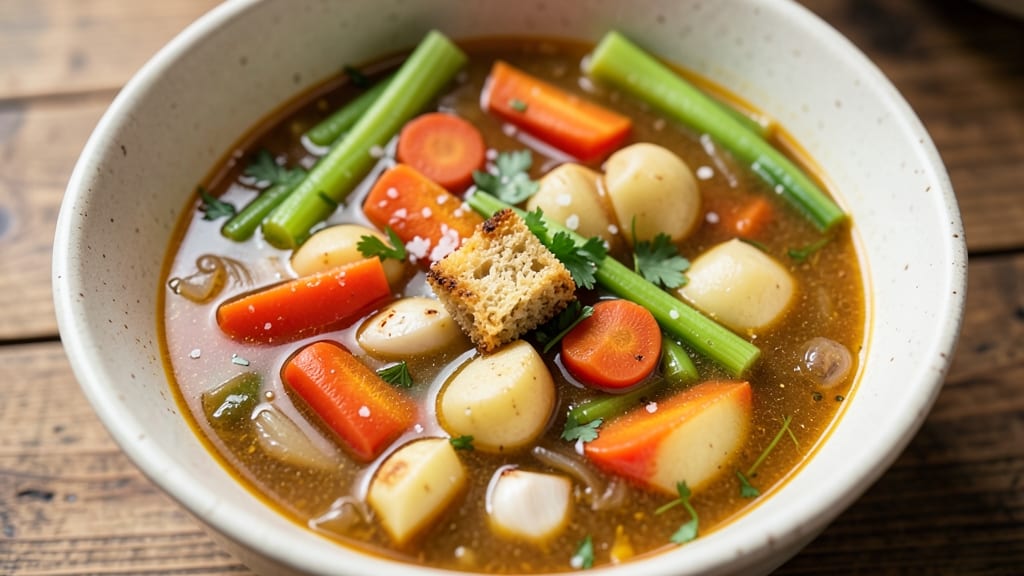
This amazing vegetable soup recipe transforms humble ingredients into a steaming bowl of comfort that warms you from the inside out. ✨ The secret lies in slow simmering—letting flavors meld into a rich, hearty broth that's packed with vegetables but never overwhelming.
I've been making this version for years, and it's the one people always ask for seconds on, even when they're not usually soup fans.
What makes this recipe special is how it balances simplicity with depth. You'll start with a simple sauté of onions, carrots, and celery—the classic "holy trinity" that forms the flavor base for countless soups.
But instead of rushing, we let everything cook low and slow, allowing the vegetables to soften just enough to release their natural sweetness into the broth. The result? A soup that's rich, satisfying, and full of wintery goodness without being heavy.
By the time you're done, you'll have a pot of golden, aromatic soup with tender vegetables swimming in a velvety broth. The best part? It's completely customizable—swap in your favorite seasonal vegetables, add beans for extra protein, or keep it vegetarian with a vegetable broth base.
This is the kind of soup that tastes even better the next day, making it perfect for meal prep or feeding a crowd.
Serve it with crusty bread for dipping or a sprinkle of fresh herbs on top. Here's how to make it—simple steps that deliver restaurant-quality results at home.
Ingredients for amazing vegetable soup
Simple vegetables, slow simmer, and big flavor—this soup is pure comfort in a bowl.
| Ingredient | Amount | Notes |
|---|---|---|
| Yellow Onion 🧅 | 1 ½ cups | Diced, medium size |
| Carrots 🥕 | 2 cups | Diced, medium size |
| Celery Stalk 🌿 | 3 whole | Diced, medium stalks |
| Garlic Cloves 🧄 | 4 cloves | Minced, fresh preferred |
| Vegetable Broth 💧 | 6 cups | Low-sodium preferred |
| Russet Potatoes 🥔 | 2 lb | Peeled, cubed |
| Sweet Potatoes 🍠 | 1 ½ lb | Peeled, cubed |
| Canned Diced Tomatoes 🍅 | 14 ½ oz | Fire-roasted preferred |
| Tomato Paste 🍅 | 2 tbsp | Smooth, not chunky |
| Extra-Virgin Olive Oil 🫒 | ¼ cup | For sautéing |
| Fresh Thyme 🌿 | 1 tbsp | Chopped, or dried |
| Bay Leaves 🍃 | 2 whole | Dried, removed before serving |
| Salt 🧂 | 1 ½ tsp | Kosher or sea salt |
| Black Pepper 🌶️ | ½ tsp | Freshly ground |
| Fresh Parsley 🌿 | ¼ cup | Chopped, for garnish |
The holy trinity—onions, carrots, and celery—is where the magic starts. Look for fresh, firm vegetables at the store, especially the carrots and celery. Trader Joe's or Whole Foods usually have the best selection, but any grocery store works. Sweet potatoes should feel heavy for their size—no wrinkles or soft spots. The broth? Low-sodium is key here unless you're adding extra salt later. I always grab the Pacific Foods brand for that rich, umami depth without the sodium overload. Fresh thyme is ideal, but dried works in a pinch—just use half the amount.
No fire-roasted tomatoes? Regular diced tomatoes work fine—just add a pinch of smoked paprika for depth. Running low on fresh thyme? Dried oregano at one-third the amount gives a similar earthy note. The tomato paste can be skipped if you're short, but it adds that restaurant-quality richness. For extra protein, toss in a can of white beans or lentils—1 cup drained works perfectly. The potatoes and sweet potatoes can be swapped for butternut squash if you're feeling fancy—just cube it small for even cooking.
This soup tastes even better the next day—honestly, the flavors meld into something extraordinary. Store leftovers in the fridge for up to 5 days, or freeze for 3 months. I like to portion it into containers right away so lunches are ready to grab. The parsley garnish? Add it fresh right before serving—it brightens everything up. For extra heartiness, serve with a side of crusty bread or a dollop of vegan sour cream.
Why You'll Love This Recipe
- 20-Minute Chop: I swear, you can dice an onion, slice carrots, and hack celery while scrolling through one episode of your favorite show. No fancy techniques—just rough cuts that soften beautifully in the broth. (Between us, my knife skills are questionable, but this soup still wins.)
- Garlic Bomb Depth: That first whiff of minced garlic hitting hot oil? Pure magic. It caramelizes just enough to give the broth a rich, savory punch without overpowering the veggies. Honestly, I double the cloves now—I can’t resist.
- Lunchbox Hero: Cold the next day? Even better. The carrots stay tender, the broth thickens into a cozy hug, and it’s the only soup my kids will eat straight from the fridge. Pack it in jars for work or school—no reheating needed, just grab and go.
- Pantry Goldmine: Onion, carrots, celery, garlic—these are the ingredients I always have lurking in my crisper. When money’s tight or the fridge is bare, this soup turns scraps into something ridiculously good. Plus, it freezes like a dream, so I make a double batch and thank myself later.
Step-by-step instructions for hearty vegetable soup
This one-pot wonder delivers restaurant-quality depth with simple techniques you'll master in minutes.
🍳 Step 1: Sauté the Vegetable Base
Heat the 0.25 cup extra-virgin olive oil in a large Dutch oven over medium heat. Add the 1.5 cups diced yellow onion, 2 cups diced carrots, and 3 diced celery stalks. Cook for 8-10 minutes until the vegetables soften and the onions become translucent.
Here's where the magic begins: the vegetables should release their natural juices and start to caramelize slightly at the edges. Stir occasionally to ensure even cooking. If the onions begin to brown too quickly, reduce heat to medium-low. This step builds the foundation of flavor that will carry through your entire soup.
🍳 Step 2: Add Aromatics and Tomatoes
Push the sautéed vegetables to one side of the pot and add the 4 minced garlic cloves. Stir for 30 seconds until fragrant—you'll smell that unmistakable garlic aroma. Then add the 14.5 oz canned diced tomatoes (with juices) and 2 tbsp tomato paste, stirring to combine.
The tomatoes will immediately begin to break down, creating a rich base for your soup. Let this mixture cook for 3-4 minutes until the tomato paste darkens slightly and the flavors meld together. This is your flavor bomb—don't skip letting it cook long enough to develop that deep, savory taste.
🥘 Step 3: Build the Soup Structure
Add the 6 cups vegetable broth, scraping up any browned bits from the bottom of the pot with a wooden spoon. Bring to a gentle boil, then reduce heat to low-medium. Add the 2 lb cubed russet potatoes, 1.5 lb cubed sweet potatoes, 1 tbsp chopped fresh thyme, 2 whole bay leaves, 1.5 tsp salt, and 0.5 tsp black pepper.
Stir gently to combine, then cover and let simmer for 20 minutes. This is where patience pays off—the potatoes need time to absorb the flavors and become tender. Keep an eye on the soup and stir occasionally to prevent the potatoes from sticking to the bottom. The soup should bubble gently but not vigorously.
⏰ Step 4: Cook Until Perfectly Tender
After the initial 20 minutes, check the potatoes for doneness by piercing a piece with a fork. If they're still firm, continue simmering uncovered for another 10-15 minutes until fork-tender. The sweet potatoes should be soft enough to pierce easily with no resistance.
Here's the thing—you want the potatoes to be completely tender but not mushy. If the soup reduces too much and becomes too thick, add ½ cup water at a time until it reaches your desired consistency. The sweet potatoes will add natural sweetness that balances the savory broth beautifully.
🍽️ Step 5: Finish and Serve
Remove the 2 bay leaves and discard them. Stir in the 0.25 cup chopped fresh parsley and let the soup sit off heat for 5 minutes to allow the flavors to meld together. Taste and adjust seasoning if needed—you might want to add a pinch more salt or pepper depending on your broth.
Ladle the soup into bowls and serve immediately while steaming hot. The aroma alone will warm your kitchen! For extra richness, top each serving with a drizzle of olive oil and a sprinkle of fresh parsley. This soup tastes even better the next day, so make extra if you can—it's perfect for meal prep too.
Pro Tips For Making Amazing Vegetable Soup
- Sweat the Aromatics: Don’t just chop onions and garlic—actually cook them until they’re soft and golden, not just raw-tasting. I used to rush this step, and the soup always lacked depth. Take the 5-8 minutes it needs over medium heat, stirring occasionally, until the onions are translucent and the garlic smells like it belongs in there.
- Cut Carrots Uniformly: Small, even pieces cook faster and stay intact. I learned this the hard way when I had a pot full of mushy carrots and still-crunchy celery. Aim for ¼-inch slices or small cubes—this way, everything finishes together without one ingredient falling apart while others stay tough.
- Salt the Broth Early: Taste the broth before adding the veggies—it’s the backbone of the soup. If it’s bland, season it now. I skipped this once and ended up with a dish that needed a whole salt shaker at the table. A pinch of salt here makes a real difference, especially if you’re using low-sodium broth.
- Toast the Celery First: Sounds weird, but it works: Sauté the celery (with the onions) for 2-3 minutes before adding garlic. It mellows the bitterness and gives the soup a richer base. I was skeptical until I tried it—now it’s non-negotiable for me. Just don’t burn it; watch the pot.
Regional styles of this amazing vegetable soup
French Rustic Style
In France, vegetable soups like this are elevated with a touch of creaminess and fresh herbs. After simmering the base, stir in ½ cup heavy cream (or coconut milk for a vegan option) and fold in ¼ cup chopped tarragon or parsley.
The French also love adding 1 diced leek (white parts only) to the sautéed vegetables for a subtle onion depth. Serve with crusty baguette slices for dipping—this version feels like a bistro classic. 🥖
Italian Minestrone Twist
For an Italian-inspired take, add 1 cup ditalini pasta or ½ cup orzo during the final 10 minutes of cooking. Stir in 1 can white beans (drained) and 1 cup chopped kale for heartiness.
Top with grated Parmesan and a drizzle of balsamic glaze before serving. The Italians also use cannellini beans instead of white beans for extra creaminess. 🍝
Spanish Tortilla Fusion
Spain takes vegetable soups to another level by incorporating potatoes and eggs. After simmering the base, whisk 2 eggs with ½ cup milk and ladle the hot soup into a bowl, then slowly pour the egg mixture back in while stirring constantly.
Let it cook for 2-3 minutes until the eggs set into soft curds. Garnish with smoked paprika and fresh parsley. This version has a silky texture that’s uniquely Spanish. 🍳
German Kümmel Soup
For a German-inspired variation, add 1 tsp caraway seeds (kümmel) to the sautéed vegetables and let them toast for 1 minute to release their aroma.
Use 1 cup sauerkraut (chopped) in place of some carrots and finish with a splash of apple cider vinegar and a sprinkle of fresh dill. The tangy, slightly sour notes balance the sweetness of the potatoes beautifully. Serve with pretzels on the side for a true German touch. 🥨
Middle Eastern Za’atar Version
Transform this soup into a Middle Eastern masterpiece by adding 1 tbsp za’atar spice to the sautéed vegetables and toasting it for 30 seconds. Stir in ½ cup chopped mint and 1 diced zucchini during the final 10 minutes of cooking.
Finish with a drizzle of extra-virgin olive oil and a sprinkle of sumac. The za’atar adds a nutty, citrusy depth that’s pure comfort. 🌿
Southern U.S. Cornbread Topping
In the American South, vegetable soup often gets topped with cornbread for extra heartiness. Prepare a simple cornbread batter (mix 1 cup cornmeal, 1 cup flour, 1 tbsp baking powder, 1 egg, and ¾ cup milk) and spoon dollops onto the soup just before serving.
Bake at 400°F for 12-15 minutes until golden. The cornbread soaks up the broth beautifully, making every bite satisfying. 🍞
Nutrition facts
Frequently asked questions
Can I make this soup vegan?
Replace the vegetable broth with a high-quality vegan broth (like mushroom or lentil-based) and use coconut milk instead of heavy cream in any regional variations. For extra richness, stir in 1 tbsp nutritional yeast at the end—it adds a cheesy, umami flavor without dairy. All the other ingredients remain the same.
How do I adjust the thickness of the soup?
If your soup is too thick, add ½ cup water or broth at a time while stirring until you reach your desired consistency. For a thicker soup, simmer uncovered for 10-15 extra minutes to reduce the liquid naturally. The potatoes will absorb more broth as they cook, so don't rush this step—patience gives you better flavor.
Can I prep this soup ahead of time?
This soup tastes even better the next day! Store leftovers in the fridge for up to 5 days or freeze for 3 months. For meal prep, portion it into containers right away—the flavors meld beautifully overnight. Reheat gently on the stove over medium-low heat, stirring occasionally, until steaming hot.
What if I don't have a Dutch oven?
Any large, heavy pot with a lid will work—even a deep skillet or stockpot. Just ensure it has enough space for the vegetables to simmer comfortably without overflowing. If your pot is too shallow, reduce the broth by 1 cup to prevent spillage during simmering. The key is maintaining a gentle simmer, not a rolling boil.
Why do my vegetables turn mushy?
Overcooking is the most common cause! Check the potatoes after 20 minutes—they should be tender but not falling apart. If you notice mushy texture, reduce the simmer time next batch by 5 minutes and stir more frequently. For extra control, cut potatoes into slightly larger chunks (about 1.5-inch cubes) so they take longer to cook.