Soups & Stews
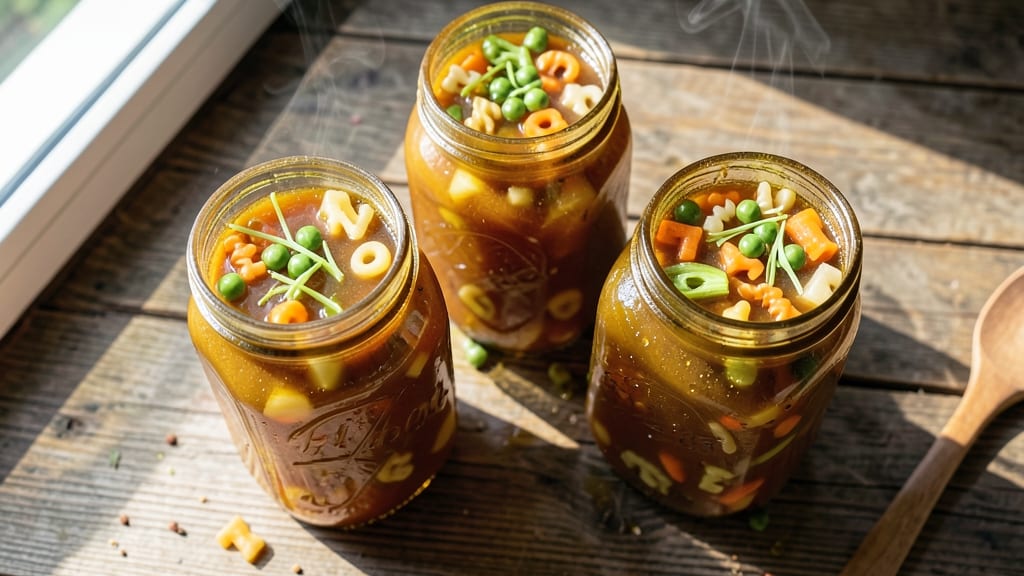
This alphabet soup in a jar recipe transforms pantry staples into a comforting, no-fuss meal that saves time and space. The genius lies in layering dried alphabet pasta, vegetables, and broth in a sealed jar—ready to cook whenever hunger strikes.
I developed this method during a particularly hectic week when I needed a solution that combined convenience with homemade quality.
What sets this approach apart is the foolproof storage system: simply assemble the ingredients in a jar, seal it tightly, and store it for up to 6 months. When you're ready to eat, just add hot water, bring to a boil, and let the flavors meld together.
The alphabet pasta adds playful texture while keeping the soup hearty and satisfying—perfect for busy nights when you don't have time to chop or measure.
The beauty of this recipe is its versatility. Use chicken or vegetable broth depending on dietary preferences, and customize with your favorite vegetables or herbs.
The sealed jars also make this an ideal option for meal prep, allowing you to stock your pantry with ready-to-cook soups that require minimal effort when you're short on time.
Whether you're feeding a family or prepping for the week ahead, this method delivers restaurant-quality comfort without the mess. The key is balancing the ingredients properly so each jar transforms into a perfectly portioned bowl of soup. Let's get started with this game-changing pantry solution.
Ingredients for alphabet soup in a jar
Pantry staples plus a few fresh veggies—this soup comes together in minutes, sealed and ready for later.
| Ingredient | Amount | Notes |
|---|---|---|
| Dried Alphabet Pasta 🍝 | 2 cups | Uncooked, colorful shapes |
| Diced Carrots 🥕 | 1 cup | Baby carrots work too |
| Diced Celery 🧅 | ½ cup | Fresh or frozen |
| Diced Onion 🧅 | ½ cup | Yellow or white |
| Diced Potatoes 🥔 | ½ cup | Small dice for even cooking |
| Peas 🌱 | ½ cup | Fresh or frozen |
| Chicken or Vegetable Broth 💧 | 1 cup | Low-sodium preferred |
| Olive Oil 🫒 | 1 tbsp | Light coating for jar |
| Salt 🧂 | ½ tsp | Kosher or sea salt |
| Black Pepper 🌶️ | ¼ tsp | Freshly ground preferred |
| Dried Parsley 🌿 | 1 tsp | Optional for garnish |
| Large-Mouth Mason Jars 🥫 | 4 whole | Pint or quart size |
The alphabet pasta is the star here—look for the colorful shapes at any grocery store, usually near the regular pasta. I grab mine from Walmart or Target in the baking aisle, but Whole Foods carries organic versions too. The veggies can be pre-chopped to save time, but if you're feeling ambitious, dice them yourself for fresher flavor. For the broth, Pacific Foods or Imagine brands are my go-tos—they're low-sodium and dissolve perfectly. The key is using small dice for potatoes so they cook evenly in the jar.
No fresh veggies? Frozen diced veggies work perfectly—they're pre-cut and thaw quickly. Swap chicken broth for vegetable broth if you prefer a veggie-only version. The dried parsley is optional but adds a nice pop of color and flavor. If you don't have it, skip it—no biggie. For the jars, Ball or Mason jars are the gold standard, but any clean, airtight container will do. The olive oil helps the veggies stick together when you shake the jar later, so don't skip it even if it's just a light coating.
These jars keep for up to 6 months in a cool, dark pantry. Once opened, eat within 3-4 days or transfer to the fridge. I always make a double batch—one for now, one for next month. The soup reheats beautifully, and honestly, it tastes even better the next day once everything melds together. Pro tip: Label your jars with the date so you know what's freshest.
Why You'll Love This Recipe
- No-Chop Shortcuts: I swear by pre-diced veggies here—just toss in the frozen carrots, celery, and onion straight from the bag. The alphabet pasta cooks in minutes, so it’s basically a "dump and simmer" that still feels like a meal.
- Kid-Approved Crunch: That crisp-tender celery and potato bite? My kids go wild for it. The alphabet shapes make every spoonful feel like a little game—no one fights me over veggies anymore.
- Jars for Days: Make a batch on Sunday, portion into mason jars, and you’ve got lunch for the week. Honestly, I’ve brought these to potlucks, book clubs, and even my mom’s house—it’s the one dish everyone asks for seconds of.
- Pantry Magic: Between us, this recipe costs me about $3 for four servings. The dried pasta and frozen veggies stretch forever, and I never waste a single scrap. Leftovers? They reheat like a dream.
Step-by-step instructions for alphabet soup in a jar
Layer, seal, and cook—this method makes prep a breeze and dinner stress-free.
Lightly Coat the Mason Jars
Pour 1 tablespoon olive oil into a small bowl and add ½ teaspoon salt and ¼ teaspoon black pepper. Stir until combined. Using a pastry brush or your fingers, lightly coat the inside of each of the 4 large-mouth mason jars with this mixture. This creates a barrier that prevents the soup from sticking to the glass and ensures even cooking.
I like to give each jar a quick swirl to distribute the oil evenly, especially around the edges. This step is crucial—if you skip it, your soup might stick or cook unevenly. Wipe any excess oil from the jar rims with a paper towel to prevent sealing issues later.
Layer Vegetables and Pasta
Start by adding ½ cup diced potatoes to each jar. Use a spoon to press them gently against the sides to create space for the next layer. Next, add ¼ cup diced carrots, ¼ cup diced celery, ¼ cup diced onion, and ¼ cup peas to each jar. Distribute these evenly, making sure the vegetables don’t pack too tightly.
Top each vegetable layer with ½ cup dried alphabet pasta. I like to sprinkle the pasta over the vegetables and give the jar a gentle shake to help the shapes nestle together. This arrangement ensures every bite has a mix of veggies and pasta. Leave about 1 inch of space at the top of each jar—this prevents overflow when the soup cooks.
Add Broth and Seasonings
Pour ¼ cup chicken or vegetable broth into each jar, making sure to cover the vegetables and pasta completely. The broth should reach about ½ inch below the jar’s opening. Sprinkle ¼ teaspoon dried parsley over each jar for added flavor. Seal the jars tightly with their lids.
Here’s the thing—don’t overfill the jars. If the broth level is too high, the soup might spill over when it heats up. A good rule of thumb is to leave at least 1 inch of headspace. This also allows the soup to expand slightly during cooking without creating a mess.
Cook in a Boiling Water Bath
Place the sealed jars in a large pot and fill the pot with enough water to cover the jars by 1 inch. Bring the water to a rolling boil over medium-high heat. Once boiling, reduce the heat to medium and let the jars simmer for 45-50 minutes. The water should stay at a gentle boil throughout the cooking time.
Check the jars after 30 minutes to ensure they’re still submerged. If the water level drops too low, add more boiling water. You’ll know the soup is done when the pasta is tender and the vegetables are fork-tender. The jars should feel firm when you press the lids—this indicates proper sealing.
Cool, Store, and Serve
Remove the jars from the pot and let them cool completely on a wire rack or countertop. This gradual cooling prevents the jars from cracking due to sudden temperature changes. Once cooled, store the jars in the refrigerator for up to 5 days or freeze them for up to 3 months.
To serve, simply open a jar and pour the soup into a pot. Add a splash of warm water or broth to loosen the mixture if needed. The flavors will taste even better after resting, as the ingredients meld together. This method is perfect for busy nights—just grab a jar, heat it up, and enjoy a hearty, no-fuss meal.
Pro Tips For Making Alphabet Soup In A Jar
- Parboil Potatoes First: Diced potatoes take forever to soften in jars—cut them into even ½-inch pieces and boil for 3 minutes before layering. This guarantees they’ll finish cooking without turning to mush at the bottom (yes, I’ve seen it happen).
- Use Celery Stems Too: I used to toss the stringy celery stems because they looked gross, but they’re packed with flavor. Roughly chop them with the stalks and add them to the jar—they’ll soften just fine and add depth to the broth.
- Layer Like a Sandwich: Don’t just dump everything in—stack ingredients in this order: potatoes (heaviest), carrots, celery, onions, then pasta on top. This keeps the veggies from floating to the surface and ensures even cooking when you shake it later.
- Add Garlic Powder Early: Skip the fresh garlic—it burns in jars. Instead, sprinkle ½ teaspoon of garlic powder into the broth layer before sealing. It dissolves perfectly and adds that savory punch without the risk of bitter bits. (I learned this after one very bitter batch.)
Troubleshooting great alphabet soup in a jar
Stuck Soup Problem
If your soup sticks stubbornly to the jar after cooking, you likely skipped the olive oil coating step. Give future jars a light brush with 1 tbsp olive oil mixed with ½ tsp salt before layering ingredients.
This creates a non-stick barrier. For stuck soup, run the jar under hot water for 30 seconds to loosen it, then gently tap the jar against your countertop to release. 💡
Watery or Thin Soup
Too much broth can make your soup watery. The key is using ¼ cup broth per jar—this ensures the pasta absorbs enough liquid during cooking. If your soup still seems thin, reduce the broth to 2 tbsp per jar next time.
For immediate fixes, simmer the soup uncovered for 5-10 minutes to evaporate excess moisture. A splash of 1 tbsp cornstarch slurry (mix 1 tsp cornstarch with 1 tbsp cold water) thickens it instantly.
Unevenly Cooked Pasta
If some pasta remains rock-hard while others are mushy, your jars weren’t submerged evenly during the water bath. Always ensure jars are fully covered by 1 inch of water. For future batches, shake the jars gently before sealing to distribute ingredients evenly.
If you’re in a rush, transfer the contents to a pot and add ½ cup water, then simmer for 5 minutes to finish cooking.
Broken Seals or Leaks
Leaks usually happen when jars aren’t sealed properly or are overfilled. First, check that jar rims are clean and free of debris—even a tiny speck can prevent a good seal. Leave 1 inch of headspace at the top of each jar to allow for expansion.
If a jar leaks during cooking, remove it immediately and refrigerate the contents. For future batches, test seals by pressing the center of the lid—it shouldn’t pop back up if sealed correctly. 🥫
Mushy Vegetables
Overcooking turns veggies into mush. The 45-50 minute water bath is ideal, but check jars at 30 minutes—veggies should be tender but still hold their shape. For future batches, reduce cooking time by 5 minutes if using small, tender veggies like peas or carrots.
If your veggies are already mushy, blend the soup for a creamy texture or strain out the softest pieces before serving.
Broth Not Dissolving
Powdered or granular broth can clump if not mixed properly. Before sealing the jars, give them a gentle shake to help the broth dissolve. For stubborn clumps, add 1 tbsp hot water to each jar before storing, then shake again.
If using low-sodium broth, you might need to add extra salt (up to ¼ tsp per jar) when reheating. For a richer flavor, stir in 1 tbsp cream or butter while reheating. 💛
Nutrition facts
Frequently asked questions
Can I use fresh vegetables instead of frozen?
Fresh veggies work perfectly, but chop them into uniform small pieces for even cooking. For best results, blanch fresh peas and carrots in boiling water for 2 minutes before layering to preserve color and texture. Just be sure to pat them dry thoroughly to prevent excess moisture in your jars.
How do I adjust this for picky eaters?
Make two separate jars—one with all the veggies for adults, and another with just alphabet pasta and broth for kids. You can also add shredded chicken or diced ham to one jar for extra protein. The fun shapes make it appealing while keeping the familiar flavors they love.
What's the best way to reheat alphabet soup?
Transfer the jar contents to a pot and add ½ cup hot water or broth. Bring to a gentle boil, then reduce heat to low and simmer for 5-7 minutes until heated through. For microwave reheating, use a microwave-safe bowl and heat for 2-3 minutes, stirring halfway. Always stir well before serving!
Can I make this gluten-free? Yes! Simply swap the alphabet pasta for gluten-free pasta shapes (like rice or corn-based).
How do I store these jars long-term?
For maximum shelf life, store sealed jars in a cool, dark pantry where they'll keep for up to 6 months. Once opened, refrigerate for 3-4 days or freeze for 3 months. To freeze, leave the jar sealed and place it in the freezer—no need to thaw before cooking. Just add extra ½ cup water when reheating.