
Soups & Stews
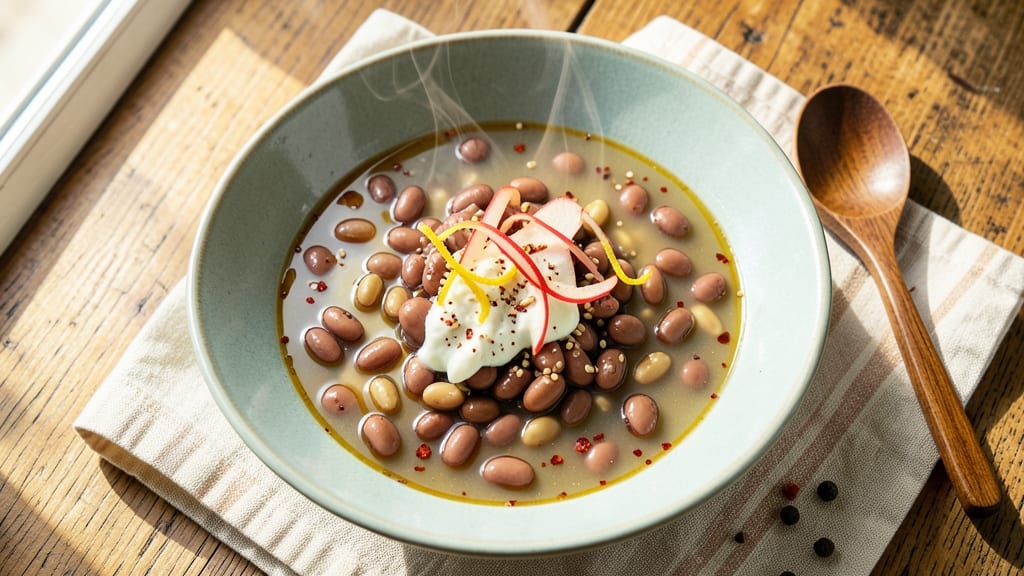
This adzuki bean soup recipe transforms simple ingredients into a rich, velvety dish that balances sweet and savory notes perfectly. The secret lies in simmering silken adzuki beans with aromatic vegetables and a touch of miso for depth—creating a comforting broth that feels both elegant and approachable.
I developed this version to capture the essence of traditional Japanese ankake soup while making it accessible for home cooks with minimal effort.
The beauty of this soup lies in its versatility—it works as a light meal on its own or pairs beautifully with steamed rice and pickled vegetables.
The beans soften into a creamy texture while absorbing the flavors of the broth, which is enhanced by a simple blend of soy sauce, mirin, and a hint of ginger. Unlike many bean soups, this one requires no special equipment, just a pot and patience for the flavors to meld.
What makes this recipe stand out is the silken adzuki beans, which break down into a luxurious consistency without losing their natural sweetness. The result is a bowl of soup that’s warm, satisfying, and subtly complex—each spoonful delivers a harmonious blend of umami, sweetness, and earthy bean flavor.
Perfect for chilly evenings or as a nourishing lunch, this soup proves that comfort food doesn’t have to be complicated.
For an extra touch, garnish with toasted sesame seeds and thinly sliced scallions to add freshness and texture. Serve with steamed rice to soak up every last drop of that flavorful broth.
Ready in about 45 minutes, this recipe is ideal for weeknight dinners or meal prep—just reheat and enjoy. Let’s get started!
Ingredients for adzuki bean soup
Silken adzuki beans and aromatic vegetables create this velvety, umami-rich soup perfect for chilly evenings.
| Ingredient | Amount | Notes |
|---|---|---|
| Silken Adzuki Beans 🌱 | 1 lb | Drained and rinsed thoroughly |
| Vegetable Broth 💧 | 4 cups | Low-sodium preferred |
| White Miso Paste 🧈 | 2 tbsp | High-quality, fermented |
| Mirin 🍶 | 1 tbsp | Sweet rice wine |
| Soy Sauce 🍶 | 1 tbsp | Organic preferred |
| Fresh Ginger 🧅 | 1 inch | Thinly sliced, peeled |
| Carrots 🥕 | 2 medium | OR 1 cup diced |
| Scallions 🧅 | 3 whole | Thinly sliced, white parts |
| Sesame Seeds 🌰 | 1 tbsp | Toasted for garnish |
| Rice Vinegar 🍶 | 1 tsp | For brightness |
| Sesame Oil 🫒 | 1 tsp | For aroma |
| Brown Sugar 🍯 | 1 tbsp | Lightly packed |
| Green Onions 🧅 | 2 whole | Thinly sliced, for garnish |
The silken adzuki beans are the heart of this recipe—look for canned varieties in the Asian aisle at Whole Foods or Trader Joe's for the best texture. If using dried beans, soak overnight and simmer until silky. Fresh ginger should be firm and aromatic; avoid any with soft spots. For the broth, low-sodium vegetable broth ensures balanced flavor without excess salt. The white miso paste adds depth—Miso Master or Marukome brands are excellent choices for authentic umami.
No mirin? Substitute 1 tbsp sugar plus 1 tbsp water—it won’t be identical but works in a pinch. Carrots can be swapped for daikon radish (julienned) for a more traditional touch. Scallions are non-negotiable for freshness, but if you’re out, green onions work. The sesame seeds should be toasted in a dry pan for 30 seconds until fragrant—don’t burn them! For extra richness, add 1 tbsp tahini to the final bowl, but omit it if you prefer a lighter soup. Brown sugar can be replaced with maple syrup for a vegan-friendly alternative.
This soup reheats beautifully—simmer gently to avoid breaking down the beans. Store in an airtight container for up to 5 days in the fridge or 3 months frozen. Portion into individual containers for easy lunches; the flavors deepen overnight. For a restaurant-worthy presentation, garnish with sesame seeds and green onions just before serving. Leftovers make a fantastic base for vegan ramen—just add noodles and extra broth.
Why You'll Love This Recipe
- Five-Ingredient Magic: I swear by this—just silken adzuki beans, broth, a spoon of white miso, a splash of mirin, and soy sauce. That’s it. No chopping, no stress, just simmer and savor.
- Umami Bomb: The miso and mirin combo? Chef’s kiss. Sweet, salty, and that deep, savory punch makes every spoonful feel like a little comfort hug—especially when the beans get tender just right.
- Lunchbox Hero: Between us, this soup reheats like a dream. Pack it cold for work or warm it up in minutes—no soggy textures, just that same rich flavor. My kids actually ask for it in their lunches.
- Budget Warmth: A whole batch costs less than takeout and stretches for days. The silken beans add creaminess without breaking the bank, and the miso makes even simple broth taste like something special.
Step-by-step instructions for adzuki bean soup
Here's how to create a harmonious blend of sweet and savory using silken adzuki beans.
Prepare the Silken Adzuki Beans
Begin by thoroughly rinsing the 1 lb silken adzuki beans under cold water to remove any surface starch, which can make the soup cloudy. Drain them well in a colander. I like to soak them for 30 minutes in fresh water to soften slightly, then drain again before cooking. This step ensures they cook evenly without splitting open during simmering.
In a large pot, combine the drained beans with the 4 cups vegetable broth. Bring to a gentle boil over medium-high heat, then immediately reduce to a low simmer. The goal is to maintain a steady, barely bubbling surface—this prevents the beans from breaking apart and keeps their delicate texture intact. Simmer uncovered for 20 minutes, stirring occasionally to prevent sticking to the bottom.
Build the Sweet-Savory Base
While the beans simmer, prepare the aromatic components. In a small bowl, whisk together the 2 tbsp white miso paste, 1 tbsp mirin, 1 tbsp soy sauce, 1 tbsp brown sugar, and 1 tsp sesame oil. This mixture forms the soul of your soup, balancing umami depth with subtle sweetness. Set aside for now—we'll add it later to preserve its delicate flavors.
In the same pot, add the 1 inch fresh ginger (thinly sliced), 2 medium carrots (cut into ½-inch pieces), and 3 whole scallions (thinly sliced, white parts only). Cook for 5 minutes over medium heat, stirring occasionally, until the carrots soften slightly and the ginger releases its aromatic oils. The vegetables should retain their shape—this ensures they contribute texture rather than mushiness to the finished soup.
Combine and Simmer to Perfection
Carefully pour the miso-mirin mixture into the pot while stirring continuously. Add the 1 tsp rice vinegar and bring the soup back to a gentle simmer. The vinegar brightens the flavors and balances the richness of the miso. Let it simmer uncovered for 15-20 minutes, allowing the beans to fully absorb the broth and develop their signature creamy texture. The soup should thicken slightly but remain smooth—this is the hallmark of properly cooked silken adzuki beans.
Taste and adjust seasoning if needed. You might need a touch more soy sauce for saltiness or a hint of mirin for sweetness. The beans are done when they're tender but still hold their shape, and the broth has reduced enough to coat the back of a spoon. This balance ensures each spoonful delivers both texture and flavor.
Finish and Serve
Remove the pot from heat and let the soup rest for 5 minutes. This allows the flavors to meld and the beans to finish absorbing the broth. Stir in the 1 tsp sesame oil just before serving—this adds a delicate nutty aroma that enhances the overall experience.
Ladle the soup into bowls and garnish each serving with 1 tbsp toasted sesame seeds and 2 whole green onions (thinly sliced). The sesame seeds add crunch and visual appeal, while the green onions provide a fresh contrast to the rich, savory broth. Serve immediately while hot, as the flavors continue to develop even after the pot leaves the stove.
Pro Tips For Making Adzuki Bean Soup
- SOAK BEANS 30 MINUTES: I learned this the hard way—skipping the soak makes silken adzuki beans turn to mush. Just pop them in warm water for half an hour before cooking, and they’ll hold their shape beautifully. (Yes, even if you’re impatient like me.)
- STIR MISO LAST: White miso is delicate—add it after the broth simmers, not at the start. Toss it in with the mirin and soy sauce right before removing from heat, or you’ll end up with a bitter, clumpy mess instead of that smooth, umami-rich finish.
- DON’T BOIL THE BROTH: Simmer, don’t boil, or your vegetable broth will turn cloudy and lose flavor. Keep it at a gentle bubble—just enough to melt the miso and warm the beans without making the whole thing look like soup gone wrong.
- SWAP MIRIN FOR RICE VINEGAR: Short on mirin? Use 1 tablespoon rice vinegar plus 1 teaspoon sugar—it cuts the sweetness but keeps the brightness. (Your future self will thank you for not rushing to the store.)
Make-ahead tips for this recipe
Prep Ahead Basics
Start by prepping all your ingredients the night before—this soup is designed for make-ahead convenience. Rinse and drain the 1 lb silken adzuki beans and store them in an airtight container in the fridge.
Chop the 2 medium carrots and 3 scallions into ½-inch pieces and slice the 1 inch fresh ginger thinly. Keep these in separate containers to prevent browning. The white miso paste, mirin, and soy sauce can be measured out in advance and stored in a small jar. 🧈
Broth Prep Shortcut
Save time by making a double batch of vegetable broth and freezing it in 1-cup portions in ice cube trays. Pop out the cubes and store in a freezer bag—thaw overnight in the fridge or directly in the pot.
This ensures you always have flavorful broth ready without the hassle of starting from scratch. For extra depth, add ½ cup dashi powder to your broth base when reheating.
Bean Soaking Hack
If you're short on time, skip the 30-minute soak and add ½ tsp baking soda to the pot with the beans and broth. This helps soften them faster while maintaining their texture. Just
Freeze the miso-mirin mixture in 1-tbsp portions in ice cube trays. Pop out a cube and add it directly to your reheated soup—this preserves all the delicate flavors. The frozen cubes also help thicken the broth slightly when reheated, mimicking the fresh simmer. Store these flavor cubes in a sealed container for up to 3 months. Reheat your soup gently on the stovetop over low heat to avoid breaking down the beans. Add ¼ cup water or broth to prevent sticking and simmer for 5-7 minutes until heated through. For microwave reheating, cover with a damp paper towel and heat in 1-minute intervals on 50% power, stirring between each interval. Always check the internal temperature reaches 165°F. For maximum flavor development, prepare the soup 1 day ahead and store it in an airtight container in the fridge. The beans will absorb even more broth, deepening their natural sweetness. When ready to serve, simply reheat and garnish with fresh toasted sesame seeds and green onions. This approach works perfectly for lunch prep—just grab a container and heat it up for a satisfying midday meal. ⏰Flavor Boost Freezing
Reheating Like a Pro
Meal Prep Timeline
Nutrition facts
Frequently asked questions
Can I use dried adzuki beans instead of silken beans?
Dried beans will work, but they require longer cooking (about 1.5-2 hours) and may not soften as smoothly. Soak them overnight first, then simmer until fork-tender. For best texture, use 2 cups dried beans (about 1 lb equivalent) and add them to the broth after the initial 30-minute simmer to prevent overcooking. The flavor will be similar but slightly earthier.
How can I make this soup spicier?
Add ½ tsp red pepper flakes or 1 tbsp gochujang (Korean chili paste) when combining the miso-mirin mixture. For heat with depth, stir in 1 tsp sriracha at the end. If using fresh chili, add it with the ginger and carrots—just remove it before serving if you prefer no visible spice. Start with small amounts and adjust to taste.
What’s the best way to store leftovers?
Store in an airtight container in the fridge for up to 5 days or freeze for 3 months. For freezing, cool completely first, then portion into 1-cup servings with a splash of broth to prevent drying. Thaw overnight in the fridge—never microwave directly from frozen. Reheat gently on the stovetop with ¼ cup water to restore creaminess.
Can I make this soup gluten-free?
Yes! Replace the soy sauce with tamari (gluten-free soy sauce) and use gluten-free miso (check labels). The rest of the recipe remains unchanged. For extra umami, add 1 tbsp nutritional yeast to the miso-mirin mixture. Always verify all ingredients for hidden gluten, especially in broths and seasonings.
Why did my beans turn mushy?
Overcooking or high heat causes beans to break down. Keep the broth at a gentle simmer (small bubbles) and never boil vigorously. For silken beans, cook no longer than 20 minutes after adding broth. If using dried beans, start checking for tenderness at 1 hour of simmering. Stir occasionally to prevent sticking, which can also lead to mushiness.